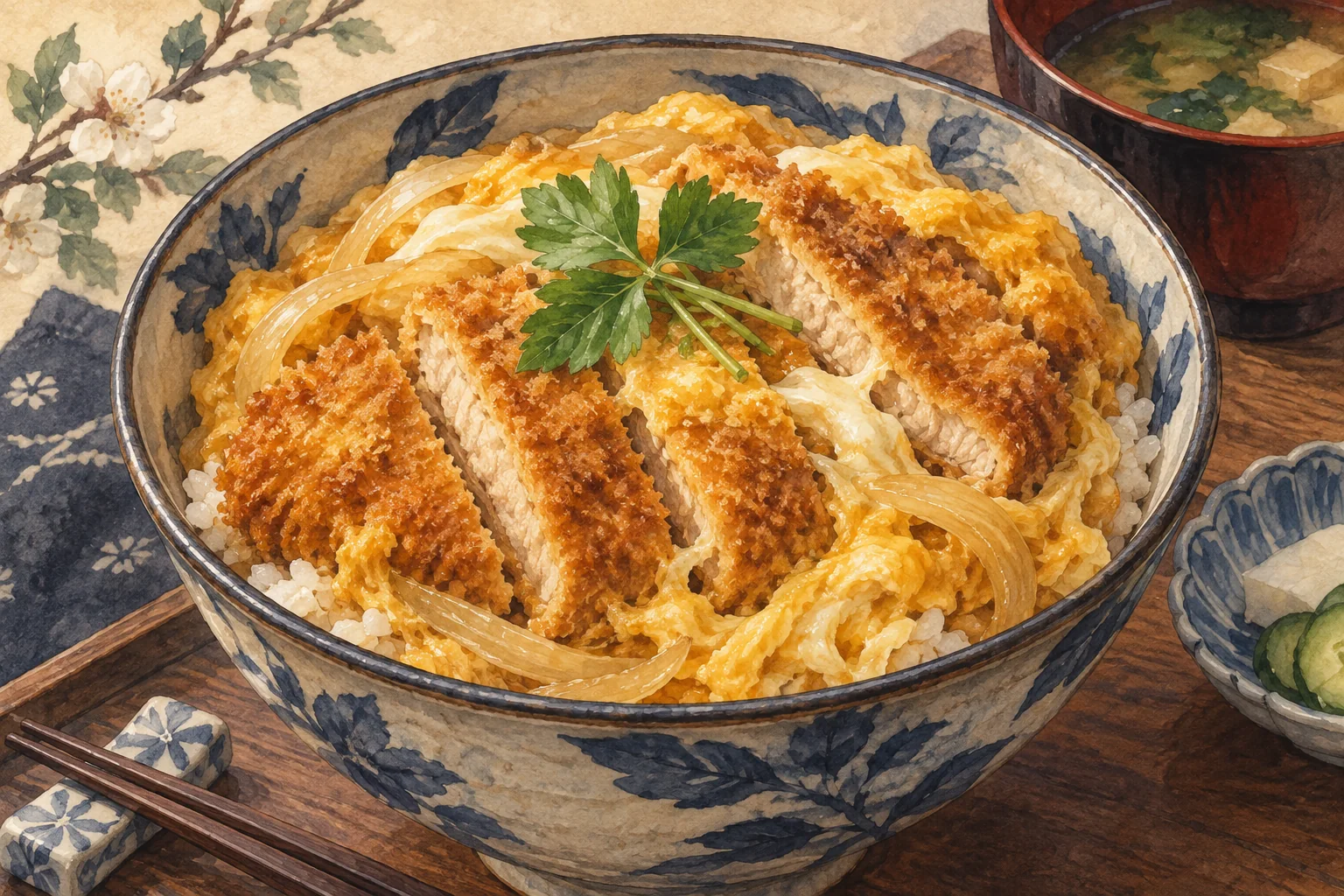
カツ丼かつどん
katsudon
the pork cutlet rice bowl students eat before an exam
「勝つ」と同じ音だから、試験の前に食べる。取調室で出る、というのは作り話。
一言で言うと
これだけ覚えれば最低限伝わる一文
Katsudon is a breaded pork cutlet simmered with onion and egg and served over rice, eaten for luck before exams.
カツ丼とは、揚げた豚カツを玉ねぎと卵で煮てご飯にのせた丼で、試験の前に縁起を担いで食べるものです。
30秒で説明する
外国人に説明するときの標準サイズ
A tonkatsu cutlet is sliced, simmered briefly in dashi, soy sauce and mirin with onion, bound with beaten egg and slid over rice. It is heavy, cheap and everywhere. Students eat it the night before an exam because katsu sounds like the verb to win. And no, police do not offer it to win confessions — that is a scene from film and television, not current practice.
とんかつを切り、出汁、醤油、みりんで玉ねぎと軽く煮て、溶き卵でとじ、ご飯にのせます。重く、安く、どこにでもあります。受験生が前夜に食べるのは、カツが「勝つ」と同じ音だからです。そして、自白させるために取調室で出てくるというのは違います。映画やドラマの場面であって、今の実際の慣行ではありません。
スピーチ・英作文
通訳案内士の二次口述・大学入試の自由英作文に
Katsudon is a good dish to explain because two of the things people believe about it are cultural rather than culinary. Physically it is simple: a breaded, deep-fried pork cutlet is cut into strips, simmered for less than a minute in a sweet soy broth with sliced onion, bound with beaten egg while the egg is still soft, and tipped over a bowl of rice.
It is one of the heaviest things on a cheap restaurant menu and one of the most satisfying. The first cultural point is that students eat it before exams, because katsu is a homophone of the verb meaning to win. Parents make it the night before, shops sell it with exam-luck packaging in January, and everyone knows the pun is silly.
The second is the interrogation scene: in Japanese detective drama, a detective slides a katsudon across the table and the suspect confesses. It is such a well-known trope that people abroad assume it is real. Under current rules, offering a suspect food or favors during questioning counts as improper, so the scene does not reflect real practice.
カツ丼は説明に向いた料理です。人が信じていることのうち二つが、料理ではなく文化の話だからです。作り方そのものは簡単で、衣をつけて揚げた豚カツを細く切り、玉ねぎと一緒に甘辛い出汁で一分足らず煮て、卵が柔らかいうちにとじ、ご飯にのせます。
安い店のお品書きの中でもいちばん重い部類で、そして満足度も高い。文化の話の一つめは、受験生が試験の前に食べることです。カツが「勝つ」と同じ音だからで、親は前夜に作り、一月になると店は合格祈願の包みで売ります。語呂合わせがばかばかしいことは、みな承知しています。二つめは取調室の場面です。
日本の刑事ドラマでは、刑事が机越しにカツ丼を差し出し、容疑者が自白します。あまりに有名な型なので、海外では本当にあることだと思われています。今の規則では、取調べ中に容疑者へ食事などの便宜を与えることは不適正な行為とされており、この場面は実際の慣行を映したものではありません。
こう聞かれたら
外国人から実際にされる質問と、その答え方。
Do police really give suspects katsudon?
警察は本当に容疑者にカツ丼を出すのですか。
No. It is a drama convention. Providing food or favors to a suspect would be improper, and the scene exists because it reads well on screen.
出しません。ドラマの型です。容疑者に食事や便宜を与えることは適切ではありませんし、この場面は画面の上で効果があるから続いているものです。
Why before an exam?
どうして試験の前なのですか。
Katsu sounds the same as the verb to win. Japanese food luck is full of this kind of sound-based reasoning, and nobody claims it works.
カツが「勝つ」と同じ音だからです。日本の縁起担ぎには音の語呂合わせが多く、本当に効くと思っている人はいません。
Are there other versions?
ほかの種類もありますか。
Yes. Sauce katsudon, with the cutlet dipped in sauce and no egg, and a version with demi-glace, are local specialties in several prefectures.
あります。卵でとじず、たれにくぐらせたソースカツ丼や、デミグラスをかけるものがあり、いくつかの県の名物になっています。
誤解されやすい
MYTHJapanese police serve katsudon during interrogations.
日本の警察は取調べでカツ丼を出す、と思われがちです。
FACTIt is a fictional convention from detective drama. Under current rules, offering a suspect food or favors during questioning is treated as improper.
刑事ドラマの作り事です。今の規則では、取調べ中に容疑者へ食事などの便宜を与えることは不適正な行為とされています。
そのまま使えるフレーズ
- It's a fried pork cutlet, simmered with egg over rice.揚げた豚カツを卵でとじて、ご飯にのせたものです。
- Katsu sounds like the word for winning.カツは「勝つ」と同じ音です。
- Students eat it the night before an exam.受験生は試験の前夜に食べます。
- The interrogation scene is from television, not real life.取調室の場面はテレビの作り話です。
- Some regions serve it with sauce instead of egg.卵ではなくソースをかける地方もあります。
説明に使う語句
- pork cutletとんかつ
- to bind with egg卵でとじる
- wordplay, pun語呂合わせ
- exam luck合格祈願
- interrogation取り調べ
動画で見る
YouTube より豆知識
カツ丼の発祥には複数の説があり、大正期の東京の店を挙げるものが多いが、確定していない。福井県の「ソースカツ丼」、岡山県の「デミカツ丼」、新潟県の「タレカツ丼」など、卵でとじない形が各地の名物になっている。取調室でカツ丼を出す場面は刑事ドラマの定番だが、2008年に定められた国家公安委員会の規則で、取調べ中に被疑者へ便宜を供与することは監督の対象となる不適正な行為とされており、実際の慣行ではない。
