家元いえもと
iemoto
the head of a school of a traditional art
茶道も華道も、流派の頂点に一つの家がある。
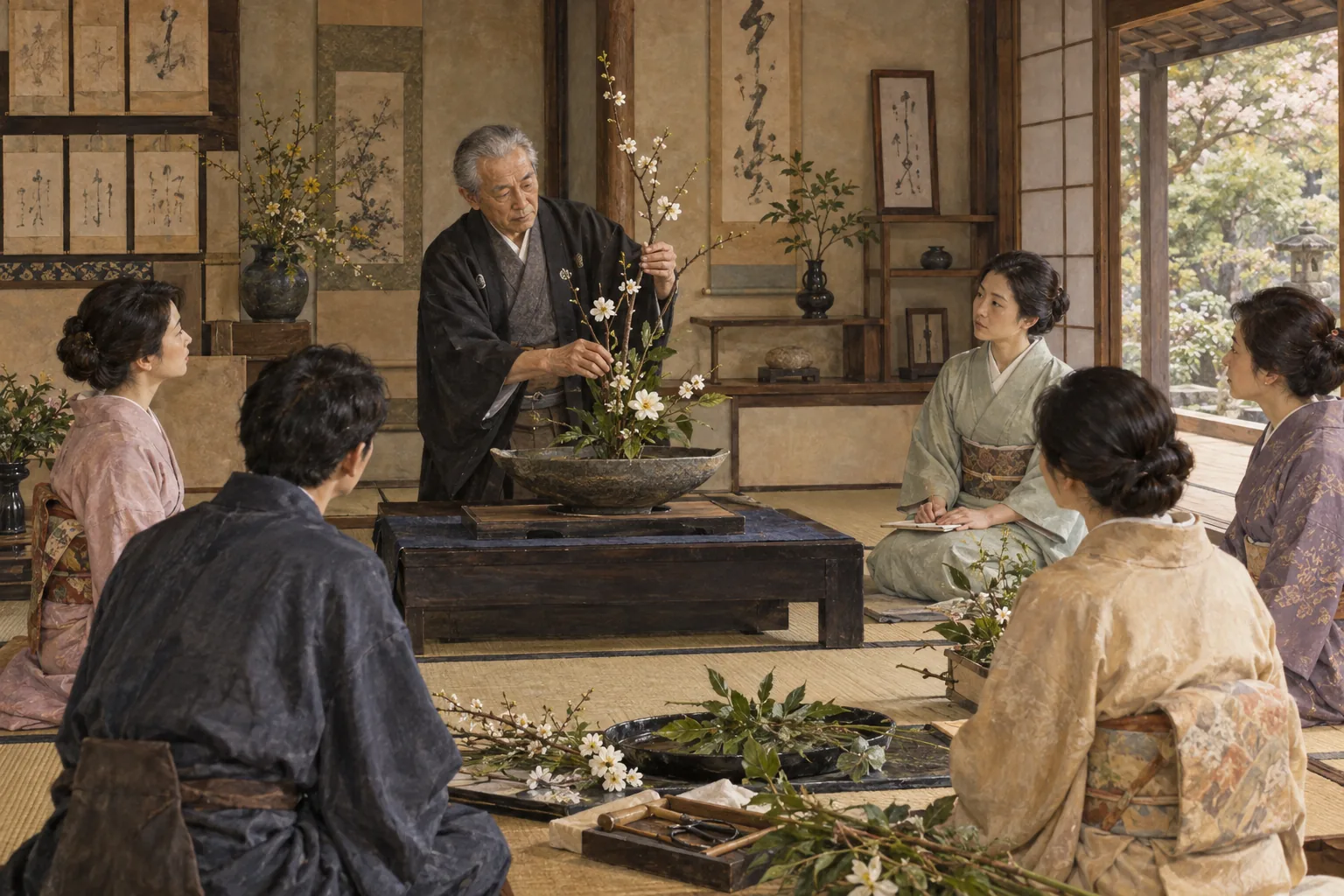
一言で言うと
これだけ覚えれば最低限伝わる一文
An iemoto is the hereditary head of a school of a traditional art, who guards its style and grants its licenses.
家元とは、伝統芸道の流派を代々受け継ぐ頭で、その型を守り、免状を出す立場の人です。
30秒で説明する
外国人に説明するときの標準サイズ
Tea, flower arranging, dance, noh and many other arts are organized into schools, and each school has a single family at its head. The iemoto decides what counts as correct form, and licenses pass down through ranks of teachers to pupils, along with the fees. The system keeps a style intact across centuries, and it is also regularly criticized for being closed and expensive.
茶道、華道、舞踊、能をはじめ多くの芸道は流派に分かれ、その頂点にそれぞれ一つの家があります。家元は何が正しい型かを定め、免状は師範から弟子へ段階を追って渡り、その分の謝礼も動きます。この仕組みは型を何百年も保ってきましたが、閉じている、費用がかかる、という批判も繰り返されてきました。
スピーチ・英作文
通訳案内士の二次口述・大学入試の自由英作文に
If you take a tea lesson in Japan, you are not just learning to make tea; you are entering a school, and every school has an iemoto at the top. The word means the origin house, and the position is normally hereditary.
The iemoto holds the authority to say what the correct form is, and that authority is passed down as licenses: a pupil receives permission to learn a particular procedure, later permission to teach, and each step involves a certificate and a payment that travels up through the teacher to the head house.
The system took its modern shape in the Edo period, when arts that had been taught person to person needed a way to organize thousands of townspeople who wanted lessons. The benefit is real; a movement can be transmitted almost unchanged over four hundred years. The criticism is also real, that it makes an art expensive, slow to change and hard to enter, and schools have been losing pupils for decades.
日本で茶の稽古に通うとき、人は茶の点て方を習うだけでなく、流派に入ります。どの流派にも家元がいます。もとの家という意味の語で、地位はふつう世襲です。家元は何が正しい型かを定める権限を持ち、その権限は免状として下りていきます。
弟子はある点前を習う許しを受け、やがて教える許しを受けます。段階ごとに免状があり、それに伴う謝礼が、師を通って家元の家へ上がっていきます。この形が整ったのは江戸時代で、人から人へ伝えていた芸を、稽古を望む多くの町人に向けて組織する必要が生じたためです。
効用は本物です。所作が四百年ほとんど変わらずに伝わります。批判も本物です。費用がかかり、変わりにくく、入りにくい。流派の弟子は何十年も減り続けています。
こう聞かれたら
外国人から実際にされる質問と、その答え方。
Do I have to join a school to learn?
習うには流派に入らないといけませんか。
For a serious course, effectively yes, because teachers are licensed by a school and teach its form. For a one-off experience, no; tourist tea and flower sessions do not enroll you in anything.
本格的に習うなら、事実上そうなります。教える人は流派の免状を持ち、その型を教えるからです。一度きりの体験なら要りません。観光向けの茶や生け花の体験に入門はともないません。
How much does a license cost?
免状はいくらかかるのですか。
It varies by school and by level, and schools do not always publish the figures. Teachers usually explain the fees before a pupil applies, and asking about them early is normal rather than rude.
流派と段階によって違い、表に出していない流派もあります。ふつうは申請の前に師が説明します。早い段階でたずねるのは失礼ではなく、当たり前のことです。
Does the same system apply to martial arts?
武道でも同じ仕組みですか。
Partly. Old schools of swordsmanship still work this way, but judo, kendo and karate largely moved to national organizations with dan ranks and standardized examinations, which is a different structure.
一部は同じです。古流の剣術には今もこの形が残ります。柔道、剣道、空手はおおむね全国的な団体による段位と共通の審査に移りました。これは別の仕組みです。
誤解されやすい
MYTHThe iemoto is simply the most skilled practitioner in the school.
家元とは、その流派でいちばん腕の立つ人のことだ、と思われがちです。
FACTThe position is hereditary and is about authority over the form, not about being the best performer. Skill matters, but the role is to guarantee that the style is transmitted correctly.
家元は世襲の地位で、演者として最も優れているかどうかではなく、型についての権限を持つ立場です。腕前は問われますが、役割は型が正しく伝わることを保証することにあります。
そのまま使えるフレーズ
- Every school has a head family.流派ごとに家元の家があります。
- The position passes down the family.地位は代々受け継がれます。
- Licenses are granted step by step.免状は段階を追って出されます。
- Which school do you study with?どちらの流派で習っていますか。
- A trial lesson does not commit you.体験だけなら入門にはなりません。
説明に使う語句
- head of a school家元
- school or lineage流派
- license or certificate免状
- qualified teacher師範
- prescribed form型
動画で見る
YouTube より豆知識
家元制度は、茶道、華道、日本舞踊、能楽、香道などに見られる仕組みで、流派の型を守る家が頂点に立ち、免状を通じて権限と謝礼が上下します。今の形が整ったのは江戸時代で、町人に稽古が広がったことが背景にあります。茶道では千利休の子孫が表千家、裏千家、武者小路千家に分かれ、華道では池坊が古い歴史を持ちます。型が長く変わらずに伝わる一方、費用と閉鎖性への批判もあり、稽古人口は長く減少が続いています。
