守破離しゅはり
shu ha ri
the three stages of learning a traditional art
型を守り、型を破り、型を離れる。離れてよいのは、守りきった人だけ。
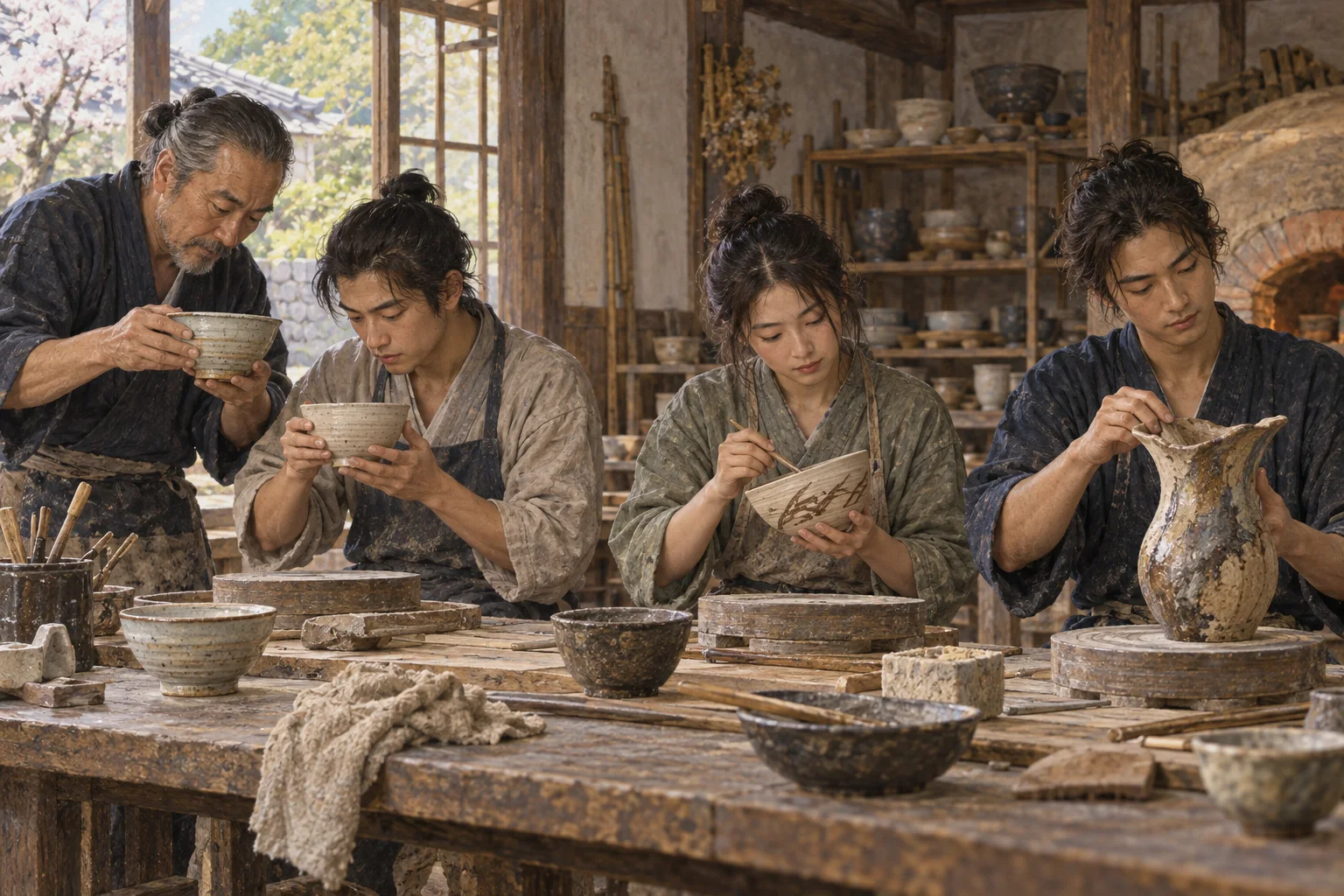
一言で言うと
これだけ覚えれば最低限伝わる一文
Shu ha ri is a three-stage model of mastery: keep the form, break the form, then leave it behind.
守破離とは、型を守り、型を破り、型から離れるという、習得を三段階で捉える考え方です。
30秒で説明する
外国人に説明するときの標準サイズ
Shu ha ri describes how a traditional Japanese art is learned. In shu you copy your teacher exactly and change nothing, for years. In ha you begin to test the form, comparing it with other approaches and finding where it bends. In ri you leave the form and work freely, having absorbed it so completely that it no longer constrains you. The order matters: skipping to ri is not originality, it is just not knowing the form.
守破離は、日本の伝統の芸がどう身につくかを表した言葉です。守では、師の通りにそっくり写し、何年も何も変えません。破では、型を試し、ほかのやり方と比べ、どこが動かせるかを探ります。離では、型を離れ、自由に行います。すでに型を吸い尽くしていて、縛りにならないからです。順序が肝心です。守らずに離へ飛ぶのは独創ではなく、型を知らないだけです。
スピーチ・英作文
通訳案内士の二次口述・大学入試の自由英作文に
Shu ha ri is how Japan describes learning a craft, and it is worth explaining because the order is the argument. The first stage, shu, means keep: you copy your teacher exactly, without variation and without asking why, for a long time — years in tea ceremony, martial arts or a traditional trade.
You are not being asked to understand, you are being asked to do it until your body does it. The second stage, ha, means break: once the form is in you, you start to test it, study other teachers, notice where the form is essential and where it was just your teacher's habit. The third, ri, means leave: you no longer refer to the form consciously, and what you produce is your own.
The point people miss is that ri is not permission to ignore the form. You can only leave what you have fully absorbed, and someone who skips shu and declares themselves at ri is simply someone who never learned. The idea is now used well outside the arts, in Japanese business and software teams, as a model for how any skill is acquired.
守破離は、日本が技の習得をどう捉えているかを表す言葉で、説明する値打ちがあります。順序そのものが主張だからです。第一段階の「守」は、守ること。師のやり方をそっくり写し、変えず、なぜかも問わずに、長いあいだ続けます。茶道でも武道でも伝統の職でも、年単位です。
理解することを求められているのではなく、体がそうするまで繰り返すことを求められています。第二段階の「破」は、破ること。型が身に入ったところで、それを試し、ほかの師を学び、どこが欠かせない部分で、どこが自分の師の癖だったのかを見分けていきます。第三の「離」は、離れること。もう型を意識して参照せず、作るものは自分のものになります。
見落とされがちなのは、離が「型を無視してよい」という許しではない、という点です。離れられるのは、吸い尽くしたものだけ。守を飛ばして自分は離にいると言う人は、単に学ばなかった人です。この考え方はいま、芸の外でも使われ、日本の企業や開発の現場で、技能がどう身につくかの型として引かれます。
こう聞かれたら
外国人から実際にされる質問と、その答え方。
Where does the idea come from?
どこから来た考え方ですか。
It is associated with the tea ceremony and with a verse attributed to Sen no Rikyu, and it spread through martial arts and other traditional forms. The precise origin is not settled.
茶の湯に結びつけられ、千利休のものとされる歌が引かれます。武道やほかの伝統芸能を通じて広まりました。出どころは確定していません。
How long is the first stage?
守はどれくらい続くのですか。
There is no fixed length, and that is deliberate. In practice it is years, and in some disciplines a teacher decides when you have moved on rather than you deciding.
決まった長さはありませんし、それが意図です。実際には年単位で、師が「次に進んだ」と判断する世界もあります。自分では決めません。
Is this used outside traditional arts?
伝統の芸の外でも使われますか。
Yes, widely. Japanese companies and software teams use it as a model for training, and it appears in agile development literature in English as well.
広く使われています。日本の企業や開発の現場が育成の型として用い、英語の開発の文献にも出てきます。
誤解されやすい
MYTHShu ha ri means you should eventually ignore the rules.
守破離とは、最後には決まりを無視してよいという意味だ、と思われがちです。
FACTYou can only leave a form you have fully absorbed. Skipping the copying stage produces someone who never learned the form, not someone free of it.
離れられるのは、吸い尽くした型だけです。写す段階を飛ばせば、型から自由な人ではなく、型を知らない人ができます。
そのまま使えるフレーズ
- First you keep the form exactly.まず型をそのまま守ります。
- Then you start to test where it bends.次に、どこが動かせるかを試します。
- Only then can you leave it behind.そのあとでようやく離れられます。
- You can't skip to the last stage.最後の段階に飛ぶことはできません。
- Japanese companies use this as a training model.日本の企業は、これを育成の型として使います。
説明に使う語句
- form, pattern型
- to keep守
- to break破
- to leave離
- apprenticeship修行
動画で見る
YouTube より豆知識
守破離は、千利休のものと伝えられる「規矩作法 守り尽くして 破るとも 離るるとても 本を忘るな」という歌に結びつけて説明されることが多いが、この歌の作者については確かなことが分かっていない。能の世阿弥の芸論との関わりも指摘される。武道、茶道、華道などの稽古の段階を示す語として広く使われ、近年はアジャイル開発の入門書などでも Shu-Ha-Ri として紹介されている。
