合掌造りと茅葺きがっしょうづくりとかやぶき
gasshozukuri to kayabuki
the steep thatched farmhouses of the snow country
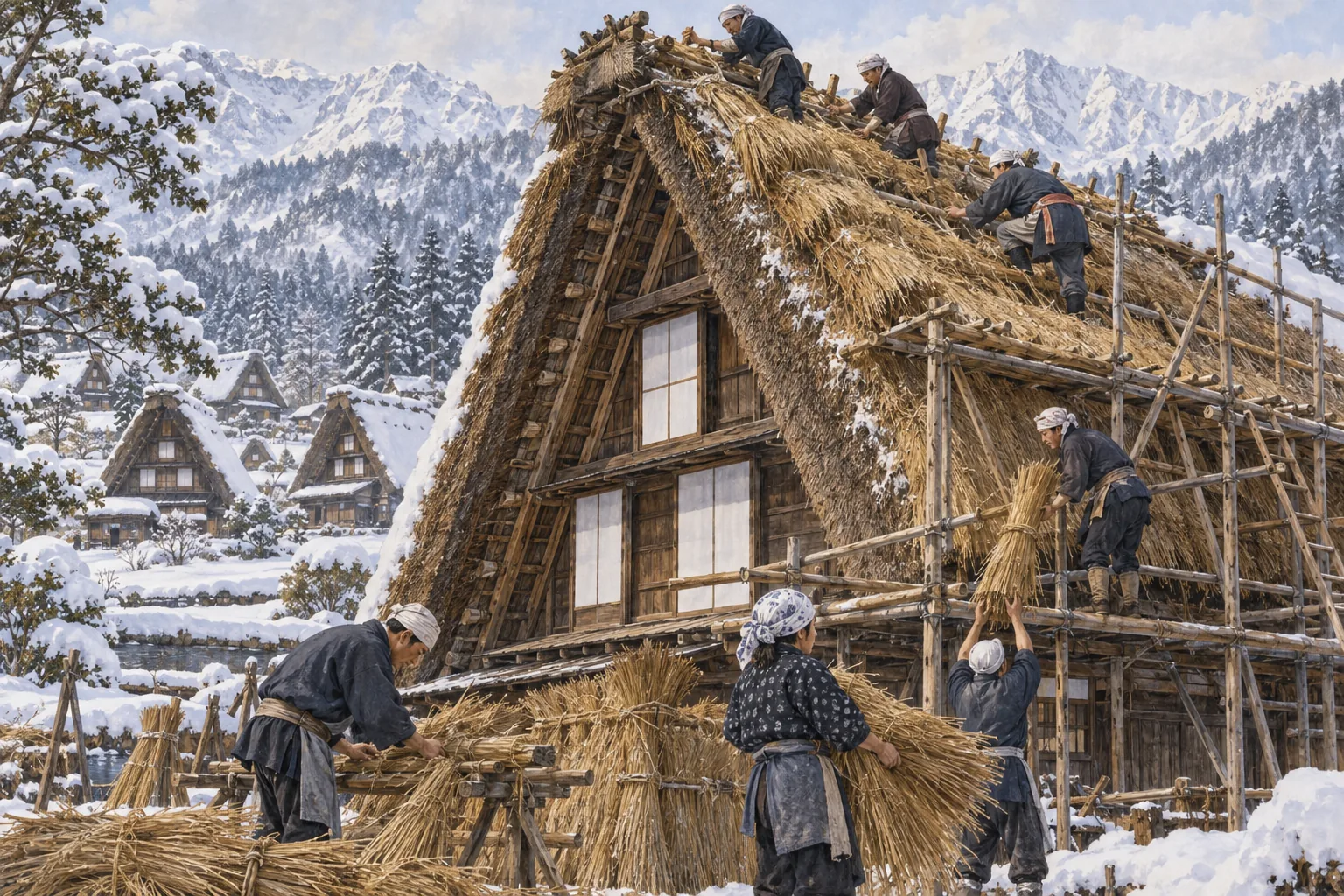
屋根が急なのは雪のため。葺き替えは村総出でやる。
一言で言うと
これだけ覚えれば最低限伝わる一文
Gasshozukuri to kayabuki, or gassho-style thatched farmhouses, are homes with steep roofs that shed heavy snow and shelter silkworms upstairs.
合掌造りと茅葺きとは、深い雪を落とし、上の階で蚕を飼うための急な茅葺き屋根を持つ農家のことです。
30秒で説明する
外国人に説明するときの標準サイズ
In the snow country of Gifu and Toyama, farmhouses were built with roofs so steep that they look like hands pressed together in prayer, which is what the name says. The angle sheds snow, the thatch insulates, and the large attic space under it was used for raising silkworms. The roofs are rethatched every few decades by the whole village working together.
岐阜と富山の雪深い地域では、手を合わせた形に見えるほど急な屋根を持つ農家が建てられました。名はその形から来ています。角度が雪を落とし、茅が断熱し、その下の広い小屋裏では蚕を飼いました。屋根の葺き替えは数十年に一度、村じゅうが総出で行います。
スピーチ・英作文
通訳案内士の二次口述・大学入試の自由英作文に
Shirakawa-go in Gifu and Gokayama in Toyama are World Heritage villages, and what is listed is not one building but a working relationship between a roof and a place. Snow here falls in meters. A roof at roughly sixty degrees lets it slide before the weight breaks the frame, and thatch a meter thick keeps the house survivable.
The name gassho-zukuri comes from the resemblance to two hands pressed together. Because the pitch creates a huge attic, two or three floors of it were used for raising silkworms, which gave these isolated villages a cash crop through the winter. Two things keep the roofs alive.
The hearth below burns daily and the smoke rising through the house keeps insects and rot out of the thatch. And when a roof reaches the end of its thirty or forty years, the village rethatches it together in a day or two under a mutual labor system, since no household could pay for it alone.
岐阜の白川郷と富山の五箇山は世界遺産ですが、登録されているのは一棟の建物ではなく、屋根とその土地との関係です。ここでは雪がメートル単位で積もります。六十度ほどの傾きなら、骨組みが折れる前に雪が滑り落ちます。厚さ一メートルほどの茅が、家を住める場所に保ちます。
合掌造りという名は、両手を合わせた形に似ていることから来ています。この傾きが巨大な小屋裏を生むので、その二層も三層も蚕を飼うのに使われました。冬のあいだ、隔たった村に現金をもたらす仕事です。屋根を保っているものが二つあります。
下の囲炉裏で毎日火を焚き、家を抜けていく煙が茅に虫と腐りを寄せつけないこと。そして三十年から四十年で寿命を迎えた屋根を、村が総出で一日か二日で葺き替えること。結と呼ぶ助け合いの仕組みで、一軒では費用をまかなえないからです。
こう聞かれたら
外国人から実際にされる質問と、その答え方。
Do people still live in them?
今も人が住んでいるのですか。
Yes. Shirakawa-go is a working village, not a museum, and many of the houses are private homes; some take guests as inns. Visitors are asked to stay out of gardens and off private paths.
住んでいます。白川郷は博物館ではなく暮らしのある村で、多くは個人の住宅です。宿として客を取る家もあります。庭や私有の通路には入らないよう求められています。
How is the roof rethatched?
屋根はどうやって葺き替えるのですか。
By scaffolding the whole roof and replacing the thatch in bundles, with dozens or hundreds of people working at once. Some villages keep their own reed fields and cut the material themselves in autumn.
屋根全体に足場を組み、束にした茅を替えていきます。数十人から百人以上が一度に取りかかります。茅場を持ち、秋に自分たちで刈り取って材料をそろえる村もあります。
Why are they only in that area?
どうしてあの地域にしかないのですか。
Because the combination is specific: extreme snow, poor rice land that made silk essential, and isolation that meant building with what grew nearby. Steep thatched farmhouses exist elsewhere, but not on this scale or with this attic use.
条件がそろっていたからです。極端な雪、米の取れにくい土地ゆえに養蚕が欠かせなかったこと、そして手近な材料で建てるしかない隔たり。急な茅葺きの農家は各地にありますが、この規模で小屋裏をここまで使う例はほかにありません。
そのまま使えるフレーズ
- The roof is steep so the snow slides off.雪が滑り落ちるように屋根が急です。
- The attic was used for silkworms.小屋裏で蚕を飼っていました。
- The whole village rethatches it together.村総出で葺き替えます。
- Smoke from the hearth protects the thatch.囲炉裏の煙が茅を守ります。
- People still live in these houses.今も人が住んでいます。
説明に使う語句
- thatched roof茅葺き
- roof pitch屋根の勾配
- attic floor小屋裏
- silkworm raising養蚕
- mutual labor結
動画で見る
YouTube より豆知識
合掌造りは、掌を合わせた形に見える急勾配の屋根を持つ農家で、岐阜の白川郷と富山の五箇山に集中しています。屋根の傾きは雪を滑り落とすためで、厚い茅が断熱を担います。屋根裏は二層、三層に使われ、養蚕の場になりました。葺き替えは三十年から四十年に一度で、結と呼ばれる相互扶助によって村が総出で行います。下の囲炉裏の煙が茅の防虫と防腐に働くため、火を絶やさないことが建物の維持につながります。1995年に世界遺産に登録されました。
