道後温泉どうごおんせん
dogo onsen
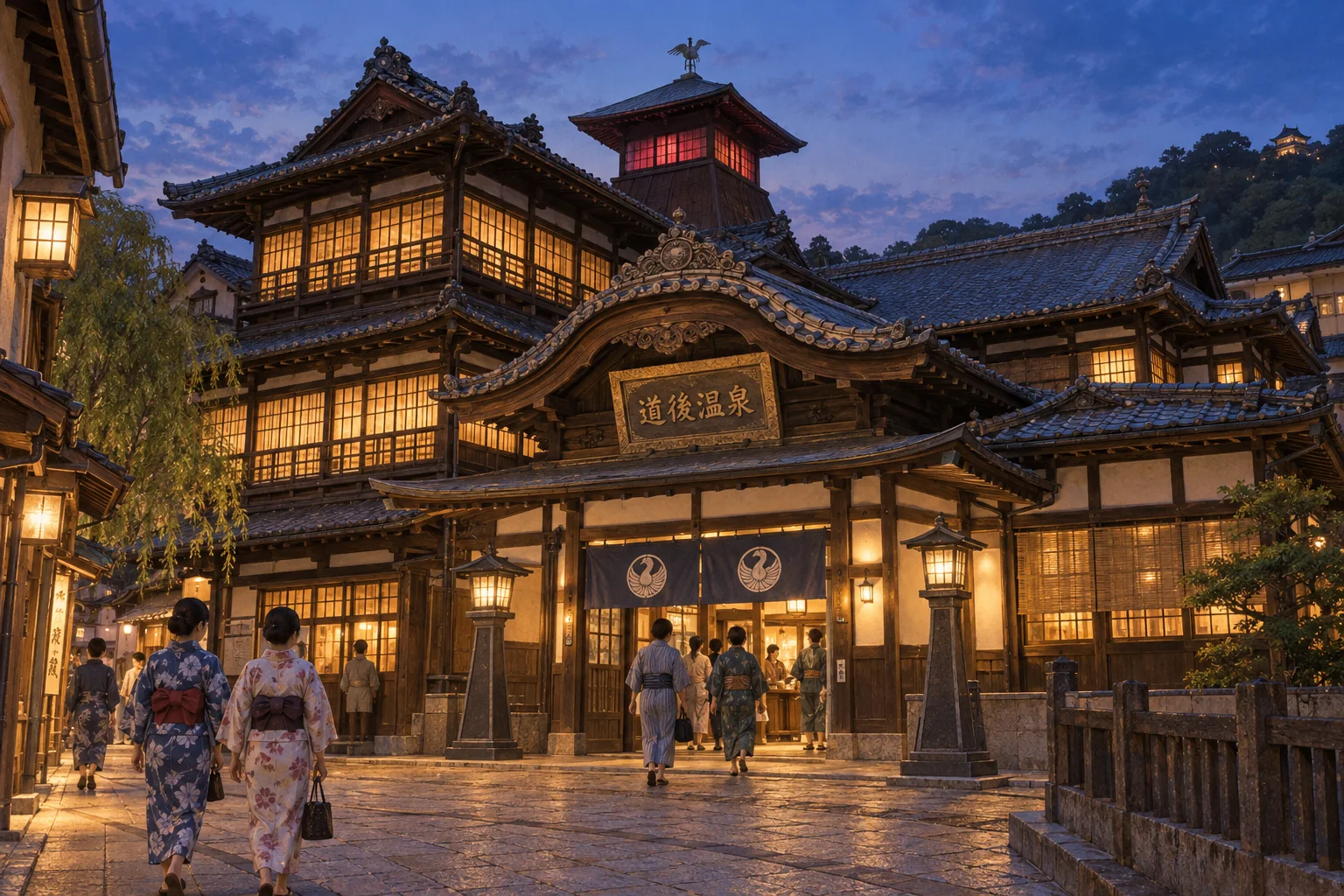
one of Japan's oldest hot springs, and its wooden bathhouse
1894年の木造の公衆浴場が、いまも現役で営業している。
一言で言うと
これだけ覚えれば最低限伝わる一文
Dogo onsen is a Matsuyama hot spring with over a thousand years of written history and an 1894 wooden bathhouse.
道後温泉とは、千年以上前の文献に現れ、1894年に建った木造の浴場をもつ松山の温泉です。
30秒で説明する
外国人に説明するときの標準サイズ
Dogo appears in some of Japan's oldest written records, which is why it is usually described as one of the country's oldest hot springs. Its landmark is the main bathhouse, a three-story wooden building completed in 1894 and still operating as a public bath, with a room reserved for imperial visits. The novelist Natsume Soseki used it in his novel Botchan, and the town has traded on that ever since.
道後は日本の最も古い文献のいくつかに現れます。日本最古級の温泉とされるのはそのためです。町の顔は本館で、1894年に完成した三階建ての木造建築。いまも公衆浴場として営業しており、皇室のための部屋も残ります。夏目漱石が小説『坊っちゃん』に書き、町はそれ以来この縁で知られています。
スピーチ・英作文
通訳案内士の二次口述・大学入試の自由英作文に
Dogo Onsen in Matsuyama is usually introduced as one of the oldest hot springs in Japan, and the basis for that is documentary: it appears in some of the country's earliest surviving writings, so people have been bathing here for well over a thousand years. What you actually go to see, though, is a building from 1894.
The main bathhouse is a three-story wooden structure with a white heron on the roof — the bird that, in the local legend, was healed by the water. It is not a museum. You pay at the entrance, take off your shoes, and get into a public bath that the town has used continuously since the Meiji period, and depending on the ticket you can rent a room upstairs, put on a yukata and have tea afterward.
There is also a room built for imperial visits, which can be viewed. Natsume Soseki taught in Matsuyama and put the bathhouse into his novel Botchan, so the town names everything after it, including a small replica steam train.
松山の道後温泉は、日本最古級の温泉として紹介されます。その根拠は文献です。現存する日本最古級の書物のいくつかに名が出てくるので、千年以上前から人が入っていたことになります。ただ、実際に見に行くのは1894年の建物です。
本館は三階建ての木造で、屋根には白鷺がのっています。この地の伝説で、湯に浸かって傷を癒したとされる鳥です。博物館ではありません。入口で料金を払い、靴を脱ぎ、明治から途切れずに町が使い続けてきた公衆浴場に入ります。
券によっては二階や三階の部屋を借り、浴衣に着替えて、湯上がりに茶を飲むこともできます。皇室のために造られた部屋もあり、見学できます。夏目漱石は松山で教え、この浴場を『坊っちゃん』に書きました。町はそれにちなんだ名前をあちこちに付けており、蒸気機関車を模した小さな列車まであります。
こう聞かれたら
外国人から実際にされる質問と、その答え方。
Is it really the oldest?
本当に日本最古なのですか。
It is one of the oldest with a written record, which is the careful way to say it. Several other springs make similar claims, and there is no way to settle it.
文献に残るものとしては最古級、というのが丁寧な言い方です。同じ主張をする温泉はほかにもあり、決着はつきません。
Can anyone use the old building?
あの建物には誰でも入れますか。
Yes, it is an ordinary public bath with an entrance fee. There are several ticket grades; the cheapest gets you the bath, the higher ones add a room and tea.
入れます。料金を払って入るふつうの公衆浴場です。券には何段階かあり、いちばん安いものは入浴のみ、上の券には部屋と茶が付きます。
Do I need to bring anything?
何か持っていく必要はありますか。
A small towel, or buy one there. Soap is not always provided in the cheapest option, and as in any public bath you wash before getting in.
小さなタオルを。現地でも買えます。安い券では石鹸がないこともあります。どの浴場でも同じですが、入る前に体を洗ってください。
誤解されやすい
MYTHThe bathhouse was the model for the one in Spirited Away.
この建物が『千と千尋の神隠し』の湯屋のモデルだ、と言われます。
FACTIt is often named as an inspiration, but the studio has not confirmed any single model, and several buildings are mentioned. Treat it as a story, not a fact.
着想の一つとしてよく挙げられますが、制作側が特定の建物を認めたわけではなく、候補は複数あります。事実ではなく話として扱うのが妥当です。
そのまま使えるフレーズ
- It's one of the oldest hot springs in Japan.日本でも最も古い温泉の一つです。
- The wooden bathhouse was built in 1894.木造の本館は1894年に建ちました。
- It's still an ordinary public bath.いまもふつうの公衆浴場です。
- You can rent a room and have tea afterward.部屋を借りて、湯上がりに茶を飲めます。
- Soseki wrote about it in his novel Botchan.漱石が『坊っちゃん』に書きました。
説明に使う語句
- public bathhouse公衆浴場
- wooden architecture木造建築
- room for imperial visits又新殿
- white heron白鷺
- after the bath湯上がり
動画で見る
YouTube より豆知識
道後温泉本館は1894年(明治27年)の建築で、1994年に国の重要文化財に指定された。公衆浴場として営業を続けながら重要文化財に指定された例として知られる。皇室専用の浴室「又新殿」は1899年に造られた。夏目漱石は1895年に松山中学へ赴任し、その経験が『坊っちゃん』(1906年)の下敷きになっている。傷ついた白鷺が湯で癒えたという伝説が、開湯の由来として語られる。
