2026年10月7日(水)(バックナンバー)
今日の日本文化
長崎くんちと盗難防止とバーコードの日
10月7日は、長崎の秋祭り「長崎くんち」が始まる日です。語呂合わせで「盗難防止の日」、アメリカでバーコードの特許が認められた日にちなむ「バーコードの日」でもあります。龍の踊りから、レジの「ピッ」まで、話題の幅が広い一日です。
今日は何の日
-
1634年とされる長崎くんち(10月7日〜9日)Nagasaki Kunchi festival begins
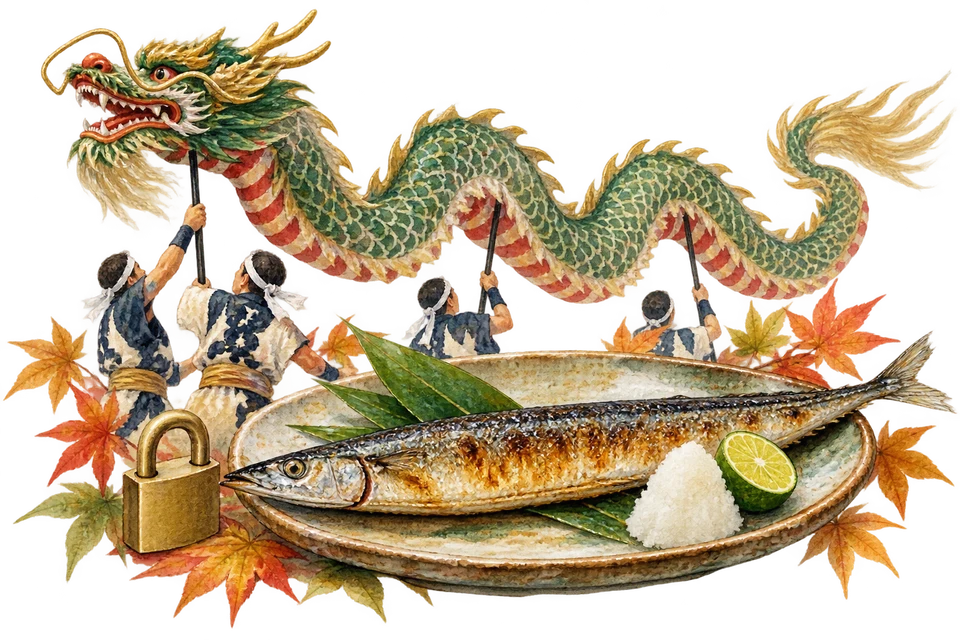
Nagasaki Kunchi is the autumn festival of Suwa Shrine in Nagasaki, held every year from October 7th to 9th. It's said to have started in 1634. Each neighborhood performs only once every seven years, and the shows reflect Nagasaki's long contact with China and Europe, like the famous dragon dance. The performances are an Important Intangible Folk Cultural Property of Japan.
長崎くんちは、長崎の諏訪神社の秋の祭りで、毎年10月7日から9日まで行われます。始まりは1634年とされます。踊りを出す町の当番は7年に一度しか回ってこず、名物の龍踊(じゃおどり)のように、中国やヨーロッパと長く交わってきた長崎らしい演し物が並びます。奉納踊は国の重要無形民俗文化財です。
辞典でくわしく › -
2003年制定盗難防止の日Theft Prevention Day
October 7th can be read as "to-nan," which sounds like the Japanese word for theft. The General Insurance Association of Japan picked this date in 2003. That year, car thefts in Japan hit a peak of more than 64,000. By 2024 the number had dropped to about 6,000, less than a tenth of the peak.
10月7日は「とう(10)なん(7)」と読めることから、日本損害保険協会が2003年にこの日を「盗難防止の日」にしました。その年、日本の自動車盗難は6万4千件を超え、ピークになりました。2024年には約6千件まで減り、ピークの1割を切っています。
-
1952年バーコードの日Barcode Day
On October 7th, 1952, a patent for the barcode was granted in the United States. Today, almost everything you buy at a Japanese supermarket or konbini has one. The code used for products in Japan is called the JAN code, and most of them start with 45 or 49, the numbers assigned to Japan.
1952年10月7日、アメリカでバーコードの特許が認められました。いまでは、日本のスーパーやコンビニで買うものの、ほとんどにバーコードがついています。日本の商品に使われるコードは「JANコード」と呼ばれ、多くは日本に割り当てられた「45」か「49」で始まります。
辞典でくわしく ›
今日の三択クイズ
長崎くんちで、踊りを奉納する町(踊町)の当番は、何年に一度回ってくる?
正解は7年に一度です。長崎市内の踊町は7つの組に分かれ、毎年1組ずつ当番になります。一度出たら次は7年後なので、町の人たちは何年もかけて準備をします。
外国人に聞かれたら
Why is there a Chinese-style dragon dance at a Japanese shrine festival?
なぜ日本の神社のお祭りで、中国風の龍の踊りをするの?
That's Nagasaki for you. For about two hundred years, when Japan limited its contact with the outside world, Nagasaki was one of the few places where Chinese and Dutch traders were allowed to come. Chinese culture became part of local life, and the dragon dance was offered to the local shrine like any other performance. To people in Nagasaki, it doesn't feel foreign at all.
それが長崎らしさなんです。日本が外の世界との行き来を制限していた約200年の間、長崎は中国とオランダの商人が来ることを許された数少ない場所の一つでした。中国の文化が町の暮らしに溶け込み、龍踊も、ほかの演し物と同じように地元の神社に奉納されてきました。長崎の人にとっては、まったく外国のものという感じがしないのです。
今日のひとこと英語
Could you keep an eye on my bag for a second?
ちょっとだけ、かばんを見ていてもらえますか。
「見ていて」を Could you see my bag? と言うと、「かばんが見える?」という意味に取られます。「目を離さずに見張る」は keep an eye on です。日本では席にかばんを置いたまま離れる人もいますが、海外では盗難の心配があるので、この一言が役に立ちます。
今日の一文
October 7th is the first day of Nagasaki Kunchi, a shrine festival that mixes Japanese, Chinese, and European influences. It's also Theft Prevention Day in Japan, and Barcode Day, after a U.S. barcode patent granted in 1952.
10月7日は、日本と中国とヨーロッパの影響が混じり合う神社の祭り「長崎くんち」の初日です。日本の「盗難防止の日」でもあり、1952年にアメリカでバーコードの特許が認められたことにちなむ「バーコードの日」でもあります。
今日の読みもの
今日に関係する項目
- 名所標準 長崎と出島Nagasaki and Dejimathe port that was Japan's only window to Europe, and the second atomic bombing 200年以上、日本が西洋を見ていた窓は、この扇形の小さな島だけだった。
- 年中行事必修 祭りmatsuria local festival 観光イベントではなく、神社の行事。神輿の中には神様が乗っている。
- 神道必修 神輿mikoshithe portable shrine carried through the streets at a festival 担いでいるのは神様の乗り物。わざと揺らすのは、乱暴ではなく作法。
- 現代の暮らし必修 コンビニkonbinithe Japanese convenience store 海外のコンビニとは別の生き物。「役所の窓口が24時間開いている」と言うと伝わる。
- 食べもの必修 焼き魚yakizakanagrilled fish with salt 塩をふって焼くだけ。日本の朝食の中心にある一皿。
- 現代の暮らし標準 交番kobanthe neighborhood police box 道を聞くための警察。日本の治安を説明するとき、この仕組みが効く。