女性の就業じょせいのしゅうぎょう
josei no shugyo
where women's employment in Japan stands
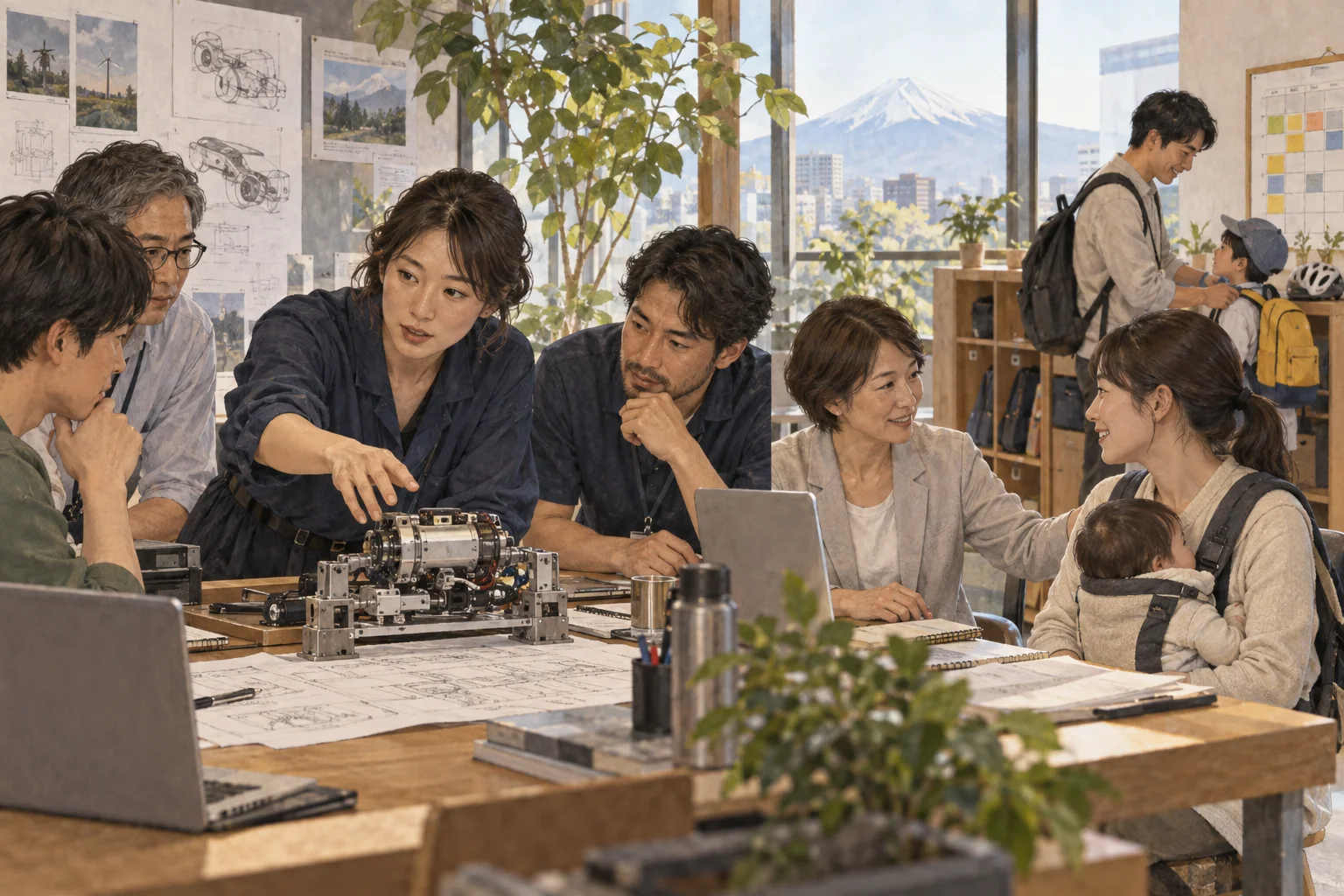
働く女性は増えた。ただし管理職は16パーセント、非正規に移る「L字」が残る。
一言で言うと
これだけ覚えれば最低限伝わる一文
Josei no shugyo, women's employment, is at a record level, yet few reach management and many go non-regular after childbirth.
女性の就業は、かつてなく広がっていますが、管理職は少なく、出産後に非正規へ移る人も多いのが実情です。
30秒で説明する
外国人に説明するときの標準サイズ
The old pattern where women left work to raise children and returned later, drawn as an M-shaped curve, has largely flattened. What replaced it is a different problem: women stay employed but often move from regular to non-regular jobs, a shape called the L-curve. In 2024, women held 16.3 percent of managerial positions, against roughly 30 percent or more in many other countries. Change is happening, but slowly.
女性が育児のために仕事を離れ、のちに戻るという古い型は、M字カーブと呼ばれ、ほぼ解消しつつあります。代わりに現れたのは別の問題です。働き続けはするものの、正規から非正規へ移る人が多く、これはL字カーブと呼ばれます。2024年、管理的な職に就く人に占める女性の割合は16.3パーセントで、多くの国のおおむね30パーセント以上に対して低い水準です。変化は起きていますが、ゆっくりです。
スピーチ・英作文
通訳案内士の二次口述・大学入試の自由英作文に
Japan's picture of women at work has changed in one way and not in another. For decades, a graph of women's employment by age showed an M shape: high in the twenties, a dip in the thirties as women left to raise children, and a rise again later. That dip has largely filled in, and more women are working than ever.
But a second shape has become visible, called the L-curve, drawn from the proportion of women in regular employment: it peaks in the late twenties and then falls, because women who return or continue after childbirth often do so in part-time or contract work with lower pay and less security. At the top the numbers remain low.
Government figures for 2024 put women at 16.3 percent of managerial positions, against roughly thirty percent or more in many comparable countries, and 12.5 percent of board members at listed companies. The causes usually named are long working hours, transfers that assume a spouse at home, and an unequal share of housework and care. Targets have been set and repeatedly pushed back.
日本の働く女性の姿は、ある面では変わり、別の面では変わっていません。何十年ものあいだ、年齢別の女性の就業率のグラフはM字を描いていました。20代で高く、30代で子育てのために離職して下がり、その後また上がる形です。その谷はほぼ埋まり、働く女性はかつてなく増えました。
しかし二つ目の形が見えてきました。L字カーブと呼ばれ、正規雇用に就く女性の割合から描かれます。20代後半で頂点を迎えたあと下がっていくのは、出産後に復帰したり働き続けたりする人の多くが、賃金が低く安定も乏しいパートや契約の仕事に就くからです。上の層の数字は低いままです。
国の統計では2024年、管理的職業従事者に占める女性は16.3パーセントで、比較できる多くの国のおおむね30パーセント以上に対して低く、上場企業の役員では12.5パーセントでした。理由として挙げられるのは、長い労働時間、家に配偶者がいることを前提とした転勤、そして家事と育児の偏った分担です。目標は掲げられ、何度も先送りされてきました。
こう聞かれたら
外国人から実際にされる質問と、その答え方。
What are the M-curve and the L-curve?
M字カーブとL字カーブとは何ですか。
The M-curve is women's employment rate by age, which used to dip in the thirties. It has largely flattened. The L-curve plots the share in regular, as opposed to non-regular, employment: it peaks around the late twenties and falls after, showing that staying employed is not the same as keeping a secure job.
M字カーブは年齢別の女性の就業率で、かつては30代で谷ができました。それはほぼ解消しました。L字カーブは非正規ではなく正規で働く人の割合を示し、20代後半を頂点に下がっていきます。働き続けることと、安定した仕事を保つことは別だと示す形です。
Why are there so few women managers?
どうして女性の管理職がこれほど少ないのですか。
The reasons usually given are structural rather than about ability: promotion tracks that assume long hours and relocation, career breaks that set the seniority clock back, and an unequal division of housework and childcare at home. Companies now report gender pay and promotion data, which has made the gaps visible.
挙げられる理由は能力の話ではなく構造の話です。長時間労働と転勤を前提にした昇進の道筋、年功の時計を巻き戻す離職期間、そして家庭での家事と育児の偏った分担です。企業は男女の賃金や登用の情報を公表するようになり、差が見えるようになりました。
Is paternity leave used?
父親の育児休業は使われているのですか。
Legally both parents can take it, and take-up by men has risen substantially from a very low base, helped by rules requiring companies to ask employees about it. Periods taken are often short, sometimes a few days, so some say the headline rate does not fully show how care is shared.
法律上は両親とも取得でき、男性の取得率はごく低い水準から大きく上がりました。企業に取得の意向を確認させる制度が後押ししています。ただし取得期間は短いことが多く、数日という例もあるため、公表される取得率だけでは実際の分担は十分に分からない、という指摘もあります。
誤解されやすい
MYTHJapanese women stop working when they marry.
日本の女性は結婚すると働くのをやめる、と思われがちです。
FACTMost keep working, and the employment dip in the thirties has largely disappeared; the remaining gap is in the type of job and in promotion, not in whether women work.
多くは働き続け、30代の就業率の谷もほぼ消えました。残っている差は、働くかどうかではなく、仕事の種類と昇進にあります。
そのまま使えるフレーズ
- More women work now than at any time before.働く女性は今がこれまでで最も多いです。
- Only about sixteen percent of managers are women.管理職に占める女性は16パーセントほどです。
- Many move to part-time work after having children.出産後にパートへ移る人が多いです。
- Long hours and transfers make promotion harder.長時間労働と転勤が昇進を難しくしています。
- Men take parental leave, but usually briefly.男性も育休を取りますが、たいてい短期間です。
説明に使う語句
- employment rate就業率
- managerial position管理職
- regular / non-regular正規/非正規
- parental leave育児休業
- gender gap男女の格差
- career break離職期間
動画で見る
YouTube より豆知識
内閣府男女共同参画局の資料によれば、管理的職業従事者に占める女性の割合は令和6(2024)年で16.3パーセントで、諸外国のおおむね30パーセント以上と比べて低い水準にあります。同じ年の上場企業の役員に占める女性の割合は全上場企業で12.5パーセント、東証プライム市場上場企業で15.6パーセントでした。女性の年齢別の就業率が30代で落ち込む「M字カーブ」は解消に向かっていますが、正規雇用比率は25〜29歳の59.7パーセントを頂点に下がる「L字カーブ」が残っていると指摘されています。背景には、長時間労働を前提とした働き方、勤務地を限定しない雇用、家事や育児の分担の偏りが挙げられます。企業には男女の賃金の差の公表が求められるようになり、比較しやすくなりました。
