出産と里帰りしゅっさんとさとがえり
satogaeri shussan
going home to your mother to give birth
出産の前に実家へ帰り、産後しばらくそこで過ごす。夫は残る。
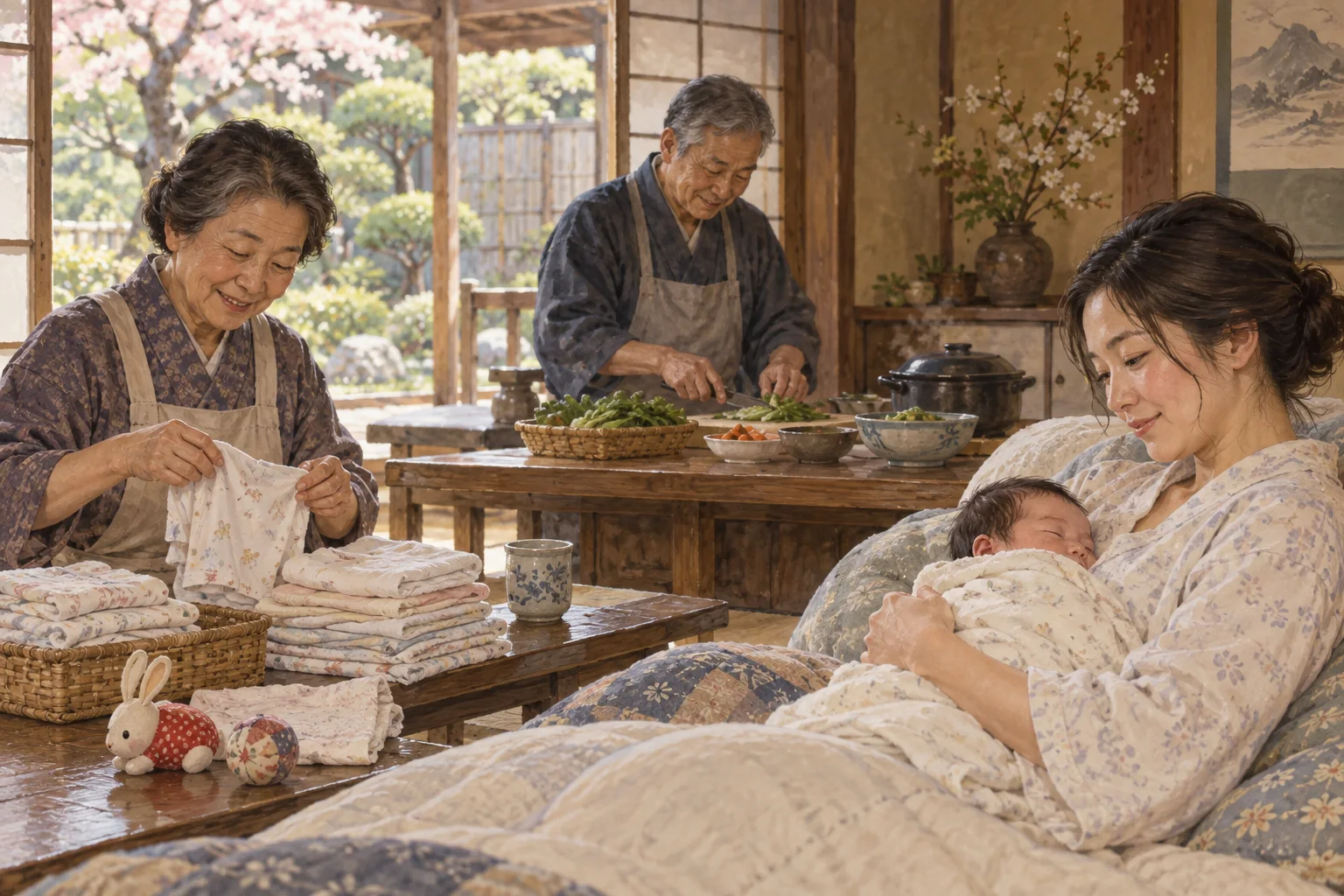
一言で言うと
これだけ覚えれば最低限伝わる一文
Satogaeri shussan means returning to your parents' home to give birth and stay for the first weeks.
里帰り出産とは、出産のために実家に戻り、産後しばらくそこで過ごすことです。
30秒で説明する
外国人に説明するときの標準サイズ
Many Japanese women return to their parents' home about a month before the due date, give birth at a hospital there, and stay for a month or two afterwards with their mother's help. The husband usually stays where they live and visits. The practice is common but declining as parents age and work patterns change.
日本では、予定日のひと月ほど前に実家へ戻り、そこの病院で出産して、産後一、二か月を母親の手を借りて過ごす女性が多くいます。夫はふだんの住まいに残り、訪ねてきます。よく行われている一方で、親の高齢化や働き方の変化とともに減りつつあります。
スピーチ・英作文
通訳案内士の二次口述・大学入試の自由英作文に
Satogaeri shussan is the practice of going back to your parents' home to have a baby. A woman typically returns about a month before the due date, registers with a hospital near her parents, gives birth there, and stays for another month or two afterwards while her mother handles cooking, laundry and the household so that she can recover and feed the baby.
The husband normally stays where the couple live and visits at weekends, which means many Japanese fathers are not present for much of the first two months. The logic is old and practical: the postpartum period is treated in Japan as a time for the mother to rest almost completely, and grandparents provide the labor that makes that possible.
It is declining. Parents are older and may be working or caring for their own parents, hospitals near the parents may not accept a patient who has had no prenatal care there, and there is growing argument that the father should be present rather than visiting.
里帰り出産とは、子を産むために実家へ戻る習わしです。ふつうは予定日のひと月ほど前に帰り、実家の近くの病院にかかり、そこで産んで、その後さらに一、二か月とどまります。その間、母親が炊事、洗濯、家のことを引き受け、本人は回復と授乳に専念できます。
夫はふだん二人が住んでいる場所に残り、週末に訪ねます。つまり日本の父親の多くは、最初の二か月の大半をそばにいないことになります。この理屈は古く、そして実際的です。日本では産後は母親がほとんど完全に休む時期として扱われ、祖父母がそれを可能にする働き手になります。
この習慣は減りつつあります。親の側が高齢になり、まだ働いていたり自分の親を介護していたりします。実家近くの病院が、そこで妊婦健診を受けていない人を受け入れないこともあります。そして父親は訪ねる側ではなくそばにいるべきだ、という声も強まっています。
こう聞かれたら
外国人から実際にされる質問と、その答え方。
Can you just turn up at a hospital near your parents?
実家の近くの病院に、そのまま行けばいいのですか。
No. Hospitals require you to register in advance, often by a certain week of pregnancy, and many will not accept a first visit late in the term. Arrangements are usually made several months ahead.
できません。病院は事前の予約を求め、妊娠の一定の週までに受診していることを条件とする場合も多く、後期になってからの初診を受け入れないところも多くあります。手配は数か月前から進めるのがふつうです。
Why does the father not go too?
どうして父親は一緒に行かないのですか。
Usually work, since parental leave for fathers is short if taken at all and the parents' home may be far away. Some fathers now take the newer short leave around the birth specifically so that they can be there.
たいていは仕事のためです。父親の育児休業は、取ったとしても短いことが多く、実家が遠い場合もあります。近年は、そばにいるために出生の前後に取れる新しい短い休業を使う父親も出てきました。
そのまま使えるフレーズ
- She's gone back to her parents to give birth.里帰り出産で実家に帰っています。
- She'll stay for about two months.二か月ほど滞在します。
- You have to register with the hospital early.病院には早めに予約が要ります。
- Her mother handles the household.家のことは母親がやってくれます。
説明に使う語句
- to give birth出産する
- parents' home実家
- postpartum period産後
- prenatal check-up妊婦健診
動画で見る
YouTube より豆知識
産後の一か月ほどを休養にあてる考え方は「床上げ」という言葉に残っています。母子健康手帳は妊娠の届け出によって市区町村から交付され、健診や予防接種の記録に使われます。里帰り先で健診を受ける場合、費用の助成は住民票のある自治体との間で後から精算する仕組みがあります。産後の家事や育児を支援する産後ケア事業を設ける自治体も増えました。夫が育児休業を取って自宅で過ごす形を選ぶ家庭も出てきています。
