登校班とうこうはん
tokohan
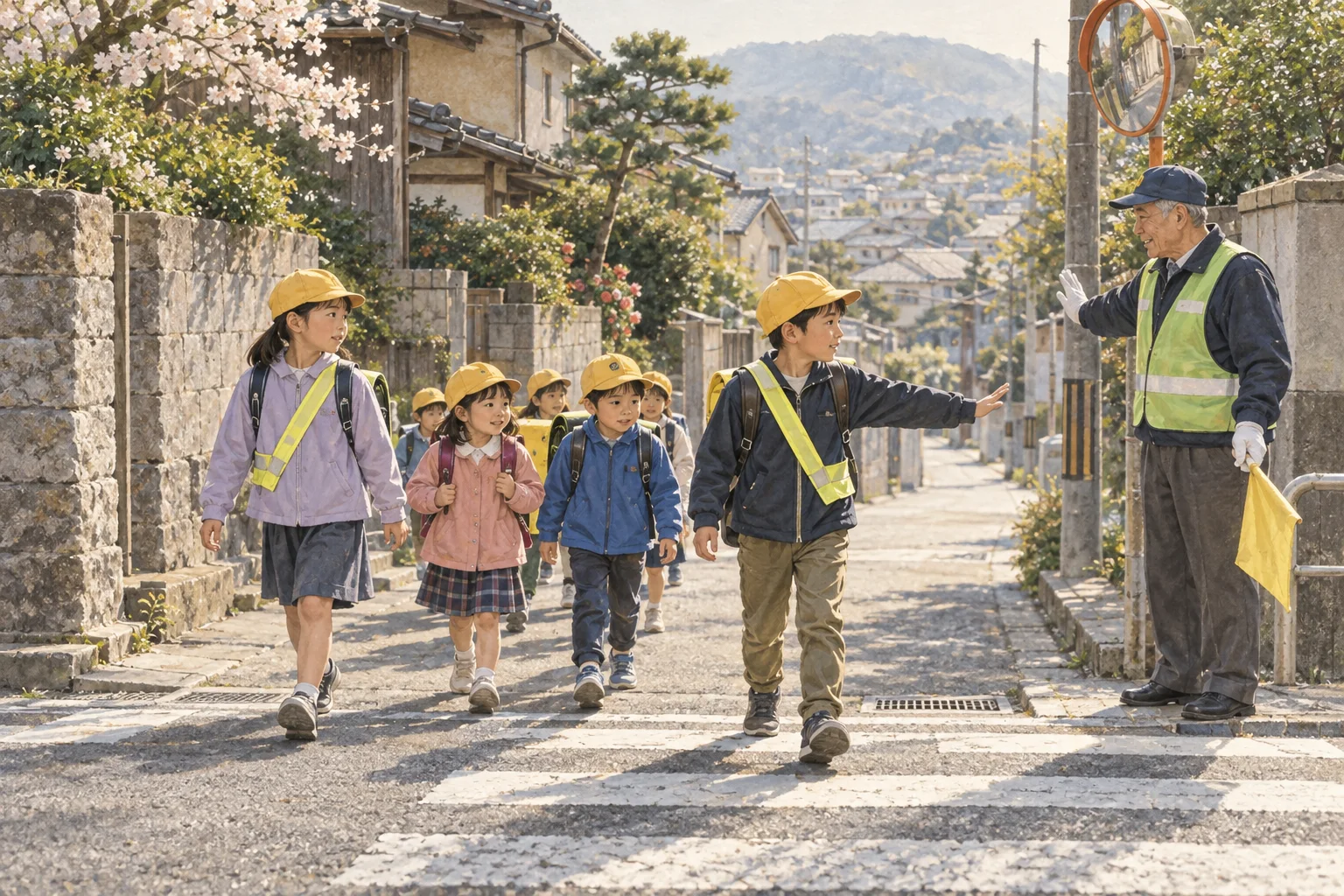
children walking to school in groups
小学生だけで通学する。上級生が先頭と最後尾につく。
一言で言うと
これだけ覚えれば最低限伝わる一文
In many areas, Japanese primary school children walk to school in groups, without adults, led by older pupils.
多くの地域で、日本の小学生は大人の付き添いなしで、上級生が引率する班を組んで歩いて通学します。
30秒で説明する
外国人に説明するときの標準サイズ
In most of Japan, primary school children walk to school themselves, often in a neighborhood group with a sixth-grader at the front and another at the back. Parents take turns standing at crossings, and shops and homes along the route display stickers marking them as places a child can run to for help.
日本の多くの地域で、小学生は自分で歩いて通学します。近所ごとに班を組み、六年生が先頭と最後尾につくことが多くあります。保護者は交代で交差点に立ち、通学路沿いの店や家には、子どもが助けを求めて駆け込める場所であることを示す札が貼られています。
スピーチ・英作文
通訳案内士の二次口述・大学入試の自由英作文に
One of the first things visitors notice in a Japanese residential area at eight in the morning is a line of small children, often in yellow hats, walking to school with no adult in sight. Most primary schools have a designated catchment and children walk, often in a group formed by neighborhood, with a sixth-grader leading and another bringing up the rear.
This is not carelessness. The system is supported by a lot of structure: fixed routes chosen for safety, parent volunteers with flags at crossings, road markings and time-limited traffic restrictions near schools, and stickers in the windows of shops and houses that have agreed to shelter a child in trouble.
Teachers walk the route at the start of the year. Children are also taught from the first week to walk the designated route and to go straight home. The result is that Japanese children gain independence early, and the arrangement depends on a dense, low-traffic residential layout that not every country has.
朝八時の日本の住宅地で、訪れた人がまず気づくものの一つが、黄色い帽子をかぶっていることも多い小さな子どもたちが、大人の姿もなく列になって学校へ歩いていく光景です。多くの小学校には通学の区域が定められており、子どもは歩いて通います。近所ごとに班を組み、六年生が先頭に立ち、別の六年生が最後尾につくことが多くあります。
これは無頓着なのではありません。この仕組みは多くの下支えに支えられています。安全を考えて選ばれた通学路、旗を持って交差点に立つ保護者、学校の近くの路面表示や時間帯の通行規制、そして困った子どもを保護すると約束した店や家の窓に貼られた札です。
年度の初めには教師が通学路を歩きます。子どもも最初の週から、決められた道を通り、まっすぐ帰るよう教えられます。その結果、日本の子どもは早くから自立します。そしてこの仕組みは、どの国にもあるとは限らない、密で車の少ない住宅地の形に支えられています。
こう聞かれたら
外国人から実際にされる質問と、その答え方。
At what age do children start walking alone?
子どもは何歳から一人で通うのですか。
From the first year of primary school, age six. First-years usually walk in a group with older children for the first term at least, and many schools hold a walking practice in the first week.
小学校一年生、六歳からです。一年生は少なくとも最初の学期は上級生と一緒の班で歩き、多くの学校は最初の週に通学路を歩く練習をします。
What are the stickers on shop windows?
店の窓に貼ってあるステッカーは何ですか。
They mark a kodomo 110-ban no ie, a house or shop that has agreed to take in a child who feels threatened and to call the police. The scheme is run with local authorities and police.
子ども110番の家の札です。危険を感じた子どもを受け入れ、警察に通報することを引き受けた家や店を示します。自治体と警察が一緒に進めている取り組みです。
Is it actually safe?
実際に安全なのですか。
Traffic is the main risk rather than crime, which is why so much effort goes into route design and crossings. Incidents do happen and are reported widely, and schools adjust routes when they do.
主な危険は犯罪より交通です。だからこそ通学路の設計と横断の場所にこれだけ手をかけます。事故や事件は起きますし、大きく報じられます。そのたびに学校は通学路を見直します。
誤解されやすい
MYTHJapanese parents let small children travel alone because Japan has no crime.
日本で小さな子が一人で出歩けるのは、犯罪がないからだ、と思われがちです。
FACTIt works because of a system: fixed routes, adult volunteers at crossings, designated safe houses and traffic restrictions near schools. Crime exists, and incidents lead to route changes.
これが成り立つのは仕組みがあるからです。決められた通学路、交差点に立つ大人、駆け込める家の指定、学校周辺の通行規制です。犯罪はありますし、事件が起きれば通学路は見直されます。
そのまま使えるフレーズ
- They walk to school in a group.班を組んで登校します。
- The sixth-graders lead the line.六年生が先頭を歩きます。
- It's my turn with the flag today.今日は旗当番です。
- Please take the designated route.決められた通学路を通ってください。
- That sticker means it's a safe house.あの札は子ども110番の家の印です。
説明に使う語句
- walking group登校班
- designated route to school通学路
- crossing-guard duty旗当番
- yellow school hat黄色い帽子
- designated safe house子ども110番の家
動画で見る
YouTube より豆知識
集団登校は地域や学校によって形が違い、班を組む学校もあれば、各自で登校する学校もあります。一年生には黄色い帽子や黄色いランドセルカバーを使い、車から見えやすくする工夫が広く行われています。子ども110番の家は、地域の店や住宅が協力して札を掲げる取り組みで、全国に広がりました。通学路の安全点検は学校、警察、道路管理者が合同で行うことになっており、事故が起きた場合には点検と改善が求められます。
