奈良公園の鹿ならこうえんのしか
Nara Koen no shika
the wild deer that roam a city park in Nara
飼われていない。野生の鹿が、国の天然記念物として町の中に住んでいる。
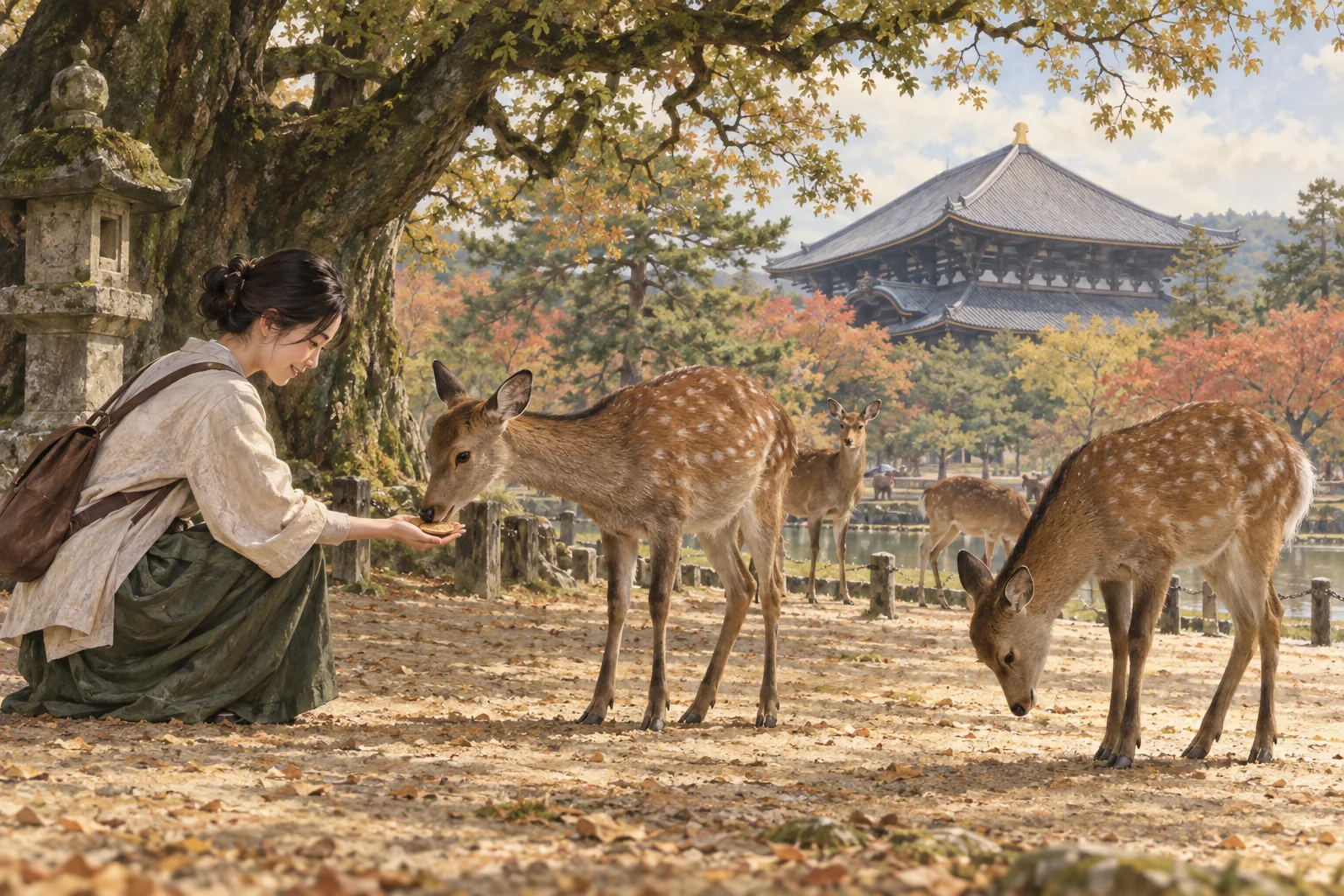
一言で言うと
これだけ覚えれば最低限伝わる一文
Nara Koen no shika, the deer of Nara Park, are wild animals protected as a national natural monument.
奈良公園の鹿とは、国の天然記念物として守られている野生の動物です。
30秒で説明する
外国人に説明するときの標準サイズ
Around Nara Park, deer walk freely among visitors, cross roads and sleep on the grass. They are not kept, fed or owned by anyone. They are wild sika deer, designated a national natural monument, and a foundation looks after their welfare rather than raising them. You can buy crackers made for them, but nothing else should be fed to them.
奈良公園のあたりでは、鹿が人のあいだを歩き、道路を渡り、芝で寝ています。飼われても、養われても、誰かの所有物でもありません。野生のニホンジカで、国の天然記念物に指定されており、財団が飼育ではなく保護にあたっています。専用の鹿せんべいは売っていますが、それ以外のものを与えてはいけません。
スピーチ・英作文
通訳案内士の二次口述・大学入試の自由英作文に
In Nara, deer wander around a city park in the middle of town, and visitors are often surprised at how close they get. The key thing to understand is that these are wild animals, not a zoo. They are protected as a national natural monument, and a foundation looks after injured ones, but nobody owns or feeds them as a herd.
The reason they are here is religious: the deity of Kasuga Shrine is said to have arrived riding a white deer, so for centuries killing one was a serious offense. A 2025 survey counted 1,465 deer, the highest number recorded. Two practical warnings. First, feed them only the crackers sold for the purpose, and nothing else; plastic and paper kill deer every year, so do not let a wrapper or a map get taken.
Second, they are stronger than they look. Males in the autumn rut can be dangerous and have their antlers sawn off each October for that reason, and any deer that thinks you are hiding food may push or nip. If you hold a cracker above your head, expect to be surrounded.
奈良では、町なかの公園を鹿が歩いていて、その近さに驚かれる方が多いです。大事なのは、これが動物園ではなく野生の動物だということです。国の天然記念物として守られ、けがをした個体は財団が保護しますが、群れとして誰かが飼っているわけでも餌を与えているわけでもありません。
ここにいる理由は信仰です。春日大社の神が白い鹿に乗って来たとされ、何百年ものあいだ、鹿を殺すことは重い罪とされてきました。2025年の調査では1465頭が確認され、記録のなかで最多でした。実用の注意を二つ。まず、与えてよいのは専用の鹿せんべいだけで、他は与えないでください。
毎年、ビニールや紙で鹿が死んでいます。包み紙や地図を取られないように。次に、見た目より力が強いです。秋の発情期の雄は危険で、そのため毎年10月に角を切ります。餌を隠していると思われれば、押されたり噛まれたりします。せんべいを頭の上に持ち上げれば、囲まれると思ってください。
こう聞かれたら
外国人から実際にされる質問と、その答え方。
Do they really bow?
鹿は本当にお辞儀をするのですか。
They lower their heads at people holding crackers, and it looks like a bow. It is learned behavior aimed at getting food, not politeness, and the same motion is how a deer threatens with its head.
せんべいを持った人に頭を下げるので、お辞儀のように見えます。餌をもらうために覚えた行動で、礼儀ではありません。同じ動きは、頭で威嚇するときのものでもあります。
Is it safe for children?
子どもでも安全ですか。
Mostly, but keep children from holding crackers above their heads or running. The deer will follow food, and a shove from an adult male is enough to knock a child over. Injuries are reported every year.
おおむね大丈夫ですが、子どもがせんべいを頭の上に持ったり走ったりしないようにしてください。鹿は餌を追いますし、大きな雄に押されれば子どもは倒れます。けがは毎年報告されています。
Why are their antlers cut?
どうして角を切るのですか。
Males are dangerous during the autumn rut, so the antlers are sawn off in an event held each October. It does not hurt the deer, since the antlers are dead bone by then, and they regrow the following year.
秋の発情期の雄が危ないので、毎年10月の行事で角を切ります。そのころ角は骨になっていて痛みはなく、翌年また生えてきます。
誤解されやすい
MYTHThe deer are tame animals kept by the park.
鹿は公園が飼っている慣れた動物だと思われがちです。
FACTThey are wild, unowned and protected as a national natural monument. Nobody raises them, and they can injure people, especially males in autumn.
野生で、誰の所有物でもなく、国の天然記念物として守られています。育てている人はいませんし、特に秋の雄は人にけがをさせることがあります。
そのまま使えるフレーズ
- They're wild animals, not park pets.飼われているのではなく、野生の動物です。
- Only feed them the crackers sold for it — nothing else.与えてよいのは専用の鹿せんべいだけです。
- Don't let them take your map or a wrapper. Paper kills them.地図や包み紙を取られないでください。紙で死んでしまうので。
- If you hold food up, you'll be surrounded.食べ物を持ち上げると、囲まれます。
- The males have their antlers cut in October because the rut makes them dangerous.秋は雄が危ないので、10月に角を切ります。
説明に使う語句
- wild野生の
- natural monument天然記念物
- antler角
- rutting season発情期
- deer cracker鹿せんべい
動画で見る
YouTube より豆知識
奈良公園一帯のシカは野生で、国の天然記念物に指定されている。春日大社の祭神が白鹿に乗って来たという伝承から神の使いとされ、長く保護されてきた。一般財団法人奈良の鹿愛護会が毎年7月に生息調査を行っており、2025年の調査では前年より140頭多い1465頭が確認され、記録上最多となった。増加の要因として、観光客の増加で鹿せんべいを食べる機会が増え、栄養状態がよくなったことが挙げられている。鹿せんべいは米ぬかと小麦粉で作られ、鹿に害のないよう作られている。雄鹿の角は毎年10月の「鹿の角きり」で切られる。
