天ぷらてんぷら
tempura
lightly battered deep-fried seafood and vegetables
日本料理の代表格だが、ポルトガル由来。「和食=昔からあるもの」ではない例。
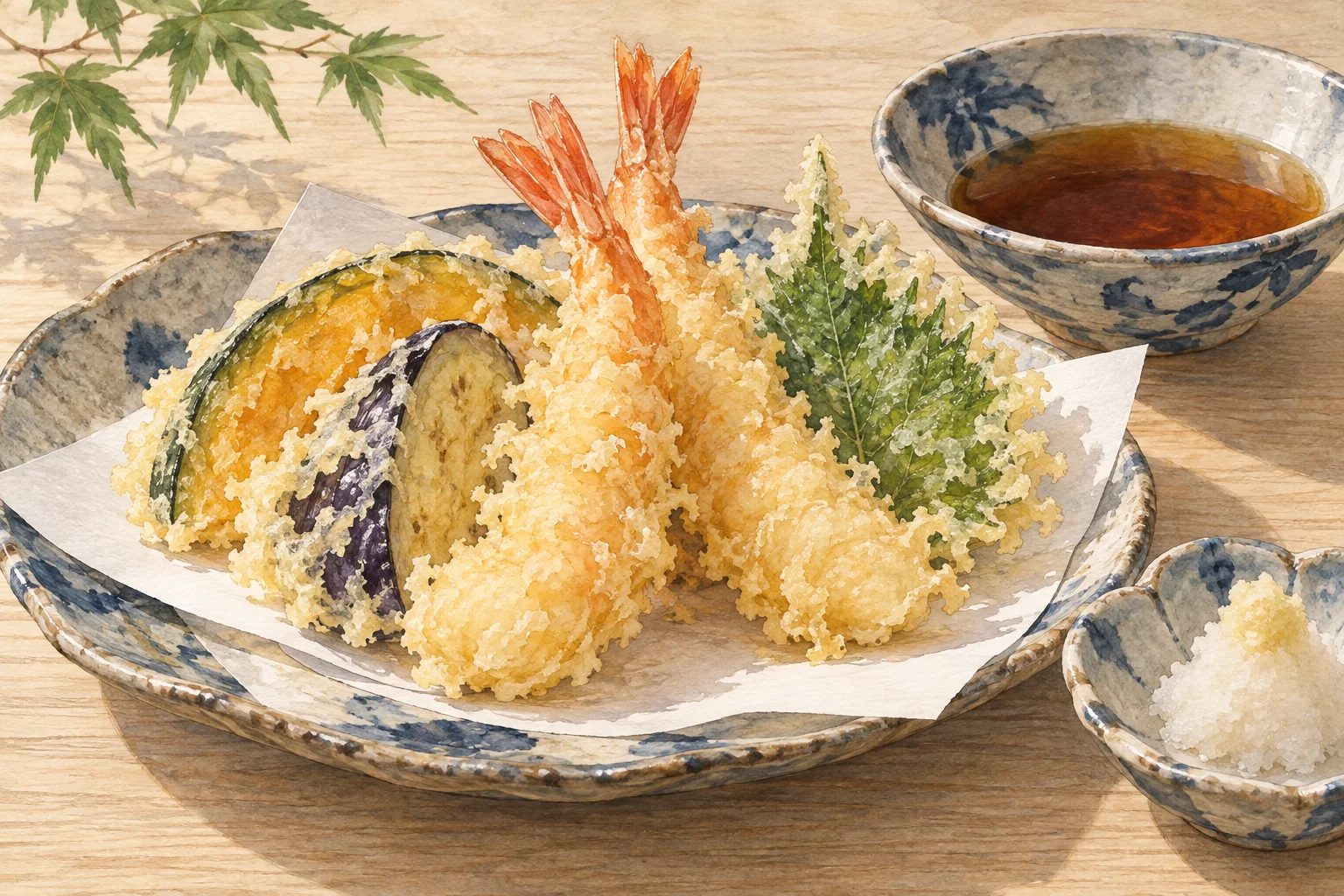
一言で言うと
これだけ覚えれば最低限伝わる一文
Tempura is seafood and vegetables fried in a thin, light batter, and it is generally said to have come from Portugal.
天ぷらは、魚介や野菜を薄く軽い衣で揚げたもので、もとはポルトガルから伝わったとされます。
30秒で説明する
外国人に説明するときの標準サイズ
Tempura is made by dipping shrimp, fish or vegetables in a batter of flour, egg and very cold water, then frying them briefly in hot oil. Done properly the coating is thin and dry, not heavy. It is eaten with grated daikon in a dipping sauce, or with salt. The technique is generally said to have arrived with the Portuguese in the sixteenth century.
天ぷらは、えび・魚・野菜を、小麦粉と卵と非常に冷たい水の衣にくぐらせ、熱い油で短時間揚げたものです。うまく揚がれば、衣は薄く乾いていて重くありません。大根おろしを入れたつゆか、塩で食べます。この技法は16世紀にポルトガル人とともに伝わったとされます。
スピーチ・英作文
通訳案内士の二次口述・大学入試の自由英作文に
Tempura is one of the foods people name when asked about Japanese cuisine, and it is worth saying that it is not originally Japanese. Deep-frying in batter came to Nagasaki with Portuguese missionaries in the sixteenth century, and the name is often traced to a Latin or Portuguese word connected with religious fasting days, when meat was avoided and fish was eaten instead.
What Japan did was refine it. The batter is made with cold water and barely mixed, so lumps of flour remain and the gluten does not develop; the result is a coating that is thin and dry rather than thick and greasy.
It is fried for a very short time at a high temperature. At a specialist restaurant the chef fries each piece in front of you and puts it directly on your plate, and you eat it immediately, because the whole point is the texture in the first ten seconds.
天ぷらは、日本料理と聞かれて挙げられる食べもののひとつですが、もともと日本のものではない、と言っておく価値があります。衣をつけて揚げる調理は、16世紀にポルトガルの宣教師とともに長崎へ伝わりました。
名前の由来は、肉を断ち魚を食べた宗教上の斎日に関わるラテン語・ポルトガル語の言葉にたどるのが一般的です。日本がしたのは、それを洗練させたことです。衣は冷たい水で、ほとんど混ぜずに作ります。
粉のだまが残り、グルテンが出ないようにするためで、その結果、衣は厚く脂っこくならず、薄く乾いた状態になります。高温で、ごく短時間で揚げます。専門店では、職人が一つずつ目の前で揚げて皿に直接のせ、客はすぐに食べます。最初の十秒の食感がすべてだからです。
こう聞かれたら
外国人から実際にされる質問と、その答え方。
Salt or dipping sauce?
塩ですか、つゆですか。
Both are correct. Salt suits vegetables and delicate white fish; the sauce with grated daikon suits shrimp and richer items. At a counter the chef will often tell you which to use for each piece.
どちらも正解です。塩は野菜や淡白な白身に、大根おろし入りのつゆはえびや味の濃いものに合います。カウンターでは、職人がねたごとに教えてくれることが多いです。
Why is the batter so light?
どうして衣がこんなに軽いのですか。
Because it is made with ice-cold water and stirred as little as possible, which stops gluten forming. Overmixed batter becomes chewy and absorbs oil.
氷水で作り、できるだけ混ぜないからです。混ぜすぎるとグルテンが出て、衣が重くなり油を吸います。
What is kakiage?
かき揚げとは何ですか。
Small pieces of vegetable or seafood bound together with batter and fried as one round patty. It is often served on top of soba or over rice as a bowl.
細かく切った野菜や魚介を衣でまとめ、丸く揚げたもの。そばにのせたり、丼にしたりします。
誤解されやすい
MYTHTempura is an ancient Japanese cooking method.
天ぷらは古くからの日本の調理法だと思われがちです。
FACTBatter-frying arrived with the Portuguese in the sixteenth century. It became Japanese through refinement, not origin, and was street food in Edo before it was fine dining.
衣をつけて揚げる技法は16世紀にポルトガルから伝わりました。起源ではなく洗練によって日本のものになったもので、高級料理になる前は江戸の屋台の食べものでした。
そのまま使えるフレーズ
- Eat it straight away, while the coating is crisp.衣がサクサクのうちに、すぐ召し上がってください。
- Salt for the vegetables, sauce for the shrimp.野菜は塩、えびはつゆで。
- The batter is made with ice-cold water.衣は氷水で作ります。
- It originally came from Portugal.もとはポルトガルから来ました。
- In Edo it was street food.江戸では屋台の食べものでした。
説明に使う語句
- batter衣
- deep-fry揚げる
- crispサクサクした
- dipping sauceつゆ、天つゆ
- grated daikon大根おろし
動画で見る
YouTube より豆知識
天ぷらの語源には諸説あり、ポルトガル語の tempero(調味)、スペイン語やラテン語の tempora(四季の斎日)などが挙げられる。いずれにせよ南蛮由来とされる。江戸時代には屋台で串に刺して立ち食いする庶民の食べもので、火事を恐れて屋内での揚げ物が規制されていたことも屋台化の一因だったとされる。徳川家康が鯛の天ぷらを食べて体調を崩したという逸話が知られるが、死因との因果は確認されていない。関東では魚介をごま油で揚げてつゆで、関西では野菜を揚げて塩で食べることが多かった、という地域差も語られる。天丼、天ぷらそば、天ざるなど、他の料理に組み込まれる形も多い。
