南蛮菓子なんばんがし
nanban-gashi
the sweets the Portuguese brought in the 1500s
カステラも金平糖も、もとはポルトガル語の名前。
一言で言うと
これだけ覚えれば最低限伝わる一文
Nanban-gashi are the sweets that came with Portuguese traders in the sixteenth century and stayed.
南蛮菓子とは、十六世紀にポルトガルの商人とともに伝わり、そのまま残った菓子のことです。
30秒で説明する
外国人に説明するときの標準サイズ
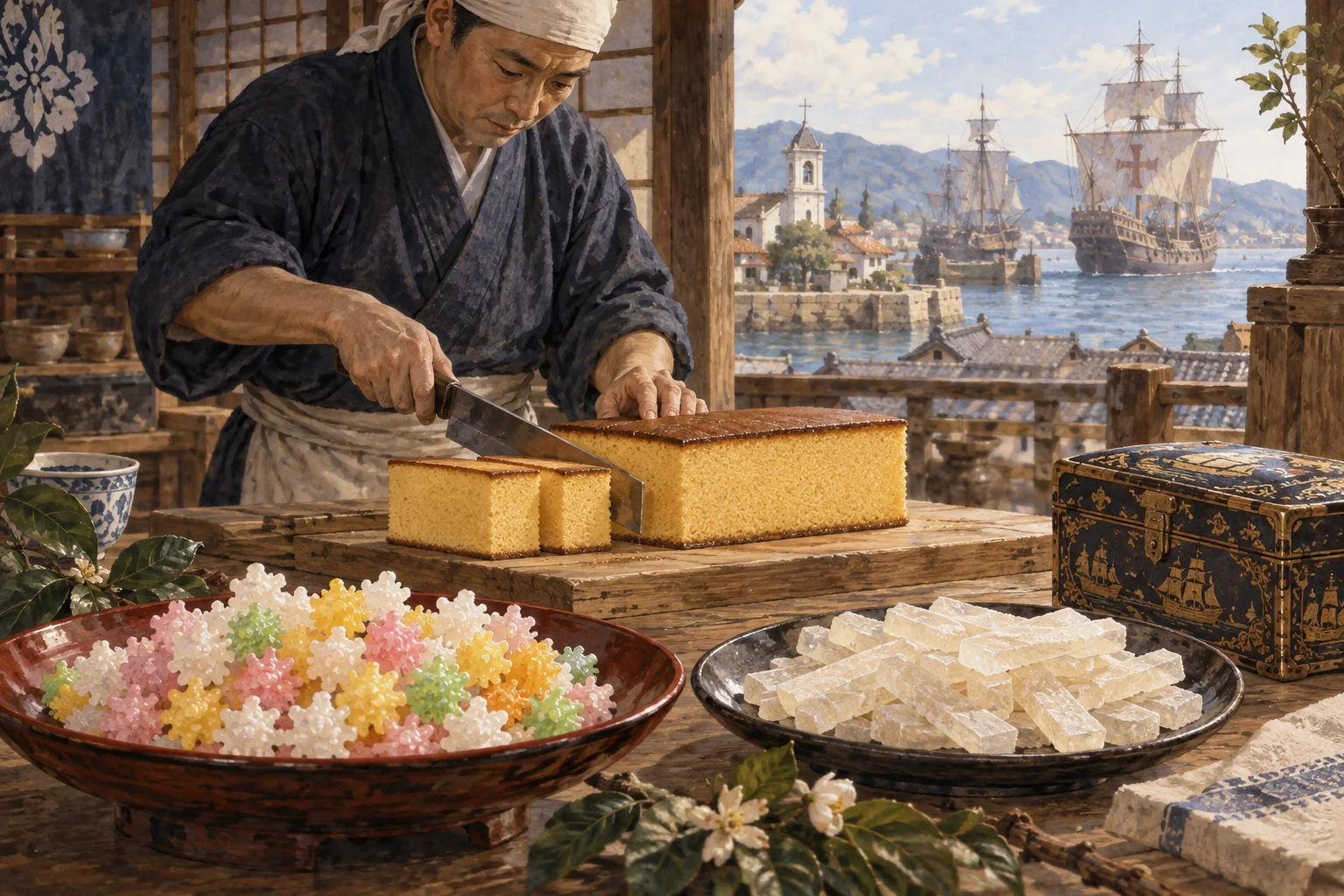
When Portuguese ships reached Japan in the sixteenth century they brought sugar, eggs and recipes. The sweets that came from them are still sold: castella, a tall sponge cake, and konpeito, tiny knobbly sugar stars. Both names are Portuguese in origin, both were luxuries when sugar was rare, and both have been changed enough over four centuries to count as Japanese sweets now.
十六世紀にポルトガルの船が日本に来たとき、砂糖と卵と作り方も一緒に入ってきました。そこから生まれた菓子は今も売られています。背の高いスポンジのカステラと、小さな突起のある砂糖の粒、金平糖です。どちらも名はポルトガル語に由来し、砂糖が貴重だった時代には高価なものでした。四百年のあいだに変わり、今では日本の菓子と呼んでよいものになっています。
スピーチ・英作文
通訳案内士の二次口述・大学入試の自由英作文に
Two of the most Japanese-looking sweets in a Japanese shop are not originally Japanese at all. Castella is a plain, dense sponge cake baked in a wooden frame and sold in a long block, and its name is usually traced to the Portuguese for bread of Castile.
Konpeito is the little colored sugar star, made by rolling a seed grain in syrup for days until the knobs form, and its name comes from the Portuguese word for a sugar confection. Both arrived with the traders and missionaries who reached Japan in the sixteenth century, at a time when sugar had to be imported and eggs were not much used in cooking, so these were rich people's gifts.
Nagasaki became the center for making them and still is. What makes them worth a mention is that neither stayed the same: Japanese castella is moister than its Portuguese ancestor and often has a layer of coarse sugar at the bottom, which is a local invention.
日本の店で見かける、いかにも日本らしい菓子のうち二つは、もとは日本のものではありません。カステラは木枠で焼く目の詰んだスポンジで、長い塊のまま売られます。名はポルトガル語の、カスティーリャのパンに由来するとされます。
金平糖は色のついた小さな星形の砂糖菓子で、芯になる粒を蜜の中で何日も転がし続けると突起ができます。名はポルトガル語の砂糖菓子を指す語から来ています。どちらも、十六世紀に日本に来た商人や宣教師とともに伝わりました。
砂糖は輸入に頼り、卵を料理に使うことも多くなかった時代ですから、裕福な人の贈り物でした。作る中心地は長崎になり、今もそうです。おもしろいのは、どちらもそのままでは残らなかったことです。日本のカステラは元の菓子よりしっとりしており、底にざらめの層があるものも多くあります。これは日本での工夫です。
こう聞かれたら
外国人から実際にされる質問と、その答え方。
Is castella the same as sponge cake?
カステラはスポンジケーキと同じものですか。
Close but not the same. Castella uses no butter and often uses a starch syrup, which makes it moister and denser, and it is baked slowly in a wooden frame. It keeps for longer than a Western sponge for the same reason.
近いけれど同じではありません。カステラはバターを使わず、水飴を使うことが多いため、しっとりして目が詰みます。木枠に入れてゆっくり焼くのも違いです。同じ理由で、洋風のスポンジより日持ちします。
How is konpeito actually made?
金平糖はどうやって作るのですか。
By rotating a seed core in a heated pan while syrup is added drop by drop, for one to two weeks. The knobs form on their own from the way the syrup dries, and nobody shapes them.
温めた釜の中で芯を転がしながら、蜜を少しずつかけていきます。これを一週間から二週間続けます。突起は蜜の乾き方によって自然にできるもので、人が形を作るのではありません。
What else came in at the same time?
同じころ、ほかに何が入ってきたのですか。
Bolo biscuits and a hard candy called aruheito are the other survivors. Tempura is usually put in the same family, from a battered fish dish the Portuguese ate on fast days, though the details of that route are debated.
ボーロと、有平糖という飴が残っています。天ぷらも同じ流れに数えられることが多く、ポルトガル人が肉を断つ日に食べた衣揚げが元とされますが、伝わり方の細部には議論があります。
そのまま使えるフレーズ
- These sweets came from Portugal.この菓子はポルトガルから来ました。
- The name is not Japanese in origin.この名は日本語が語源ではありません。
- There is coarse sugar at the bottom.底にざらめが入っています。
- It can take up to two weeks to make.作るのに二週間ほどかかることもあります。
- Nagasaki is the place for it.本場は長崎です。
説明に使う語句
- sponge cakeカステラ
- sugar candy金平糖
- coarse sugarざらめ
- starch syrup水飴
- a specialty of a place名物
動画で見る
YouTube より豆知識
南蛮菓子は、十六世紀にポルトガル船が日本に来たころに伝わった菓子の総称です。カステラの名はカスティーリャのパンを指すポルトガル語から、金平糖はコンフェイトから来ているとされます。当時の砂糖は輸入品で高価だったため、いずれも贈答や献上の品でした。長崎が製造の中心となり、今も名物です。日本のカステラは水飴を使ってしっとりさせ、底にざらめを沈める作りが定着しました。金平糖は芯に蜜をかけながら釜で転がし続けて作り、突起ができるまで一週間から二週間かかります。
