玄関のたたきげんかんのたたき
tataki
the sunken entryway floor where shoes come off
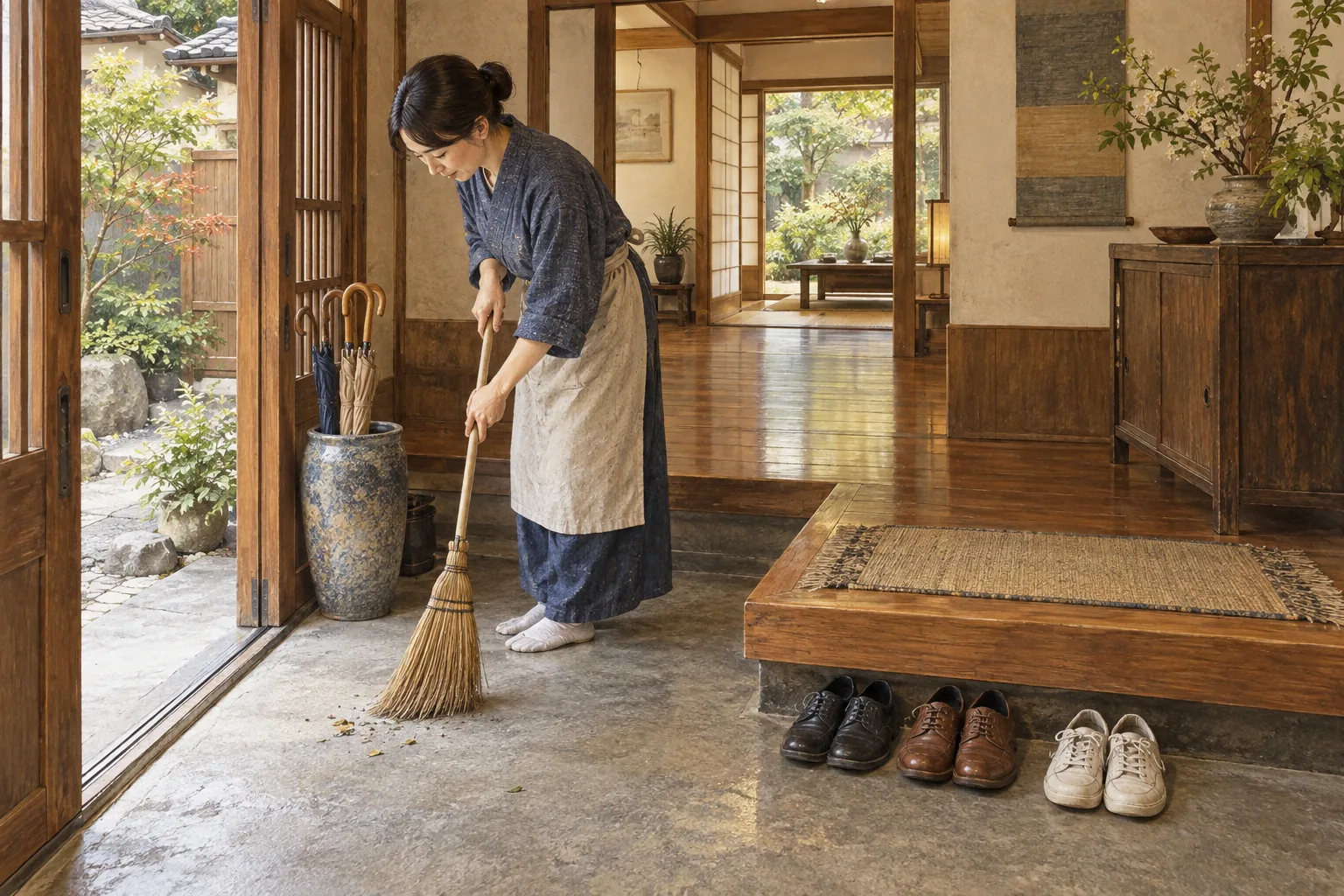
玄関の、靴のまま立てる一段低い場所。土間の名残り。
一言で言うと
これだけ覚えれば最低限伝わる一文
Tataki is the sunken, hard-floored strip inside a Japanese entrance where you keep your shoes on.
たたきとは、玄関の中で靴を履いたまま立てる、一段低くなった硬い床のことです。
30秒で説明する
外国人に説明するときの標準サイズ
Just inside a Japanese front door, before the raised floor of the house proper, there is a small sunken area called the tataki, tiled or concrete rather than carpeted or wooden. It is the only part of the house where outdoor shoes are worn, and the step up marks the boundary between outside and inside, both physically and in manners. The name comes from an old method of hardening earthen floors by pounding, tataku, a mix of clay, lime and sand, though most modern tataki are simply tiled concrete.
日本の玄関ドアを入ってすぐ、家の中の一段高い床の手前に、たたきと呼ばれる一段低い場所があります。タイルやコンクリートでできていて、カーペットや板張りではありません。靴を履いたままでよいのは家の中でここだけで、上がり框という段差が、外と中の境目を物理的にも作法のうえでも示しています。「たたき」という名前は、粘土や石灰、砂を混ぜて叩き固める、昔の土間の仕上げ方に由来し、今のたたきの多くはタイル張りのコンクリートです。
スピーチ・英作文
通訳案内士の二次口述・大学入試の自由英作文に
The moment you step through a Japanese front door, you are still, technically, outside. The small area you land on, the tataki, is a sunken patch of hard flooring, usually tile or concrete, and it is the one part of the house where shoes stay on. A step up, called the agarikamachi, leads to the raised wooden or tatami floor of the house itself, and crossing it without taking your shoes off is one of the more jarring mistakes a visitor can make.
The word tataki literally means "something pounded," from a traditional method of making a hard earthen floor by mixing clay, lime and sand and pounding it flat, a technique that predates concrete by centuries; some old farmhouses and temples still have genuine pounded-earth tataki today. In a modern apartment it is tiny, just big enough to line up shoes, but the logic is identical: a small buffer where the dirt of outside is left behind before stepping up into the clean, sock-only space beyond.
日本の玄関ドアをくぐった瞬間、あなたはまだ厳密には外にいます。足を下ろす小さな場所、たたきは、タイルやコンクリートでできた一段低い硬い床で、家の中で靴を履いたままでよいのはここだけです。上がり框と呼ばれる段差を上がると、家そのものの木の床や畳の床に続きます。
靴を脱がずにこの段差を越えてしまうのは、訪問者がやりがちな、かなり気まずい失敗の一つです。「たたき」は文字どおり「叩いたもの」という意味で、粘土や石灰、砂を混ぜて叩き固め、硬い土の床を作る昔ながらの工法に由来し、コンクリートより何世紀も古い技法です。
古い農家や寺には、今も本物の叩き土間が残っているところがあります。今のマンションのたたきはごく小さく、靴を並べられる程度の広さしかありませんが、考え方は同じです。外の世界の汚れをそこに置いて、その先の、靴下だけで歩く清潔な空間に上がっていく、小さな緩衝地帯なのです。
こう聞かれたら
外国人から実際にされる質問と、その答え方。
So I'm still technically "outside" on the tataki?
たたきの上では、まだ厳密には「外」にいることになるのですか。
Functionally, yes — it's treated as an extension of outdoors, which is why shoes stay on there and come off only once you step up onto the raised floor.
感覚としてはそうです。外の延長として扱われるため、靴を履いたままでよく、脱ぐのは一段上がった床に上がるときです。
Where should I put my shoes once I take them off?
靴を脱いだあと、どこに置けばよいですか。
Turn them around to face the door and set them neatly to one side of the tataki, out of the direct path, rather than leaving them scattered or pointing into the house.
つま先をドアの方に向け直し、たたきの端に、通り道を塞がないようきちんと並べます。散らかしたまま置いたり、家の中に向けたままにしたりはしません。
Why is the word "pounded" used for a floor?
床を表すのに、なぜ「叩く」という言葉が使われるのですか。
Because the original technique literally involved pounding a mixture of clay, lime and sand until it hardened into a durable floor, a method used long before concrete became common in homes.
もともとの工法が、粘土と石灰と砂を混ぜたものを文字どおり叩き固めて硬い床にするものだったからです。家庭にコンクリートが広まるずっと前から使われていた工法です。
そのまま使えるフレーズ
- Please leave your shoes on the tataki.靴はたたきに置いたままにしてください。
- Step up here and take your shoes off.ここで靴を脱いで上がってください。
- Turn your shoes to face the door.靴の向きをドアのほうに直してください。
- The tataki is the only part you can walk on in shoes.靴のまま歩けるのはたたきだけです。
- That step marks the edge of the house.その段差が家の境目です。
説明に使う語句
- entryway floorたたき
- raised floor step上がり框
- earthen floor土間
- entrance玄関
- shoe rack下駄箱
動画で見る
YouTube より豆知識
たたきは玄関の中で一段低くなった硬い床で、家の中で唯一、靴を履いたまま立てる場所である。名は、粘土・石灰・砂を混ぜて叩き固める「三和土(たたき)」という昔の土間の仕上げ方に由来し、コンクリートが普及する前から使われていた工法とされる。古い農家や寺院には、今もこの工法による本物の土間が残っている例がある。たたきと家の床との段差は上がり框と呼ばれ、外と内、靴と靴下の境目として、日本の家の空間を分ける基本的な仕切りになっている。
