昭和レトロしょうわレトロ
Showa retoro
a nostalgia trend for the look and feel of Japan's postwar Showa decades
昭和の「雰囲気」を懐かしむ流行。体験していない世代にも人気がある。
一言で言うと
これだけ覚えれば最低限伝わる一文
Showa retro is a nostalgia trend for the look and feel of Japan's 1950s-80s, popular even among people too young to remember it.
昭和レトロとは、1950〜80年代の昭和の雰囲気を懐かしむ流行で、その時代を知らない世代にも人気があります。
30秒で説明する
外国人に説明するときの標準サイズ
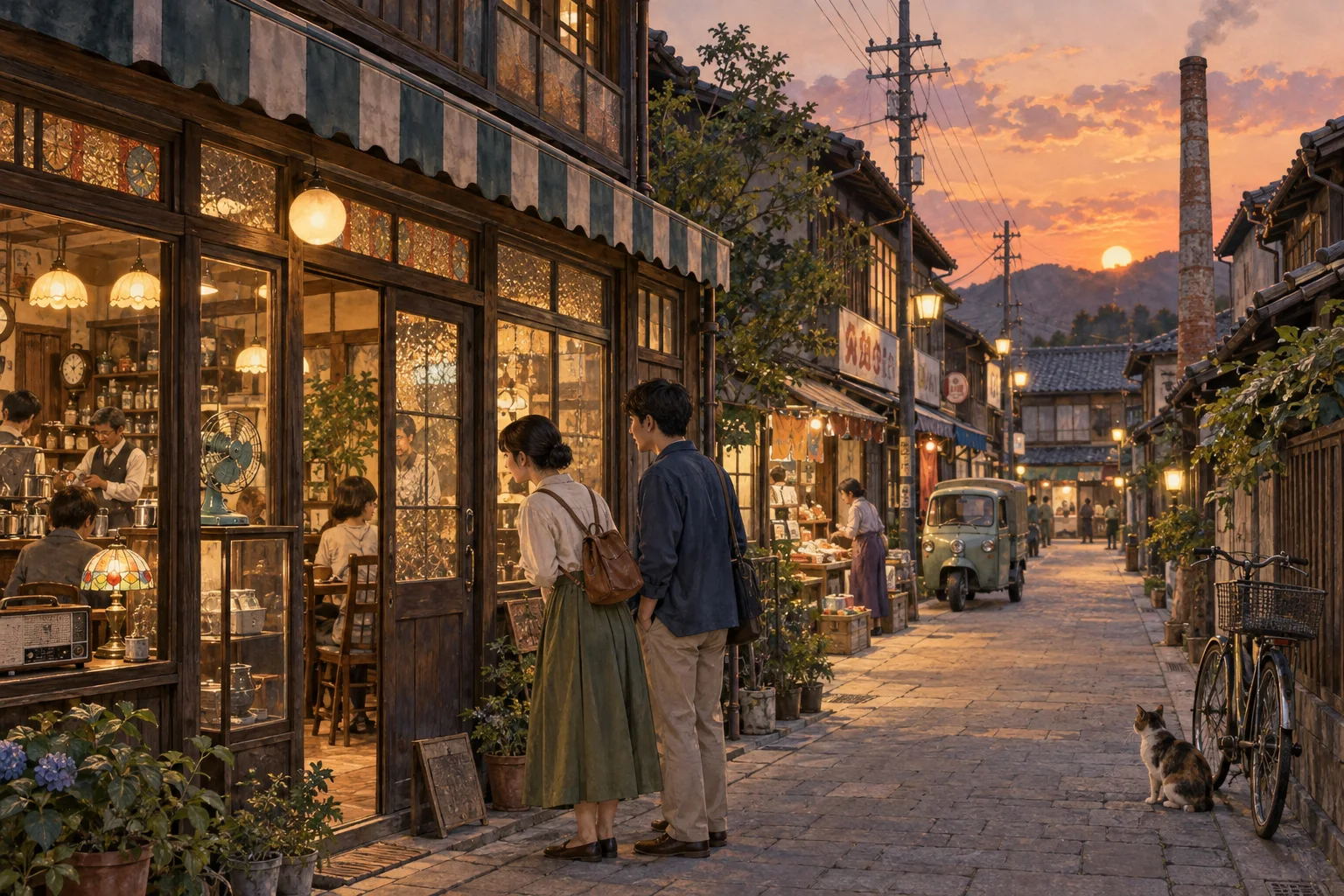
Showa retro is a design and lifestyle trend built around the aesthetic of the Showa era, roughly 1926 to 1989, but really focused on its postwar decades: rotary-dial phones, hand-painted shop signs, dim coffee shops, and rounded, candy-colored plastic goods. What makes it unusual is that much of its audience wasn't alive during that period; young people who grew up with smartphones seek out Showa-retro cafes and vending machines precisely because the look feels unfamiliar and slower rather than personally nostalgic. Old streets and shopping arcades that survived without renovation have become attractions for that reason, marketed as living museums of an era most visitors only know from photos.
昭和レトロとは、昭和時代、おおよそ1926年から1989年、なかでも戦後の数十年間の雰囲気を中心にした、デザインと暮らしの流行です。ダイヤル式の電話、手描きの看板、薄暗い喫茶店、丸みを帯びたカラフルなプラスチック製品などが特徴です。特異なのは、そのファン層の多くがその時代を生きていないことです。スマートフォンとともに育った若い世代が昭和レトロな喫茶店や自動販売機を求めるのは、まさにその見た目が個人的な懐かしさというより、見慣れなくてゆったりして感じられるからです。改装されずに残った通りや商店街まるごとが、まさにそのために観光の目玉になり、たいていの来訪者が写真でしか知らない時代を生きたまま伝える博物館のように売り出されています。
スピーチ・英作文
通訳案内士の二次口述・大学入試の自由英作文に
It sounds like a contradiction, but a lot of the people driving the Showa retro trend in Japan today were born decades after the Showa era ended in 1989. The aesthetic centers on the postwar decades: rotary-dial telephones, hand-painted shop signage, smoky coffee shops with thick ceramic cups, neon signs, and chunky, rounded plastic goods in mismatched pastel colors. For people who actually lived through that period, it can read as genuine nostalgia, but for younger generations who grew up entirely with smartphones and convenience stores, the appeal seems to work almost in reverse: the era feels foreign, slower and oddly comforting precisely because it's unfamiliar rather than remembered.
Old shopping arcades and shitamachi neighborhoods that were simply never renovated have suddenly become popular destinations for exactly this reason, and businesses have caught on, deliberately building new cafes and shops designed to look decades older than they are. It's a rare case where an entire visual era gets marketed as an aesthetic almost independent of the history behind it.
矛盾しているように聞こえますが、今の日本で昭和レトロの流行を支えている人の多くは、昭和が終わった1989年より何十年もあとに生まれています。この美意識の中心は戦後の数十年間で、ダイヤル式の電話、手描きの店の看板、分厚い陶器のカップを使う煙たい喫茶店、ネオンサイン、色のちぐはぐな丸みのあるプラスチック製品などです。
実際にその時代を生きた人にとっては本物の懐かしさとして響くこともありますが、スマートフォンとコンビニに囲まれて育った若い世代にとっては、その魅力はほとんど逆向きに働いているようです。その時代が、覚えているからではなく、見慣れないからこそ、見知らぬもの、ゆったりしたもの、なぜか心地よいものに感じられるのです。
単に改装されずに残っていただけの古い商店街や下町が、まさにそのために急に人気の観光地になり、事業者もこれに気づいて、実際の築年数より何十年も古く見えるよう意図的に新しい喫茶店や店を作るようになっています。歴史的な背景からほとんど切り離された、一つの時代まるごとの見た目が美意識として売り出される、珍しい例です。
こう聞かれたら
外国人から実際にされる質問と、その答え方。
Why would young people who never lived through the Showa era like this style?
昭和時代を経験していない若い世代が、なぜこの様式を好むのですか。
For them it isn't personal nostalgia but a kind of exoticism; the slower pace, warm lighting and analog objects feel novel and calming compared to a life spent mostly around smartphones and convenience stores.
彼らにとってこれは個人的な懐かしさではなく、一種の異国情緒のようなものです。ゆったりしたペース、温かい照明、アナログな物が、スマートフォンとコンビニに囲まれた暮らしに比べて、目新しく落ち着くものに感じられます。
Are these Showa retro cafes and shops actually old?
昭和レトロな喫茶店や店は本当に古い店なのですか。
Some genuinely are, having simply never been renovated, but plenty of others are brand-new businesses deliberately designed and decorated to look decades older, which some purists see as a bit dishonest.
本当に古い店もあり、単に改装されなかっただけですが、実際には何十年も古く見えるよう意図的に設計・装飾された新しい店も多く、これをやや不誠実だと見る根っからの愛好家もいます。
When exactly was the Showa era?
昭和時代とは正確にいつのことですか。
It ran from 1926 to 1989, covering the reign of Emperor Showa, but the Showa retro trend focuses almost entirely on the postwar decades from around the 1950s through the 1980s.
1926年から1989年までの昭和天皇の在位期間ですが、昭和レトロの流行が取り上げるのはほぼ戦後の1950年代から1980年代にかけての数十年間です。
そのまま使えるフレーズ
- This cafe has a really Showa retro feel.この喫茶店、昭和レトロな雰囲気がありますね。
- That shopping arcade was never renovated — it's genuinely old.あの商店街は改装されていないので、本当に古いままです。
- Rotary-dial phones are a classic Showa retro item.ダイヤル式の電話は昭和レトロの定番です。
- A lot of young people love this style now.今は多くの若い人がこの雰囲気を気に入っています。
- This new shop was built to look decades older.この新しい店は何十年も古く見えるように作られています。
説明に使う語句
- Showa era昭和時代
- nostalgia trendレトロブーム
- rotary-dial phoneダイヤル式電話
- old shopping arcade古い商店街
- postwar decades戦後の数十年
動画で見る
YouTube より豆知識
昭和レトロは1926年から1989年までの昭和時代、特に戦後の1950〜80年代の街並みや道具を懐かしむ流行で、その時代を知らない若い世代にも支持が広がっているのが特徴とされる。改装されずに残った商店街や喫茶店が観光名所として注目される一方、意図的に古く見せる内装で新しく開業する店も増えている。昭和という時代区分自体は天皇の在位(一世一元)に基づくが、レトロブームで扱われるのはあくまでその雰囲気であり、時代考証としての正確さを目的にしたものではない。
