蘭学らんがく
rangaku
Dutch learning during the closed country period
鎖国の日本は閉じていたが、窓が一つだけ開いていた。
一言で言うと
これだけ覚えれば最低限伝わる一文
Rangaku was the study of Western science through Dutch books during Japan's closed country period.
蘭学とは、鎖国の時代に、オランダ語の書物を通して西洋の学問を学んだ営みです。
30秒で説明する
外国人に説明するときの標準サイズ
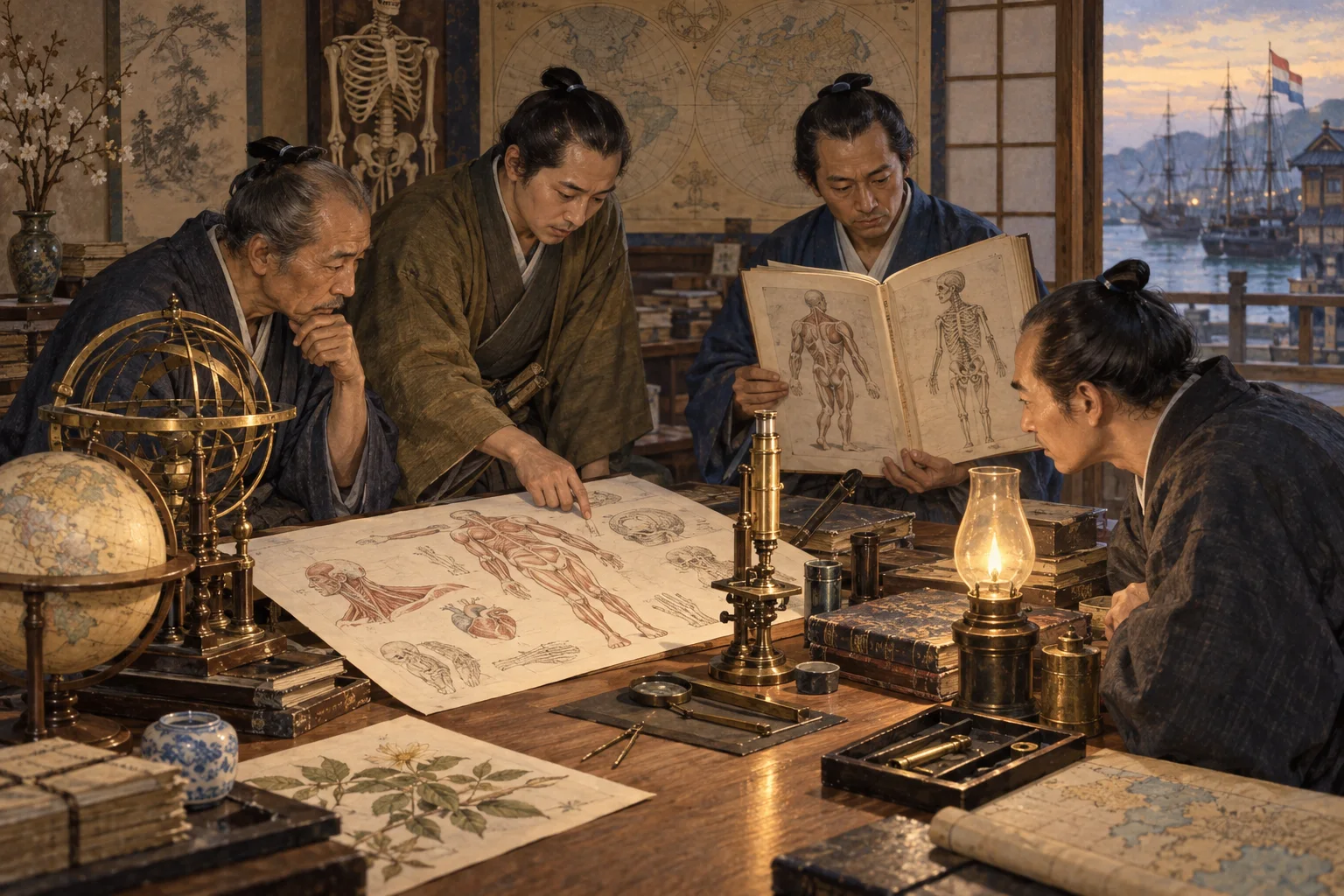
While Japan restricted foreign contact, the Dutch were allowed to trade from a small artificial island at Nagasaki, and their books came in with them. Japanese scholars taught themselves the language and worked through texts on anatomy, astronomy, chemistry and gunnery. This body of study is called rangaku, and it is why Japan was not starting from nothing when the country reopened.
日本が対外関係を制限していたあいだも、オランダは長崎の小さな人工島から貿易を許され、その書物も入ってきました。日本の学者は独学で言語を身につけ、解剖学、天文学、化学、砲術の書を読み解いていきます。この学問を蘭学と呼びます。開国のとき日本がゼロから始めずにすんだのは、これがあったからです。
スピーチ・英作文
通訳案内士の二次口述・大学入試の自由英作文に
The closed country policy is often described as Japan shutting itself off, and that is half right. Trade was restricted to a few controlled channels, and one of them was the Dutch post on Dejima, a fan-shaped artificial island in Nagasaki harbor. Books came in with the ships. From the early eighteenth century, after the shogun relaxed the ban on Western books in Chinese translation, Japanese scholars began working out Dutch with almost no dictionaries.
The famous moment came in 1771, when a group of doctors compared a Dutch anatomy book with a dissection they were watching, saw that the European illustrations were right and the Chinese medical texts they had trusted were wrong, and spent over three years producing a translation, published in 1774.
From there rangaku spread to astronomy, chemistry, geography and artillery, and private academies taught it. Several of the men who built the modern state had studied in them.
鎖国は、日本が外に対して閉じたことだと説明されがちですが、半分しか当たっていません。貿易はいくつかの管理された口に限られ、その一つが長崎湾の扇形の人工島、出島にあったオランダ商館でした。書物は船とともに入ってきます。
十八世紀の初め、将軍が漢訳された西洋書の禁を緩めたあと、日本の学者は、辞書がほとんどない状態からオランダ語を解き始めました。有名なのは1771年の場面です。数人の医師が、オランダ語の解剖書を手に腑分けの場に立ち会い、ヨーロッパの図が正しく、信じてきた中国の医書が誤っていることを目で確かめました。
そして三年余りをかけて訳し、1774年に刊行します。そこから蘭学は天文、化学、地理、砲術へ広がり、私塾がこれを教えました。近代国家を作った人々の何人かは、そうした塾の出身です。
こう聞かれたら
外国人から実際にされる質問と、その答え方。
Why Dutch and not English or Portuguese?
どうしてオランダ語だったのですか。
Because the Dutch were the only Europeans allowed to keep trading after the 1630s. They came to trade rather than to convert, which was what the shogunate objected to, so their post at Nagasaki survived while others were expelled.
1630年代以降、貿易を続けることを許されたヨーロッパの国がオランダだけだったからです。布教ではなく商いに来ていたことが、幕府の懸念に触れませんでした。ほかが退けられるなかで、長崎の商館だけが残ったのです。
How did they learn the language with no dictionary?
辞書もないのに、どうやって語学を身につけたのですか。
Slowly and collectively, from the interpreters at Nagasaki, from word lists built up by hand, and by guessing from illustrations. The translators of the anatomy book described working for days on a single sentence.
時間をかけ、何人もで進めました。長崎の通詞から学び、語のひかえを手作りで積み上げ、図から意味を推し量ります。解剖書を訳した人たちは、一文に何日もかかったと書き残しています。
Did the government approve?
幕府はこれを認めていたのですか。
It varied. Practical knowledge such as medicine, calendars and gunnery was welcomed, but scholars who looked too closely at foreign politics or geography were punished, and a German doctor was expelled in 1829 for trying to take maps out of the country.
時期によります。医学、暦、砲術のような実用の知識は歓迎されましたが、外国の政治や地理に踏み込んだ学者は処罰されました。1829年には、地図を持ち出そうとしたドイツ人の医師が国外に追われています。
誤解されやすい
MYTHJapan knew nothing about the outside world before 1853.
1853年まで、日本は外の世界を何も知らなかった、と思われがちです。
FACTDutch books came in through Nagasaki for two centuries, and scholars translated Western anatomy, astronomy and gunnery. Knowledge was limited and controlled, but it was not absent.
オランダの書物は二百年にわたり長崎から入り、学者は西洋の解剖学、天文学、砲術を訳していました。限られてはいても、知識がなかったわけではありません。
そのまま使えるフレーズ
- Dutch books came in through Nagasaki.オランダの書物は長崎から入りました。
- They learned the language on their own.独学で語学を身につけました。
- The anatomy book was published in 1774.その解剖書は1774年に刊行されました。
- The country was not completely closed.完全に閉じていたわけではありません。
- Private academies taught it.私塾がこれを教えました。
説明に使う語句
- Dutch learning蘭学
- the artificial island at Nagasaki出島
- interpreter通詞
- anatomy解剖学
- private academy私塾
動画で見る
YouTube より豆知識
蘭学は、長崎の出島を通じて入るオランダ語の書物から西洋の学問を学ぶ営みです。1720年ごろ、将軍徳川吉宗が漢訳洋書の輸入制限を緩めたことが広がりの契機とされます。1774年に刊行された解体新書は、杉田玄白や前野良沢らがドイツ人クルムスの解剖書のオランダ語訳を訳したもので、腑分けに立ち会って図の正確さを確かめたことが訳業の出発点になりました。大坂の適塾など私塾も生まれ、幕末の医学と軍事の基礎になります。一方で、地図の持ち出しが問われた1829年のシーボルト事件のように、統制も働きました。
