温泉卵おんせんたまご
onsen tamago
the egg cooked the other way around
白身がとろとろで、黄身が固まっている。ゆで卵とは逆。
一言で言うと
これだけ覚えれば最低限伝わる一文
An onsen tamago is an egg with a set yolk and a runny white, the opposite of a boiled egg.
温泉卵とは、黄身が固まり白身がとろりとした卵で、ゆで卵とは逆の状態です。
30秒で説明する
外国人に説明するときの標準サイズ
An onsen tamago is an egg cooked slowly at around seventy degrees. At that temperature the yolk sets while the white does not, so you get the reverse of a boiled egg. It is named after hot spring water, which naturally sits in that range, and is eaten with a light soy broth poured over it.
温泉卵とは、70度前後でゆっくり火を通した卵です。この温度では黄身が固まり、白身は固まらないため、ゆで卵と逆の状態になります。名は温泉の湯に由来し、その温度帯の湯が自然にあるからです。薄い出汁醤油をかけて食べます。
スピーチ・英作文
通訳案内士の二次口述・大学入試の自由英作文に
An onsen tamago is one of the most elegant pieces of accidental food science in Japan. The yolk and the white of an egg set at different temperatures: the yolk begins to firm up at around sixty-five to seventy degrees, while the white needs roughly eighty degrees to set fully.
If you cook an egg in boiling water both set, and you get a boiled egg. If you hold it at around seventy degrees for half an hour, the yolk sets and the white stays loose, which gives you the reverse.
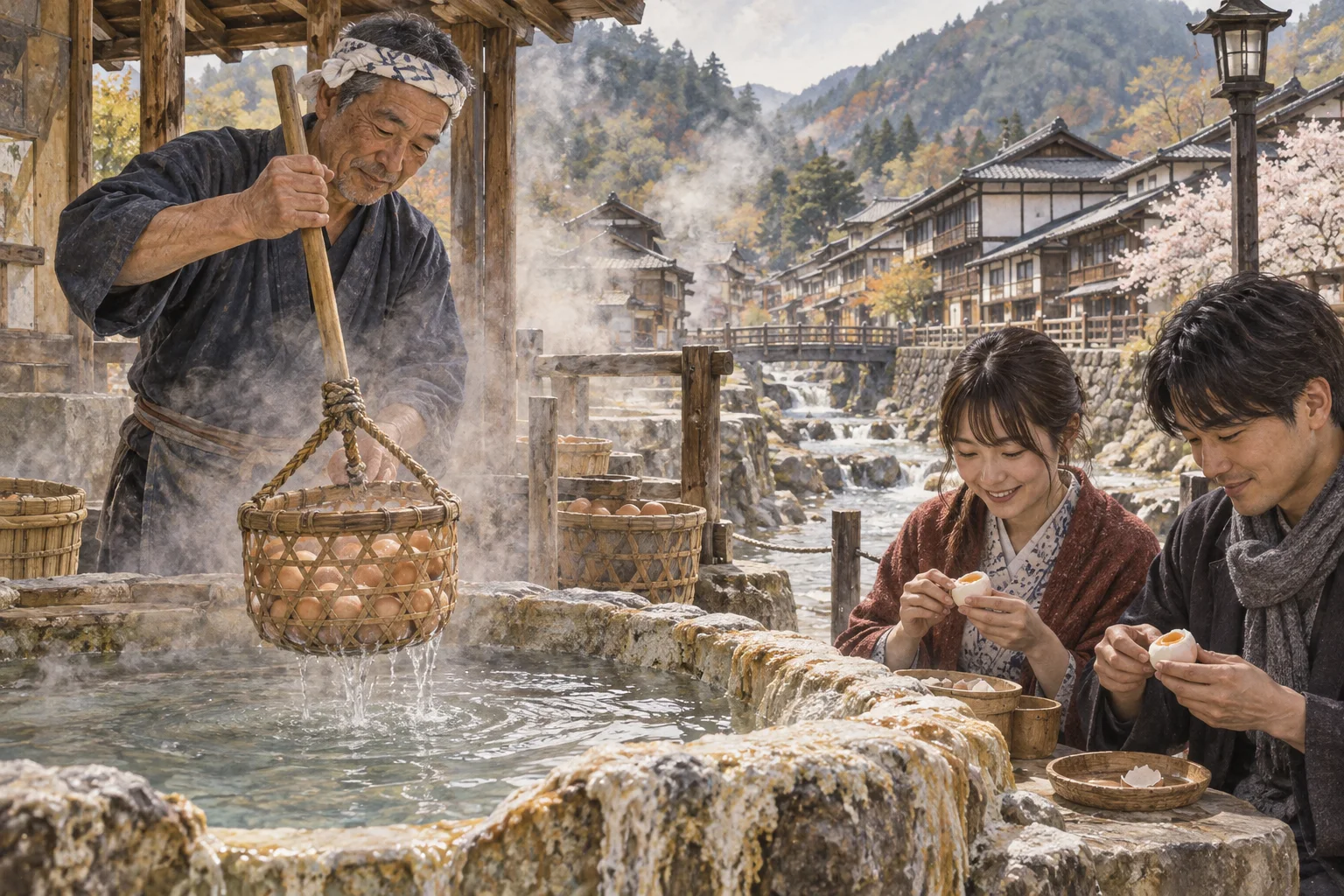
That temperature is exactly what many hot spring sources sit at, so people at hot springs have long made these by lowering a basket of eggs into the water, and shops at hot spring towns still sell them hot. It is served in a small bowl with a light soy and dashi broth poured over, sometimes with spring onion, and is also put on top of rice bowls, curry and noodles.
温泉卵は、日本で偶然に生まれた食の科学として、最も美しいもののひとつです。卵の黄身と白身は、固まる温度が違います。黄身はおよそ65度から70度で固まり始め、白身が完全に固まるにはおよそ80度が要ります。
沸いた湯で煮れば両方が固まり、ゆで卵になります。70度前後で30分ほど保てば、黄身が固まり白身はゆるいまま残り、逆の状態になります。その温度は、多くの温泉の源泉がちょうど持っている温度です。
だから温泉地の人々は昔から、卵を入れた籠を湯に沈めてこれを作ってきましたし、今も温泉街の店は湯気の立つそれを売っています。小さな器に入れ、薄い出汁醤油をかけ、葱を散らして出されます。丼やカレー、麺の上にのせることもあります。
こう聞かれたら
外国人から実際にされる質問と、その答え方。
Why does the yolk set before the white?
どうして白身より先に黄身が固まるのですか。
Because the proteins in each part coagulate at different temperatures. The yolk firms from around sixty-five to seventy degrees, the white needs closer to eighty. Holding the egg between those points sets one and not the other.
それぞれの部分のたんぱく質が固まる温度が違うからです。黄身はおよそ65度から70度で固まり始め、白身は80度近くが要ります。その間の温度で保てば、一方だけが固まります。
How is it different from a hanjuku egg?
半熟卵とはどう違うのですか。
A hanjuku egg is boiled briefly, so the white is fully set and the yolk is runny. An onsen tamago is the opposite. The two words are not interchangeable, though menus abroad often translate both as soft-boiled.
半熟卵は短く茹でたもので、白身が固まり黄身がとろりとしています。温泉卵はその逆です。二つの語は置き換えられませんが、海外の品書きではどちらも soft-boiled と訳されがちです。
Can I buy them ready made?
出来上がったものを買えますか。
Yes, in any supermarket and convenience store, usually in a pack with a sachet of broth. At hot spring towns they are sold hot at stalls, sometimes cooked in the spring itself in front of you.
買えます。どのスーパーやコンビニにもあり、たいていはたれの小袋がついています。温泉街では屋台で温かいものが売られ、目の前の源泉で作っている店もあります。
そのまま使えるフレーズ
- The yolk is set and the white is runny.黄身が固まって白身がとろりとしています。
- It's the opposite of a boiled egg.ゆで卵とは逆です。
- It's cooked at about seventy degrees.70度くらいで火を通します。
- Pour the broth over it.たれをかけて食べます。
説明に使う語句
- egg yolk黄身
- egg white白身
- to set / coagulate固まる
- broth / sauceたれ
動画で見る
YouTube より豆知識
温泉卵は、源泉の温度が70度前後の湯だまりに卵を沈めて作られてきました。温泉街では源泉の湯だまりに籠を下ろす場所が観光の見どころになっていることもあります。同じ温度帯を保てる調理器具があれば家庭でも作れ、炊飯器の保温機能を使う方法も知られています。硫黄泉で作った卵は殻が黒くなることがあり、箱根の大涌谷の黒たまご(こちらは固ゆで)が有名です。牛丼やカレー、うどんにのせる使い方も広く行われています。
