漫才まんざい
manzai
two-person stand-up comedy
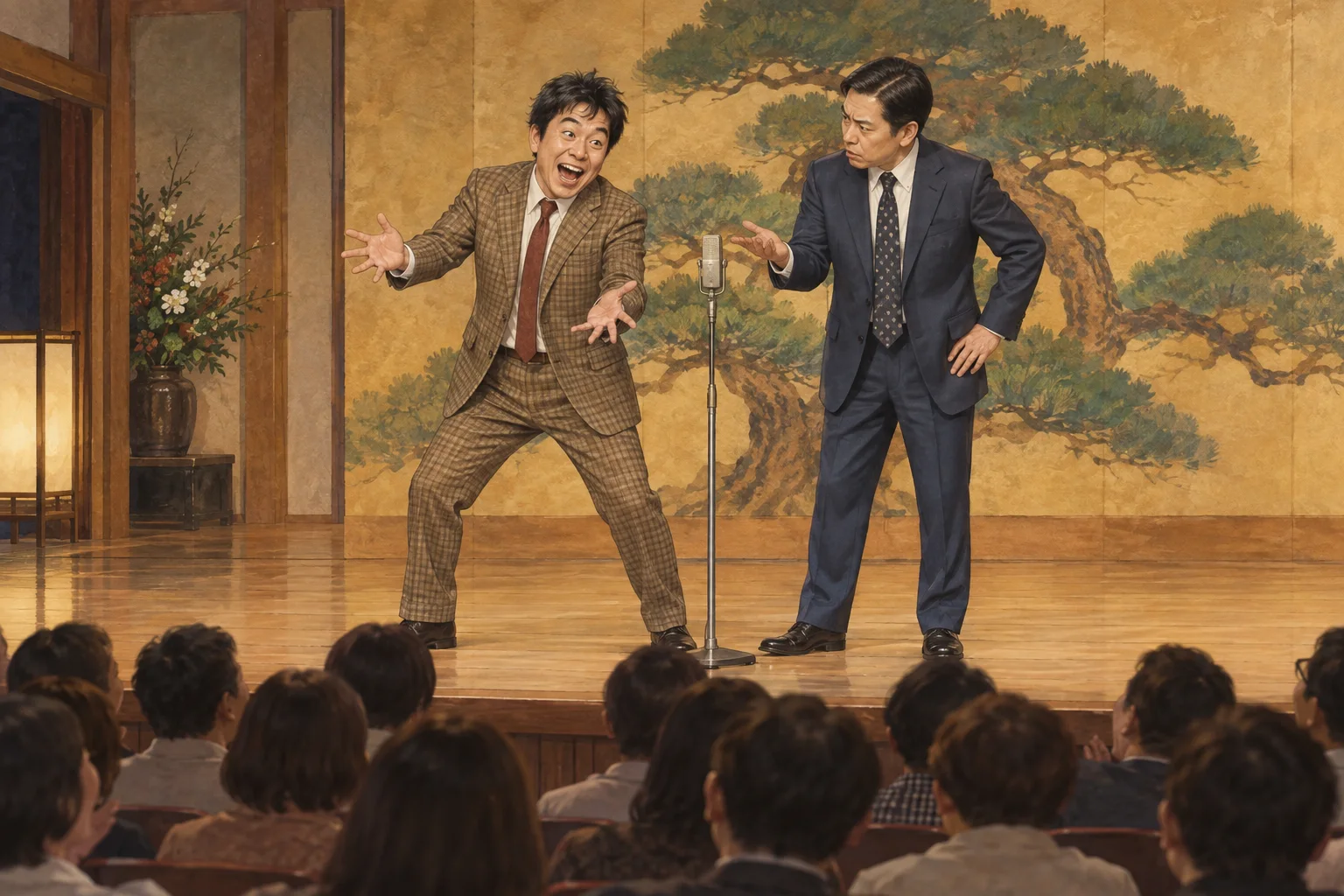
二人組でやる。片方がずれたことを言い、片方が突っ込む。役割が決まっている。
一言で言うと
これだけ覚えれば最低限伝わる一文
Manzai is Japanese two-person comedy, built on one performer saying silly things and the other correcting them.
漫才とは二人組で行う日本のお笑いで、一方がずれたことを言い、もう一方が正す形で成り立っています。
30秒で説明する
外国人に説明するときの標準サイズ
Manzai is a two-person comedy form with fixed roles. The boke says something absurd and the tsukkomi cuts in to correct it, usually fast and often with a slap to the shoulder. The rhythm matters more than the jokes, and a national television contest each December makes the winning pair famous overnight.
漫才は役割の決まった二人組のお笑いです。ボケがずれたことを言い、ツッコミがそれを正します。たいてい速く、肩をはたく動きが入ることも多くあります。個々の冗談より掛け合いの速さが物を言い、毎年12月の全国放送の大会で優勝した組は一夜で有名になります。
スピーチ・英作文
通訳案内士の二次口述・大学入試の自由英作文に
Manzai is Japan's dominant form of stand-up comedy, and it is almost always done by two people with fixed roles. One is the boke, who misunderstands things, says the wrong word, or commits to an absurd premise. The other is the tsukkomi, who interrupts to point out what is wrong, often loudly and often with a light slap to the partner's shoulder or chest.
The comedy is not really in individual jokes. It is in tempo: how fast the correction lands, how long the boke is allowed to keep going, how the rhythm builds over four minutes. The form comes from the Osaka region and still has a strong Kansai accent, both literally and culturally.
Since 2001, apart from a break in the early 2010s, a televised national contest has been held each December, and winning it changes a pair's career completely. Watching without Japanese is hard, because the humor is largely verbal, but the physical rhythm carries a surprising amount.
漫才は日本で最も広く行われている話芸のお笑いで、ほとんどの場合、役割の決まった二人で演じます。一方はボケで、物事を取り違え、言い間違い、ばかげた前提に乗り続けます。もう一方はツッコミで、何がおかしいかを指摘して割り込みます。
たいていは大きな声で、相手の肩や胸を軽くはたきながらです。笑いの本体は個々の冗談ではありません。速さです。訂正がどれだけ速く入るか、ボケをどこまで泳がせるか、四分の間に掛け合いがどう積み上がるか。この形式は大阪を中心とする地域から生まれ、今も関西の言葉と気風を色濃く残しています。
2001年からは、2010年代初めの休止をはさんで毎年12月に全国放送の大会が行われ、そこで優勝すると二人の経歴はまるごと変わります。冗談の多くが言葉によるものなので、日本語なしで見るのは難しいのですが、体の動きの間だけでも、驚くほど伝わります。
こう聞かれたら
外国人から実際にされる質問と、その答え方。
Why does one of them keep hitting the other?
どうして一方がもう一方をたたくのですか。
It is a stylized part of the form, marking the moment of correction, and it is pulled rather than real. The gesture has been criticized in recent years and some pairs avoid it, using only the verbal cut instead.
形式の一部として様式化された動きで、訂正が入る瞬間を示すものです。実際に打っているのではなく、寸止めに近いものです。近年は批判もあり、この動きを使わず言葉だけで切り込む組も増えています。
How is it different from rakugo?
落語とはどう違うのですか。
Rakugo is one person kneeling on a cushion, telling a story and playing every character with a fan and a cloth. Manzai is two people standing at a microphone, talking as themselves. Rakugo is classical, manzai is contemporary.
落語は一人が座布団に座り、扇子と手ぬぐいだけで全ての登場人物を演じ分けて話を語ります。漫才は二人が立ってマイクの前で、自分自身として話します。落語は古典、漫才は現代のものです。
そのまま使えるフレーズ
- One plays the fool, the other corrects him.一人がボケて、一人がツッコみます。
- The timing matters more than the jokes.冗談より間が大事です。
- The big contest is every December.大きな大会は毎年12月です。
- It comes from the Osaka region.大阪のあたりから生まれました。
説明に使う語句
- comedy duoお笑いコンビ
- the funny oneボケ
- the straight manツッコミ
- punchline落ち
動画で見る
YouTube より豆知識
漫才の源流は、正月に家々を回って祝いの言葉を述べた萬歳という芸能にあるとされ、それが寄席の芸として近代に整えられました。関西では「ボケ」と「ツッコミ」が日常語にもなっていて、会話の役割を指して使われます。2001年に始まった全国規模の大会(2011〜2014年は休止)は、結成から一定年数以内の組に出場を限っており、若手の登竜門になっています。舞台の持ち時間は四分ほどで、その中で構成を作り切ることが求められます。
