着物の柄と文様きもののがらともんよう
kimono no gara to mon'yo
the symbolism behind cranes, waves and other patterns woven or dyed into kimono
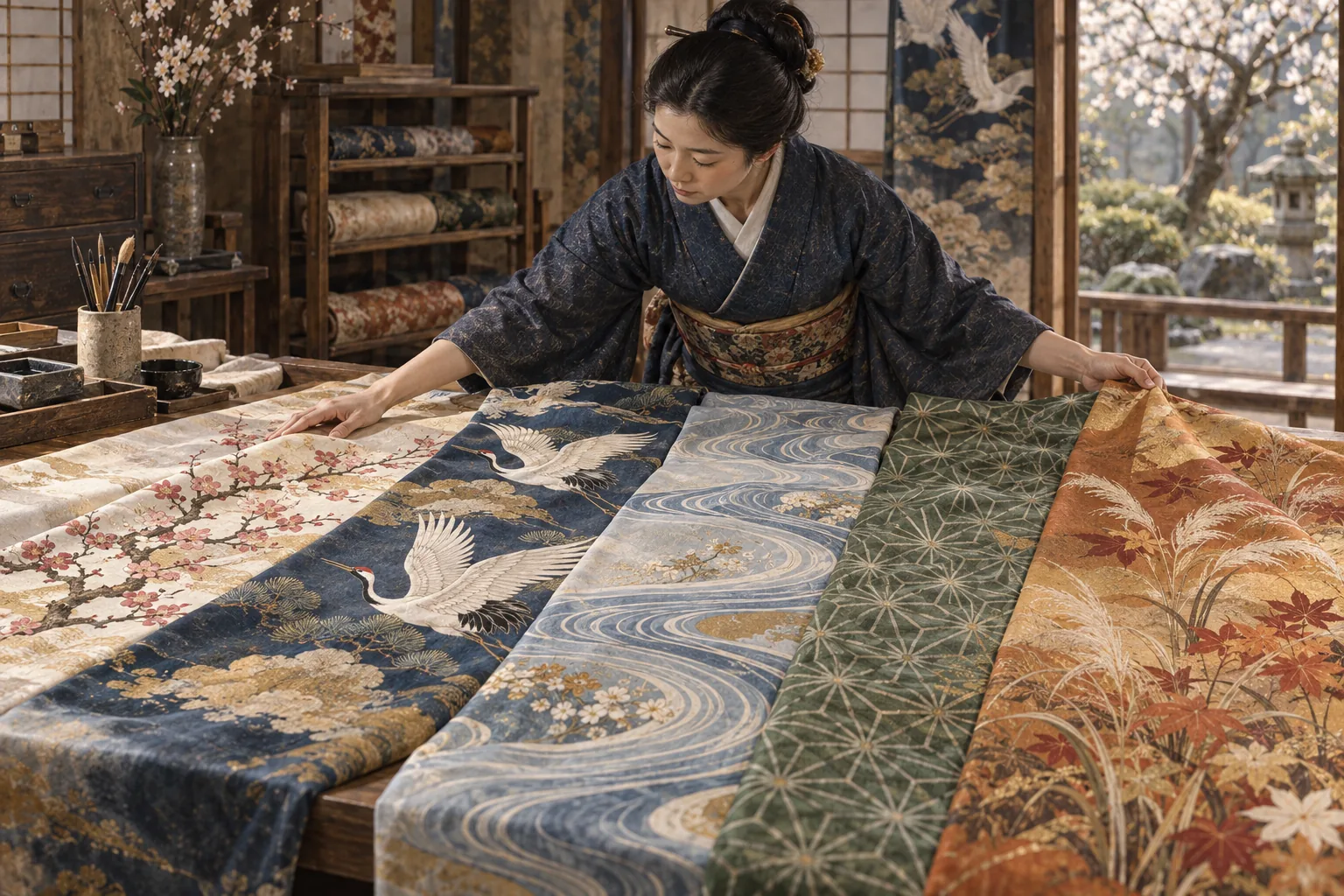
鶴や波の柄は飾りではなく、長寿や願掛けの意味を背負っている。
一言で言うと
これだけ覚えれば最低限伝わる一文
Kimono no gara to mon'yo, or kimono patterns, are designs like cranes or waves, many meaning long life or luck.
着物の柄と文様とは、鶴や波などの図柄のことで、その多くが長寿や幸運といった意味を持っています。
30秒で説明する
外国人に説明するときの標準サイズ
Japanese kimono patterns are rarely just decoration; many motifs are tied to specific wishes, drawn from nature, folklore or wordplay. A crane suggests long life, waves symbolize resilience or eternity, and cherry blossoms mark spring's brief beauty, so a pattern is often chosen to match the season or the occasion, such as auspicious motifs for a wedding. These meanings are cultural associations built up over centuries rather than fixed rules, and interpretations can vary by region, workshop or era, so not every wearer or maker reads a given motif the same way.
日本の着物の柄は単なる飾りであることは少なく、多くの文様は自然や伝承、言葉遊びに由来する具体的な願いと結びついています。鶴は長寿を、波は不屈や永遠を、桜は春のはかない美しさを表すとされ、結婚式なら縁起のよい文様を選ぶなど、季節や場に合わせて柄を選ぶことも多くあります。こうした意味づけは何百年もかけて積み重なってきた文化的な連想であり、固定した決まりではないため、地域や工房、時代によって解釈が異なることもあります。
スピーチ・英作文
通訳案内士の二次口述・大学入試の自由英作文に
Point at a crane woven into a kimono and ask why, and the answer usually traces back centuries: cranes are said to live a thousand years, so they stand for long life, which is why they show up often on wedding kimono alongside pine and turtle motifs carrying similar wishes. Waves, especially the repeating scalloped pattern called seigaiha, suggest calm continuing forever, a quiet wish for a peaceful, unbroken life.
Cherry blossoms lean the other way, celebrated precisely because they fall within days, a reminder to notice beauty before it's gone. These meanings aren't standardized rules, though; motifs drift in and out of fashion, carry different weight by region, and a maker might simply choose a pattern because it suits the season. Even so, knowing a few of these meanings turns a plain visual detail into a small story.
着物に織り込まれた鶴を指して理由を尋ねると、たいてい何百年も前にさかのぼる答えが返ってきます。鶴は千年生きるとされることから長寿の象徴とされ、結婚式の着物に松や亀の文様と並んでよく登場するのはそのためです。
波、特に扇状に重なる「青海波」と呼ばれる繰り返し文様は、穏やかさが永遠に続くことを表すとされ、平穏で途切れない人生への静かな願いが込められています。桜はその逆で、わずか数日で散るからこそ愛でられ、美しさは失われる前に気づくべきものだという教えでもあります。
こうした意味づけは固定された決まりではなく、文様は流行によって移り変わり、地域によって重みも違い、単に季節に合うからという理由で柄を選ぶ作り手もいます。それでも、こうした意味をいくつか知っているだけで、ただの模様が小さな物語に変わります。
こう聞かれたら
外国人から実際にされる質問と、その答え方。
Are these meanings something every Japanese person knows?
こうした意味は日本人なら誰でも知っているものなのですか。
Not necessarily — a few famous ones, like cranes for longevity, are widely recognized, but many specific motifs and their meanings are closer to specialist or regional knowledge, something a kimono shop or older relative might explain rather than common general knowledge.
必ずしもそうではありません。鶴が長寿を表すといった有名なものは広く知られていますが、多くの具体的な文様とその意味は、専門家や地域による知識に近く、一般常識というより、呉服店や年配の親族が教えてくれるような話です。
Do the same motifs appear on other things besides kimono?
同じ文様は着物以外にも使われるのですか。
Yes, motifs like seigaiha waves or asanoha hemp-leaf patterns show up constantly on things like furoshiki, fans, ceramics and packaging, since they're part of a shared visual vocabulary that goes well beyond clothing.
はい。青海波や麻の葉のような文様は、風呂敷や扇子、陶磁器、パッケージなど、あらゆるものに使われています。これらは着物にとどまらず、幅広く共有されている視覚的な言葉の一部だからです。
Can foreigners wear kimono with these auspicious patterns, or is that inappropriate?
外国人がこうした縁起のよい柄の着物を着るのは失礼にあたりますか。
It's generally seen as fine and even appreciated, since kimono are meant to be worn and enjoyed; the main thing to be mindful of is matching a pattern's formality to the occasion, the same courtesy expected of Japanese wearers.
一般的には問題なく、むしろ喜ばれることが多いです。着物は着て楽しむためのものだからです。気をつけるべき主な点は、柄のフォーマルさを場に合わせることで、これは日本人が着る場合にも求められる配慮と同じです。
そのまま使えるフレーズ
- What does this crane pattern mean?この鶴の柄にはどんな意味があるのですか。
- This wave pattern stands for a peaceful life that goes on and on.この波の柄は、穏やかな暮らしがいつまでも続くことを表します。
- This motif is common on wedding kimono.この文様は結婚式の着物でよく見られます。
- Cherry blossom patterns are worn mainly in spring.桜の柄は主に春に着られます。
- The meaning can depend on the region.意味は地域によって違うことがあります。
説明に使う語句
- pattern, motif柄・文様
- crane鶴
- wave pattern青海波
- auspicious, good fortune縁起のよい
- long life長寿
動画で見る
YouTube より豆知識
鶴は千年生きるとされることから長寿の象徴とされ、松竹梅とともに祝いの席の文様として使われる。波を扇状に重ねた「青海波」は同じ模様が果てしなく続くことから、平穏な暮らしが長く続くようにという願いを込めた柄とされる。麻の葉文様は成長の早い麻にあやかり子どもの産着に用いられることが多いとされる。こうした意味づけは地域や時代によって異なることもあり、すべての着物にあてはまる統一の決まりがあるわけではない。
