着物の季節の決まりきもののきせつのきまり
kimono no kisetsu no kimari
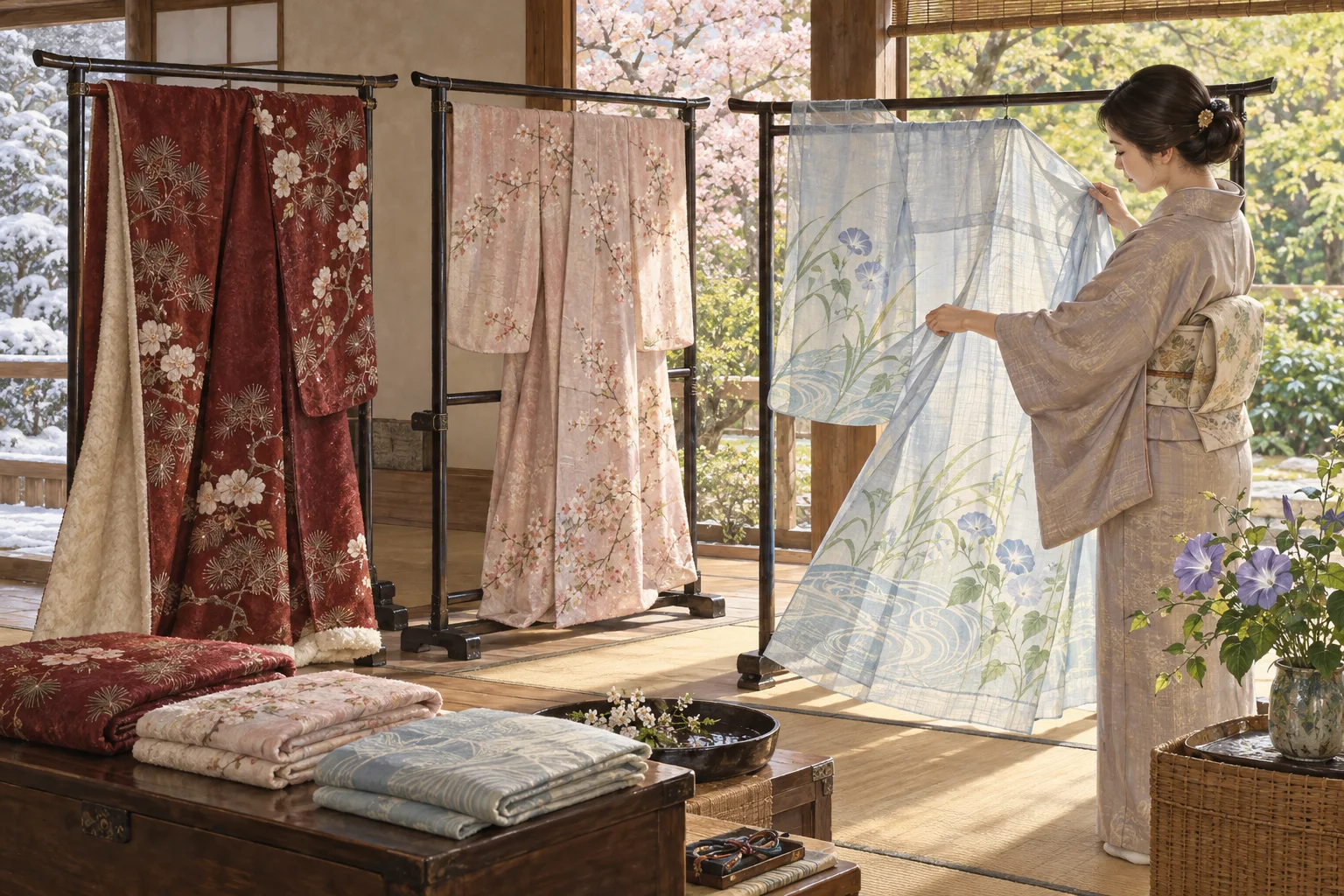
lined, unlined and sheer kimono, and when each is worn
6月と9月は単衣、7月と8月は薄物。暦で決まっていて、気温では決まらない。
一言で言うと
これだけ覚えれば最低限伝わる一文
Kimono no kisetsu no kimari, the seasonal kimono code, is set by month, not weather: lined, unlined or sheer.
着物の季節の決まりとは、袷・単衣・薄物のどれを着るかを、気温ではなく月で決める決まりです。
30秒で説明する
外国人に説明するときの標準サイズ
There are three constructions. Awase, lined, is worn from October to May. Hitoe, unlined, is for June and September. Usumono, sheer fabrics like ro and sha, are for July and August. The calendar sets it, which is why people wear lined kimono on a warm October day and complain about it.
仕立てには三つあります。裏地のある袷は10月から5月。裏をつけない単衣は6月と9月。絽や紗といった透ける薄物は7月と8月。決めるのは暦です。だから10月の暖かい日に袷を着て、暑いとこぼすことになります。
スピーチ・英作文
通訳案内士の二次口述・大学入試の自由英作文に
Kimono have a rule that surprises people: what you wear is set by the month, not by how hot it is. There are three constructions. Awase is lined and worn from October through May. Hitoe has no lining and belongs to June and September. In July and August you wear usumono, made from open weaves like ro and sha that you can see light through.
Accessories follow the same calendar, so the obi, the undergarment and even the collar change with the season. The rule was formed when the climate was cooler, and the modern summer has strained it badly: September in Tokyo is often over 30 degrees Celsius, and people wearing unlined kimono are genuinely suffering.
Teachers and wearers argue about whether to relax it, and in practice many people now shift the dates by a couple of weeks and say nothing. If you rent a kimono as a visitor, the shop handles all of this for you.
着物には、聞くと驚かれる決まりがあります。何を着るかは、暑さではなく月で決まる。仕立ては三つ。袷は裏地つきで10月から5月。単衣は裏をつけず6月と9月。7月と8月は薄物で、絽や紗のように光が透ける織りです。
小物も同じ暦に従うので、帯も襦袢も、半襟までも季節で替わります。この決まりができたのは、いまより涼しかったころです。近年の夏はそれをひどく圧迫しています。東京の9月はしばしば30度を超え、単衣の人は本当に苦しい。
ゆるめるべきかどうかは、教える側も着る側も議論しています。実際のところ、時期を二週間ほどずらして、何も言わない人が増えました。旅行で着物を借りるなら、店が全部整えてくれます。
こう聞かれたら
外国人から実際にされる質問と、その答え方。
What happens if you wear the wrong one?
季節に合わないものを着たらどうなりますか。
Nothing official. In a tea room or a formal setting someone may notice, and that is the extent of it. Among people who wear kimono often, getting it right is a quiet point of pride.
決まった罰はありません。茶席や改まった場では気づかれることがあり、それだけです。よく着る人のあいだでは、合わせられることが静かな誇りになっています。
Is the rule changing with the climate?
気候に合わせて決まりは変わってきていますか。
Informally, yes. Many wearers now start unlined kimono in May and stay in them into October. Formal circles have been slower, and the gap between what is taught and what people do has widened.
非公式には変わってきています。5月から単衣を着て、10月まで通す人が増えました。改まった場の作法は動きが遅く、教えられていることと実際のずれは広がっています。
Do men follow the same calendar?
男性も同じ暦に従うのですか。
Broadly yes, though men's kimono have fewer rules and darker colors hide more. The summer sheer fabrics are worn by men too, usually in gray or indigo rather than the pale colors women wear.
おおむね同じですが、男性の着物は決まりが少なく、色が濃いぶん目立ちません。夏の薄物は男性も着ます。女性が着る淡い色ではなく、鼠色や藍が多いです。
誤解されやすい
MYTHKimono are all the same garment in different patterns.
着物は柄が違うだけで、どれも同じ衣服だ、と思われがちです。
FACTThe construction changes with the season: lined for winter, unlined for late spring and early autumn, sheer weaves for high summer, with the accessories changing to match.
仕立てが季節で変わります。冬は裏地つき、晩春と初秋は裏なし、真夏は透ける織り。小物もそれに合わせて替わります。
そのまま使えるフレーズ
- Lined kimono are worn from October to May.袷は10月から5月に着ます。
- June and September are for unlined.6月と9月は単衣です。
- July and August are sheer fabrics.7月と8月は薄物です。
- The calendar decides, not the temperature.決めるのは気温ではなく暦です。
- The rule is under strain from hotter summers.夏が暑くなって、この決まりは無理がきています。
説明に使う語句
- lined kimono袷(あわせ)
- unlined kimono単衣(ひとえ)
- sheer summer fabric薄物
- open-weave silk絽・紗
- detachable collar半襟
動画で見る
YouTube より豆知識
袷・単衣・薄物の区分は、江戸時代の武家の衣替えの定めに由来するとされ、明治以降の学校や役所の制度にも引き継がれた。薄物のうち、絽は平織りの間に一定の間隔で糸をからませて透き間の筋を作る織り、紗は全体を糸をからませて織った、より透ける織りで、絽のほうが改まった場に向くとされる。長襦袢や半襟、帯揚げ、帯締めも季節で替え、夏には絽の半襟を合わせる。近年は温暖化を受け、単衣を着る期間を前後に広げる人が増えているが、茶道や改まった席では従来の暦を守る場合が多い。
