学級会がっきゅうかい
gakkyukai
the class meeting where pupils decide things themselves
司会も記録も子どもがやる。先生は口を出さずに見ている時間。
一言で言うと
これだけ覚えれば最低限伝わる一文
A gakkyukai is a class meeting run by the pupils themselves to decide matters affecting the class.
学級会とは、学級に関わることを子どもたち自身が話し合って決める会です。
30秒で説明する
外国人に説明するときの標準サイズ
In a class meeting, pupils take the chair and the minutes, put an issue on the agenda, discuss it and decide, often by vote. Topics range from what to do for the school festival to how to stop people forgetting their turn on the cleaning schedule. The teacher is present but deliberately stays out of it.
学級会では、子どもが司会と記録を務め、議題を出し、話し合って、多くは採決で決めます。取り上げるのは、文化祭で何をするかから、掃除の当番を忘れる人をどうするかまで様々です。先生はその場にいますが、わざと口を出しません。
スピーチ・英作文
通訳案内士の二次口述・大学入試の自由英作文に
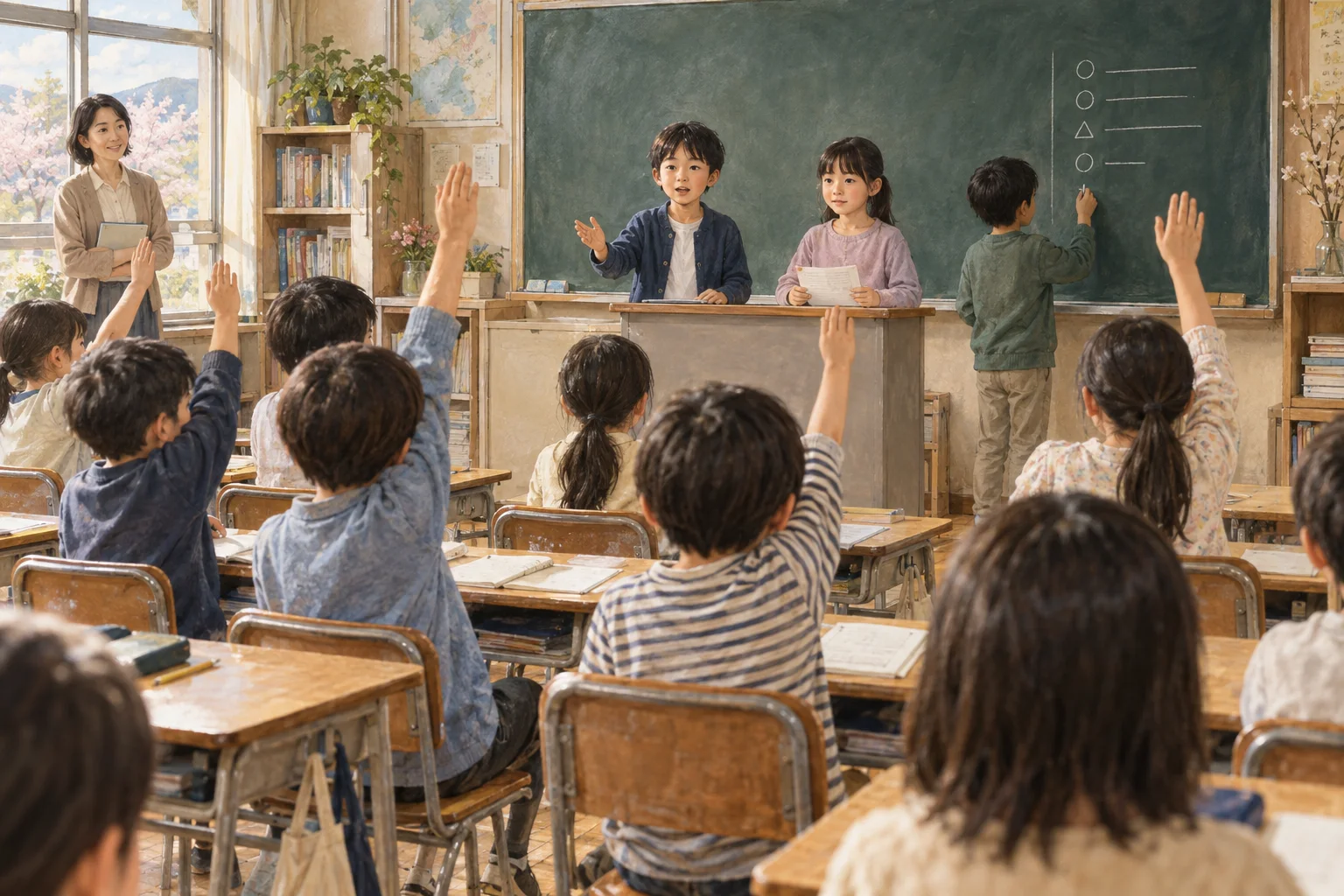
A class meeting is a small piece of civic training built into the Japanese school week. The class sits facing each other, two pupils take the chair and the blackboard notes, and an item is put up for discussion: what the class will do for the culture festival, how to deal with people leaving the classroom untidy, what the class motto should be.
Pupils raise hands, speak in turn, and the chair calls for a decision, often a vote. The teacher sits at the back and, in a well-run meeting, says almost nothing until the end. To a foreign observer the striking part is how much is genuinely handed over, including matters of behavior that in many countries a teacher would simply rule on.
The point is not the decision but the practice: children learn to speak to a group, to disagree without falling out and to accept an outcome they argued against. It is related to other jobs that are given to pupils rather than staff, such as cleaning the school and serving lunch, and together they add up to a consistent idea about what a school is for.
学級会は、日本の学校の一週間に組み込まれた、小さな市民の訓練です。学級は向かい合って座り、二人の子どもが司会と黒板の記録を受け持ち、議題が出されます。文化祭で何をするか、教室を散らかす人がいるのをどうするか、学級の目標を何にするか。手を挙げ、順に発言し、司会が採決を求めます。
多くは多数決です。先生は後ろに座り、うまく運んでいる会では、終わりまでほとんど何も言いません。外から見ていて目を引くのは、本当に任されている範囲の広さです。多くの国なら先生が決めてしまう、振る舞いについてのことまで含まれています。大事なのは決まった中身ではなく、その練習のほうです。
子どもは、集団に向けて話すこと、仲を壊さずに反対すること、自分が反対した結果を受け入れることを学びます。掃除や給食の配膳のように、職員ではなく子どもに任される仕事と地続きで、合わせると、学校とは何のための場かについての一貫した考えが見えてきます。
こう聞かれたら
外国人から実際にされる質問と、その答え方。
Does the teacher really not intervene?
先生は本当に口を出さないのですか。
They set the boundaries beforehand and step in if the discussion turns unfair or targets an individual. Within those limits the aim is to let the class reach its own conclusion, even an imperfect one.
前もって枠は示しますし、話し合いが公正でなくなったり、特定の子を責める形になったりすれば入ります。その範囲の中では、たとえ不十分でも、学級が自分たちで結論に至ることを目指します。
What kinds of things get decided?
どんなことが決められるのですか。
Class events, roles and duty rosters, the class goal, how to spend a free period, what to do about a recurring problem. Anything involving grades, staffing or safety stays with the teacher.
学級の行事、係や当番、学級の目標、空き時間の使い方、繰り返し起きる困りごとへの対応などです。成績、人事、安全に関わることは先生が決めます。
Is this the same as a student council?
これは生徒会と同じものですか。
No. The student council represents the whole school and is elected; a class meeting is the class itself, and everyone takes part. Both exist, and pupils often experience the class meeting first.
違います。生徒会は学校全体を代表し、選挙で選ばれます。学級会は学級そのもので、全員が加わります。どちらもあり、子どもが先に経験するのは学級会のほうです。
そのまま使えるフレーズ
- Let's put it to the class meeting.学級会にかけましょう。
- Who will chair today?今日の司会は誰ですか。
- Does anyone have another opinion?ほかに意見はありますか。
- We will decide by a show of hands.挙手で決めます。
- That was decided last week.それは先週決まりました。
説明に使う語句
- a class meeting学級会
- to chair司会をする
- an agenda item議題
- to vote採決する
- minutes記録
動画で見る
YouTube より豆知識
学級会は、教育課程の中の特別活動に位置づけられ、学級活動の時間に行われます。司会と記録は当番で回り、日直が務める学級もあります。議題は、意見箱や係からの提案として集められることが多いです。話し合いの進め方そのものを学ぶ機会でもあり、黒板に賛成と反対を書き分ける形がよく使われます。学校全体の代表としては児童会や生徒会があり、委員会活動と合わせて、子どもが運営に関わる仕組みが重なって用意されています。
