福岡ふくおか
fukuoka
the city closest to the continent, and its street food stalls
屋台が制度として残っている、日本でほぼ唯一の町。東京よりソウルのほうが近い。
一言で言うと
これだけ覚えれば最低限伝わる一文
Fukuoka is Kyushu's largest city, long Japan's door to the Asian mainland, with street food stalls still lining its sidewalks.
福岡とは、九州最大の都市で、古くからアジア大陸への入口であり、いまも歩道に屋台が並ぶ町です。
30秒で説明する
外国人に説明するときの標準サイズ
Fukuoka sits on the north coast of Kyushu, closer to Seoul than to Tokyo and about as close to Shanghai. That position made it Japan's contact point with the continent for well over a thousand years. It is best known now for food: tonkotsu ramen was born in this region, and around a hundred licensed yatai food stalls still open on the streets at night, which no other Japanese city has kept at that scale.
福岡は九州の北岸にあり、東京よりソウルのほうが近く、上海までも東京とほぼ同じ距離です。この地の利によって、千年以上にわたって大陸との接点であり続けました。いまよく知られているのは食です。豚骨ラーメンはこの地方で生まれ、夜になると百軒ほどの屋台が道に出ます。これほどの規模で屋台を残している都市は、ほかにありません。
スピーチ・英作文
通訳案内士の二次口述・大学入試の自由英作文に
Fukuoka is worth knowing for two reasons. The first is geography. It sits at the top of Kyushu, and it is genuinely closer to Seoul than to Tokyo, which is why it was Japan's door to the continent for most of recorded history — envoys to China left from here, and the Mongol invasions of the thirteenth century landed here. The second is the yatai.
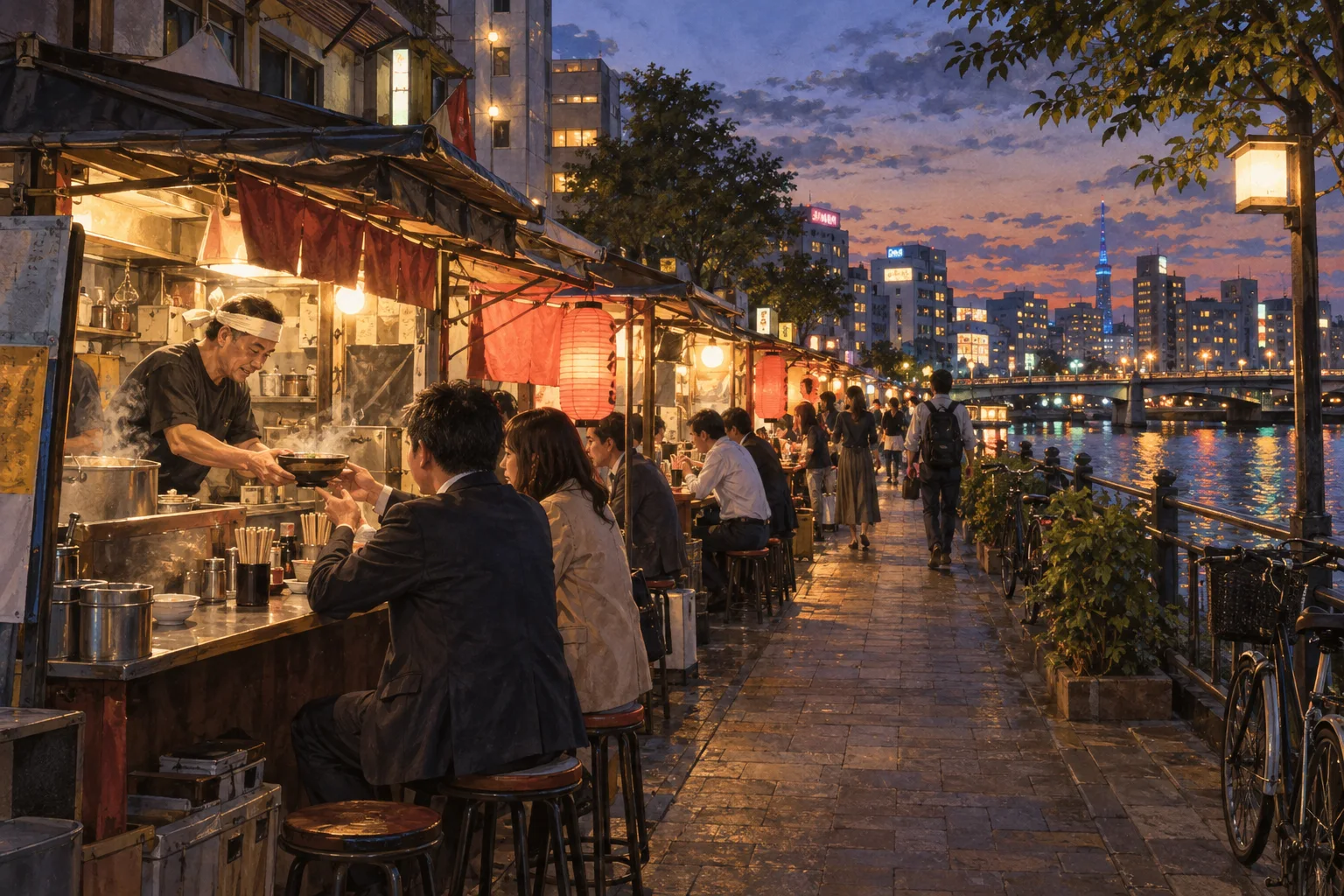
These are small wooden food stalls, wheeled into place on the sidewalk in the evening, with a counter, a curtain and room for maybe eight people. Almost every Japanese city had them after the war and almost every city removed them. Fukuoka licensed them instead, and around a hundred still operate, mostly in Nakasu and Tenjin.
You sit next to strangers, order ramen or grilled offal or a simple stew, and are expected to move on rather than settle in for hours. Tonkotsu ramen, the thick pork-bone soup that people abroad now think of as the standard Japanese ramen, started in this region.
福岡を知っておく理由は二つあります。一つは地理です。九州の北端にあり、東京よりソウルのほうが実際に近い。だからこの町は、記録の残るほとんどの時代を通じて、日本の大陸への入口でした。遣唐使はここから出ましたし、十三世紀の元寇が上陸したのもここです。
もう一つは屋台です。木で組んだ小さな店を、夕方に歩道へ引いてくる。カウンターと暖簾があり、入れるのは八人ほど。戦後はどの都市にもあり、そしてどの都市も撤去しました。福岡はかわりに許可制にし、いまも百軒ほどが中洲や天神を中心に営業しています。
見知らぬ人と肩を並べて座り、ラーメンやもつ焼きや簡単な煮込みを頼み、長居せずに次へ譲るのが作法です。いま海外で日本のラーメンといえば思い浮かぶ、濃い豚骨のスープも、この地方から始まりました。
こう聞かれたら
外国人から実際にされる質問と、その答え方。
Are the yatai still there?
屋台はいまもあるのですか。
Yes, around a hundred licensed stalls, mostly open from early evening until late. The city runs an open call for new operators, so the number has been stable rather than shrinking.
あります。許可を受けた屋台がおよそ百軒、夕方から深夜まで営業しています。市が新しい営業者を公募しているので、数は減らずに保たれています。
Is it expensive?
高いですか。
Not especially. A bowl of ramen at a stall is ordinary ramen money. Prices are posted, and if they are not, ask before ordering — that advice applies anywhere.
特に高くはありません。屋台のラーメンはふつうのラーメンの値段です。値段は書いてありますし、書いていなければ頼む前に聞いてください。これはどこでも同じです。
Why is Hakata a different name?
博多という名前は何ですか。
Hakata was the merchant port town and Fukuoka the castle town across the river; they merged in 1889. The station is Hakata, the city is Fukuoka, and both names are still used.
博多は商人の港町、福岡は川を挟んだ城下町で、1889年に一つの市になりました。駅は博多、市の名は福岡。いまも両方が使われています。
誤解されやすい
MYTHStreet food stalls are a common sight all over Japan.
屋台は日本のどこでも見られる、と思われがちです。
FACTAlmost every city removed them in the postwar decades. Fukuoka licensed them instead, and is now close to the only place where they remain in numbers.
戦後、ほとんどの都市が撤去しました。福岡は許可制にして残し、まとまった数が残るほぼ唯一の町になっています。
そのまま使えるフレーズ
- It's closer to Seoul than to Tokyo.東京よりソウルのほうが近いです。
- The yatai are food stalls that open at night.屋台は夜に出る食べ物の店です。
- You sit at a counter with about eight strangers.見知らぬ人八人ほどとカウンターに並びます。
- Tonkotsu ramen started in this area.豚骨ラーメンはこの地方から始まりました。
- Don't stay too long — let the next person sit.長居せず、次の人に席を譲ってください。
説明に使う語句
- food stall屋台
- pork-bone broth豚骨
- port town港町
- license許可
- the Mongol invasions元寇
動画で見る
YouTube より豆知識
福岡市の屋台は道路上で営業するため、福岡市屋台基本条例(2013年制定)にもとづく許可が必要で、営業場所の公募も行われている。市内の屋台数はおよそ100軒で、全国の屋台の相当数を占めるとされる。博多と福岡は1889年(明治22年)の市制施行で一つになり、市名を決める際に議論があったと伝えられる。1274年と1281年の元寇では、博多湾一帯が主戦場となった。
