食品サンプルしょくひんさんぷる
shokuhin sanpuru
the plastic food in restaurant windows
言葉が通じなくても注文できる装置。しかも一点ずつ職人の手作り。
一言で言うと
これだけ覚えれば最低限伝わる一文
Shokuhin sanpuru, or food samples, are lifelike plastic replicas of dishes displayed outside restaurants to show what you are ordering.
食品サンプルとは、店頭に飾る精巧な料理の複製で、何を注文するのか目で見て分かるようにしたものです。
30秒で説明する
外国人に説明するときの標準サイズ
Many Japanese restaurants display plastic replicas of their dishes in a window case. They are startlingly realistic, made by hand, and expensive: a single bowl of ramen can cost tens of thousands of yen to produce. For visitors they largely solve the language problem, since you can simply lead the staff outside and point.
日本の飲食店の多くは、店頭のケースに料理のプラスチック製の複製を並べています。驚くほど本物に似ていて、手作りで、そして高価です。ラーメン一杯の模型に数万円かかることもあります。訪日の方にとっては、言葉の問題をほぼ解決してくれます。店員を外に連れ出して指させばよいのです。
スピーチ・英作文
通訳案内士の二次口述・大学入試の自由英作文に
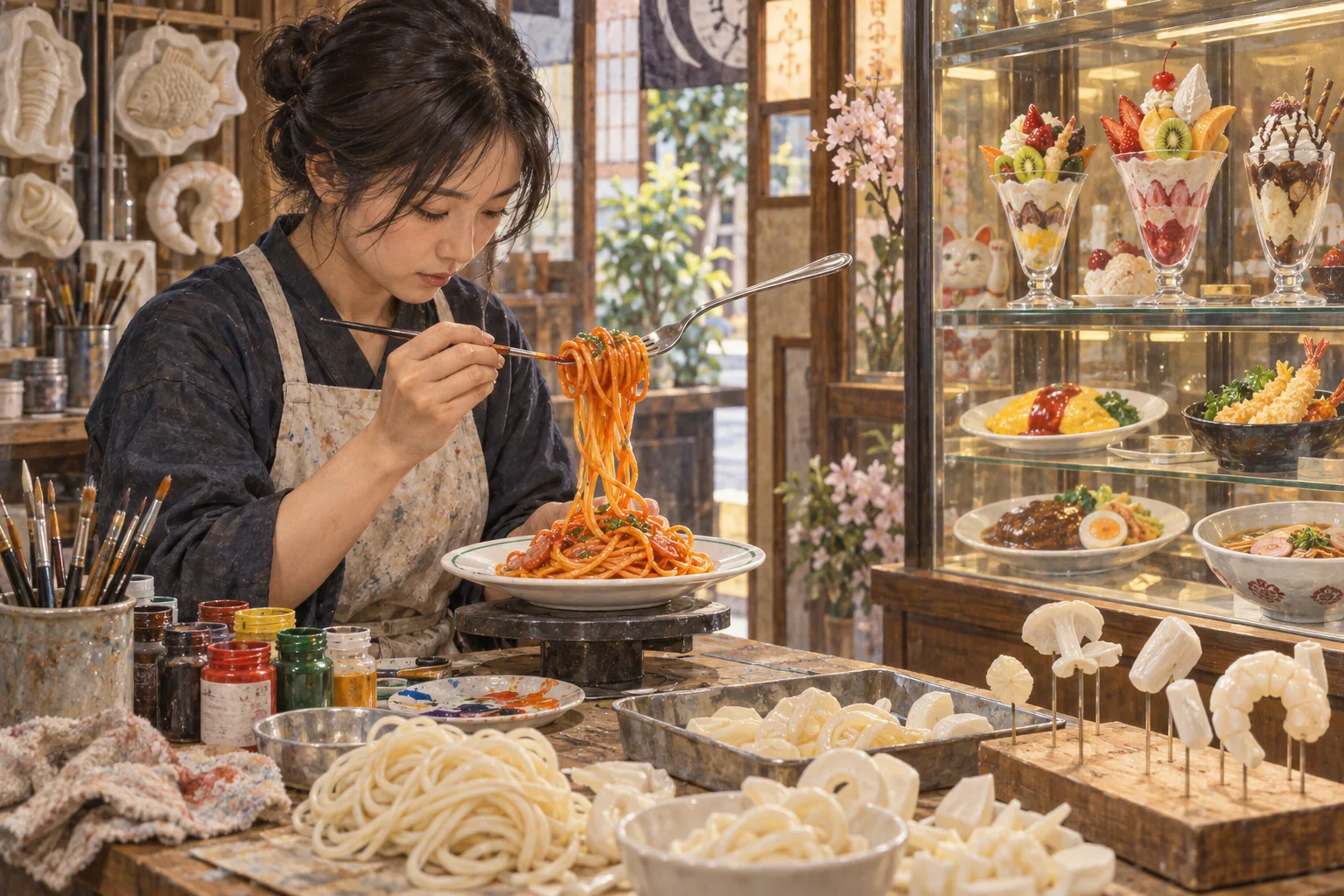
Outside a great many Japanese restaurants there is a glass case containing what appears to be food, sitting out in the sun and never going bad. These are shokuhin sampuru, plastic food samples. They are made by hand, usually from PVC, by craftspeople who cast, paint and assemble each piece individually.
A convincing bowl of noodles with steam suspended above it can cost as much as a good piece of furniture. The industry is concentrated in Gujo Hachiman in Gifu prefecture, the hometown of the man who turned it into a business in the 1930s, and you can go there and make one yourself as a workshop experience.
For a visitor who cannot read a menu, the case outside is the single most useful thing in Japanese restaurant culture: you look, you decide, you bring the waiter out and point. Nobody finds this strange, and it is the standard fallback for Japanese people too when a menu has no pictures.
日本の多くの飲食店の外には、食べ物に見えるものが入ったガラスケースがあり、日に当たり続けても傷みません。これが食品サンプルです。手作りで、多くは塩化ビニルを使い、職人が一点ずつ型を取り、彩色し、組み立てます。
湯気が宙に浮いた説得力のある麺の一杯は、良い家具ほどの値段になることもあります。産業は岐阜県郡上八幡に集中しています。1930年代にこれを事業にした人の郷里で、今ではそこで自分で作る体験もできます。
メニューが読めない旅行者にとって、この店頭のケースは、日本の飲食店文化で最も役に立つものです。見て、決めて、店員を外へ連れ出して指させばよい。誰も奇妙だとは思いませんし、写真のないメニューのときは日本人も同じことをします。
こう聞かれたら
外国人から実際にされる質問と、その答え方。
Are they really handmade?
本当に手作りなのですか。
Yes. Molds are taken from real dishes, then each piece is cast, hand-painted and assembled. Custom samples are made to order for individual restaurants.
本当にそうです。実物から型を取り、一点ずつ成形し、手で彩色して組み立てます。店ごとの特注品も作られます。
How expensive are they?
値段はどれくらいですか。
Far more than the dish they represent. A single realistic bowl of ramen or a set meal display can run into tens of thousands of yen, which is why restaurants treat them as long-term investments.
実物よりはるかに高価です。精巧なラーメン一杯や定食一式で数万円になることもあり、店は長く使う設備として扱います。
Can I buy one?
買うことはできますか。
Yes. Shops in Kappabashi in Tokyo sell keyrings, magnets and full-size pieces, and workshops in Gifu and Tokyo let you make tempura or lettuce yourself.
買えます。東京の合羽橋にキーホルダーやマグネット、実物大の品を売る店があり、岐阜や東京では天ぷらやレタスを自分で作る体験もできます。
そのまま使えるフレーズ
- You can point at the display outside.外の見本を指させば大丈夫です。
- They're handmade, one at a time.一点ずつ手作りです。
- A single bowl can cost tens of thousands of yen.一杯で数万円することもあります。
- You can make one yourself at a workshop.体験教室で自分で作れます。
- Japanese people use them the same way.日本人も同じように使っています。
説明に使う語句
- replica複製、模型
- lifelike本物そっくりの
- display caseショーケース
- mold / cast型/型を取る
- commission (verb)特注する
動画で見る
YouTube より豆知識
食品サンプルの発祥には諸説あるが、岐阜県郡上八幡出身の岩崎瀧三が1932年に大阪で「食品模型岩崎製作所」を興し、事業として成立させた最初の人とされる。第1号は妻が作ったオムレツを写したものだったと伝えられる。のちに郷里の郡上八幡に工場が置かれ、現在も郡上市は食品サンプルの生産量で全国の6割前後を占める産地である。初期は蝋(ろう)で作られ、熱で溶けやすかったため、戦後に塩化ビニル樹脂へ移行した。東京・合羽橋の道具街には食品サンプルを扱う専門店があり、観光地にもなっている。海外の日本食レストランでも使われるようになり、輸出もされている。近年は写真付きメニューやタブレット注文の普及で需要が変化しているが、店頭で足を止めさせる装置としての役割は残っている。
