洋食ようしょく
yoshoku
Western-style dishes invented in Japan
西洋料理ではない。明治の日本が西洋をまねて作った、日本の料理。
一言で言うと
これだけ覚えれば最低限伝わる一文
Yoshoku is a category of Western-looking dishes that were created in Japan and are not part of any European cuisine.
洋食とは、西洋風に見えて日本で作られた料理の総称で、本場の西洋料理にはないものです。
30秒で説明する
外国人に説明するときの標準サイズ
Yoshoku dishes look European but were invented in Japan, mostly from the late nineteenth century, when Western food arrived and cooks adapted it to local ingredients and to rice. Omurice, hayashi rice, korokke and naporitan spaghetti are the standards. They are eaten with a spoon or fork, not chopsticks, and are treated as comfort food rather than foreign food.
洋食の料理はヨーロッパ風に見えますが、日本で生まれたものです。多くは十九世紀の終わりごろから、西洋の料理が入ってきて、料理人がそれを手に入る材料と、ご飯に合う形に作り変えていきました。オムライス、ハヤシライス、コロッケ、ナポリタンが定番です。箸ではなく、さじやフォークで食べ、外国の料理ではなく、なつかしい料理として受け取られています。
スピーチ・英作文
通訳案内士の二次口述・大学入試の自由英作文に
Yoshoku is one of the more interesting categories in Japanese food, because it is neither Japanese nor Western but the record of a meeting between them. When Japan opened to the outside world in the second half of the nineteenth century, Western cooking arrived as something modern to be learned, and Japanese cooks reworked it for local ingredients, local budgets and, crucially, for rice.
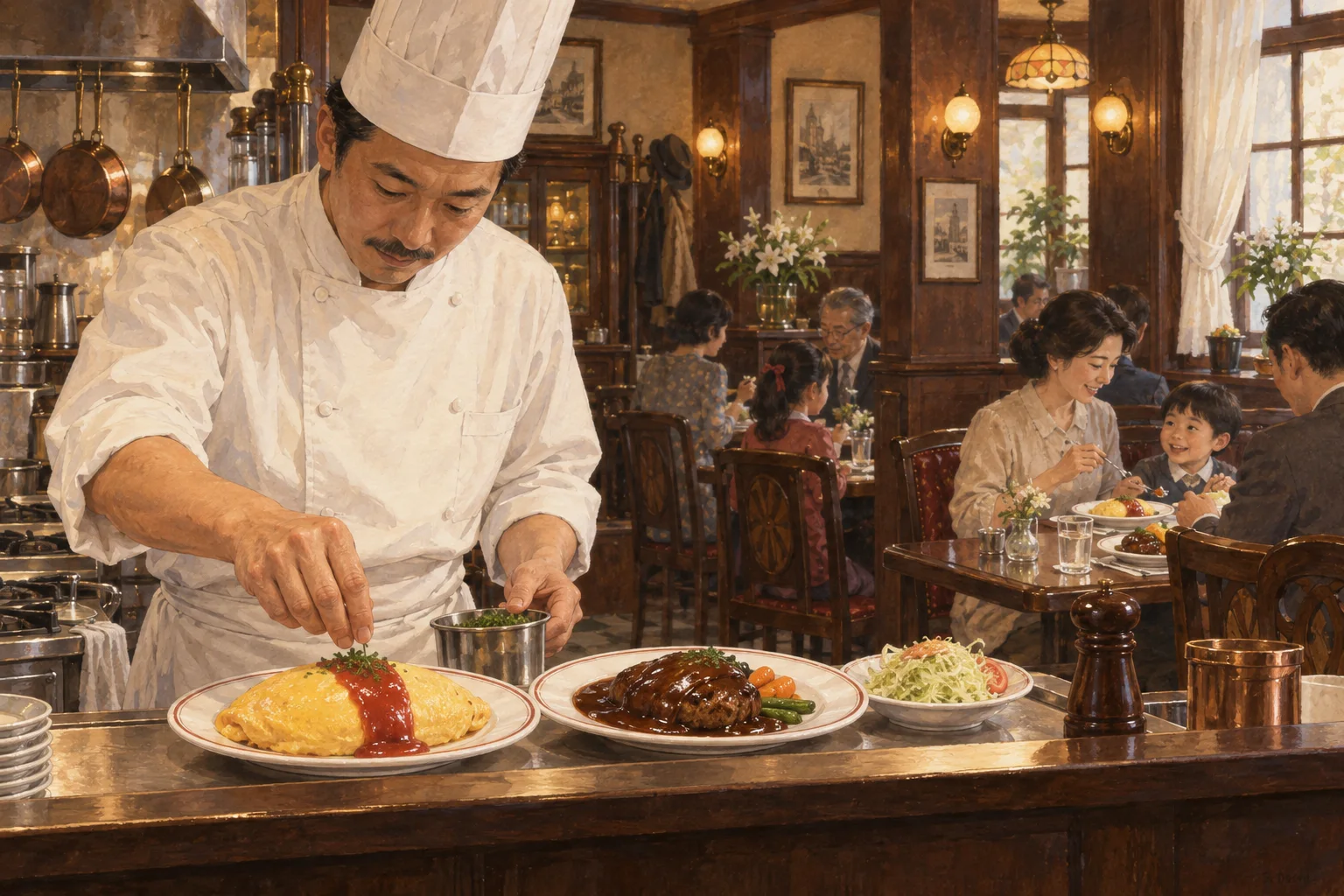
What came out is a set of dishes that began here. Omurice is a thin omelette wrapped around fried rice. Hayashi rice is a beef and onion stew in a brown sauce, served over rice. Korokke is a fried potato croquette sold at butchers' shops. Naporitan is spaghetti with ketchup, sausage and peppers, which many Italians find alarming and many Japanese people find comforting.
A yoshoku restaurant has a particular atmosphere, often unchanged since the mid twentieth century, and some older customers order the same thing they ordered as children. If you want to understand how Japan absorbs foreign things, this is a more honest example than sushi.
洋食は日本の食べ物の中でも面白い区分です。日本料理でも西洋料理でもなく、その二つが出会った記録だからです。十九世紀の後半に日本が外へ開かれると、西洋の料理は学ぶべき新しいものとして入ってきました。日本の料理人はそれを、手に入る材料と、払える値段と、そして何よりご飯に合う形へ作り変えていきます。
そうしてできたのが、ここで生まれた料理の一群です。オムライスは、薄い卵焼きで炒めたご飯を包んだもの。ハヤシライスは、牛肉と玉ねぎを茶色いソースで煮てご飯にかけたもの。コロッケは、肉屋の店先で売られるじゃがいもの揚げ物。
ナポリタンは、ケチャップとソーセージとピーマンで作るスパゲッティで、驚くイタリアの人も多く、なつかしがる日本の人も多い料理です。洋食屋には独特の空気があり、二十世紀の半ばから変わっていない店も多く、子どものころと同じものを注文する年配の客もいます。日本が外のものをどう取り込むかを知りたければ、寿司よりこちらのほうが正直な例です。
こう聞かれたら
外国人から実際にされる質問と、その答え方。
So is yoshoku Japanese food or Western food?
では洋食は日本料理ですか、西洋料理ですか。
Japanese, in every sense that matters. The dishes were created here, they are eaten with rice, and you will not find them in Europe. The category name simply records where the inspiration came from.
意味のあるどの見方からしても、日本の料理です。ここで生まれ、ご飯と一緒に食べ、ヨーロッパには見当たりません。洋食という呼び名は、何をまねて始まったかを記録しているだけです。
Is tonkatsu yoshoku?
とんかつは洋食ですか。
It began as one, adapted from a breaded cutlet, and it has since become its own thing, eaten with chopsticks, rice and shredded cabbage. Curry rice followed a similar path, arriving through Britain rather than India.
洋食として始まりました。西洋のカツレツを作り変えたものです。その後は独立し、箸で、ご飯と千切りキャベツと一緒に食べます。カレーライスも似た道をたどりました。インドからではなく、イギリスを経て入ってきています。
Where do I try it?
どこで食べられますか。
Look for an old-fashioned yoshoku shop rather than a modern restaurant, often with wax food models in the window and a menu that has not changed in decades. Department store restaurant floors are a reliable place to find one.
新しい店より、昔ながらの洋食屋を探してください。窓に食品サンプルが並び、品書きが何十年も変わっていない店です。百貨店の食堂のある階は、見つけやすい場所です。
誤解されやすい
MYTHYoshoku is Japan's attempt at cooking European food, and it is a poor imitation.
洋食はヨーロッパ料理をまねそこねたものだと思われがちです。
FACTIt was never meant to reproduce European dishes. Cooks adapted them deliberately to go with rice and with local tastes, and the results have been standard Japanese home and restaurant food for generations.
もともと再現するために作られたものではありません。料理人は、ご飯に合うように、こちらの好みに合うように、意図して作り変えました。その結果は長年にわたって、日本の家庭と食堂の定番になっています。
そのまま使えるフレーズ
- These dishes were invented in Japan.これらの料理は日本で生まれました。
- It looks Western but you will not find it in Europe.西洋風に見えますが、ヨーロッパにはありません。
- I will have the omurice, please.オムライスをお願いします。
- This shop has been here since my grandmother's day.この店は祖母の代からあります。
- You eat it with a spoon.さじで食べます。
説明に使う語句
- to adapt作り変える
- comfort foodなつかしい味の料理
- a croquetteコロッケ
- a stew煮込み
- an omelette卵焼き・オムレツ
動画で見る
YouTube より豆知識
洋食が広まったのは明治から大正にかけてで、はじめは西洋の作法を学ぶための料理という面がありました。やがて値段が下がり、家庭にも入っていきます。オムライスやポークカツレツの発祥をうたう店はいくつもあり、どれが最初かは諸説あって定まっていません。コロッケは肉屋で売られるようになって広まり、家庭の惣菜として根づきました。ナポリタンは、ケチャップを使う点でイタリアの料理とは別のものです。今も残る古い洋食屋では、品書きが数十年変わらず、窓に食品サンプルが並んでいることがよくあります。
