大福だいふく
daifuku
the pounded rice cake wrapped around sweet bean paste
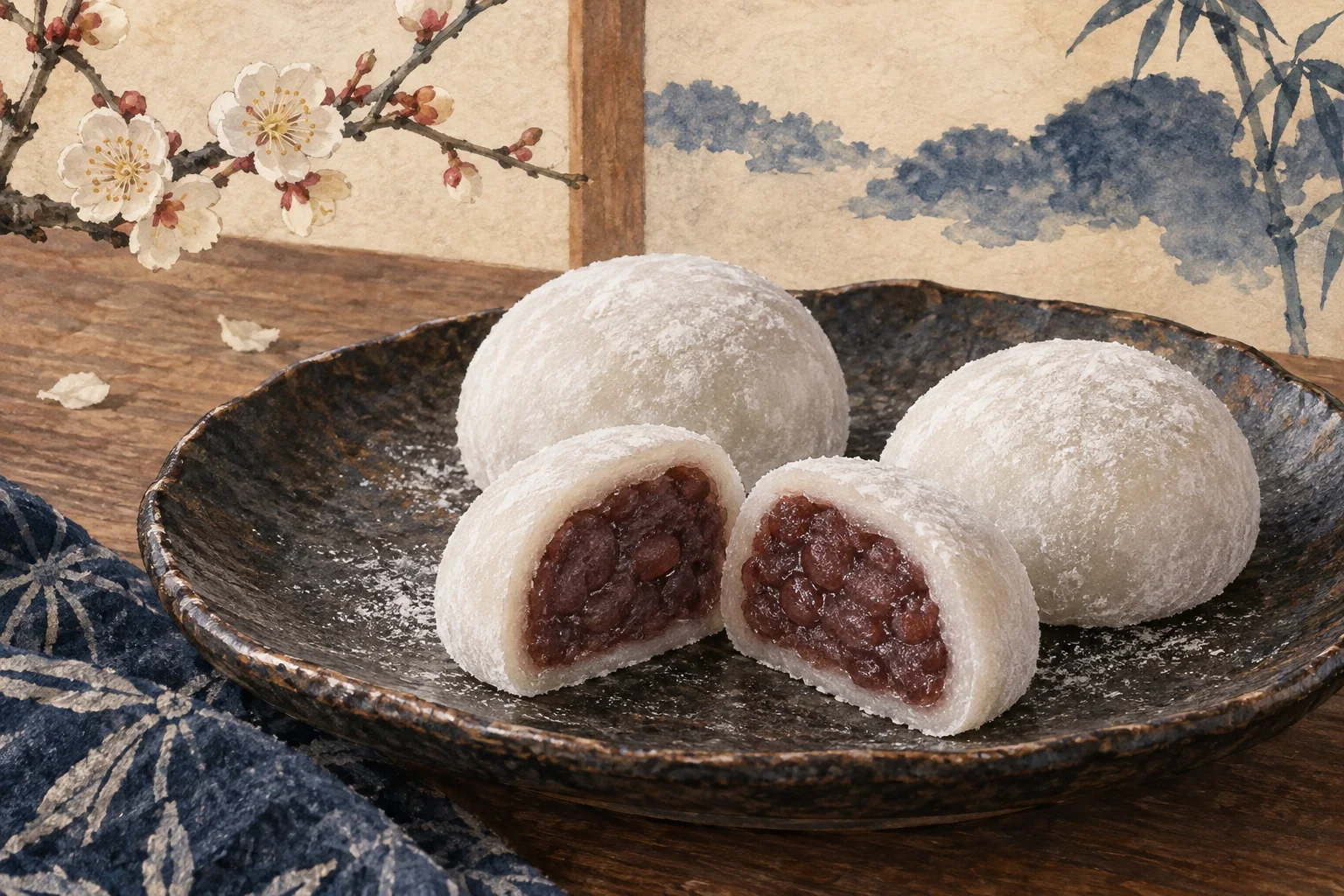
餅で餡を包んだ菓子。いちご大福は1980年代に生まれた新しいもの。
一言で言うと
これだけ覚えれば最低限伝わる一文
Daifuku is a soft pounded rice cake wrapped around sweet bean paste, dusted with starch so it doesn't stick.
大福とは、柔らかい餅で餡を包み、くっつかないように粉をまぶした菓子です。
30秒で説明する
外国人に説明するときの標準サイズ
Daifuku is mochi — rice pounded until it becomes a smooth elastic dough — wrapped around a ball of sweet azuki bean paste and dusted with potato or rice starch. It is soft, chewy and eaten fresh, usually within a day. The strawberry version, with a whole berry inside the bean paste, is a modern invention from the 1980s and is now as standard as the original.
大福は餅、つまり米をついて滑らかで弾力のある生地にしたもので、それで小豆の餡を包み、片栗粉や餅取り粉をまぶします。柔らかく、よく伸び、たいてい当日のうちに食べます。餡の中に丸ごと苺を入れたいちご大福は1980年代に生まれた新しいもので、いまでは元のものと同じくらい定番になっています。
スピーチ・英作文
通訳案内士の二次口述・大学入試の自由英作文に
Daifuku is one of the Japanese sweets foreign visitors most often enjoy, partly because the texture is the point. Mochi is made by pounding steamed glutinous rice until the grains disappear and it becomes a single smooth, elastic mass — not a dough you mix, but rice beaten into a new material.
A piece of that is flattened, a ball of sweetened azuki bean paste is placed inside, and it is closed and dusted with starch so it does not stick to your fingers. Eaten the day it is made, it is soft enough to pull apart; a day later it is noticeably firmer. The filling can be smooth or coarse bean paste, or white bean, and there are salted versions.
The one worth mentioning is ichigo daifuku, with a whole strawberry sitting inside the bean paste. Many people assume it is old; it was actually created in the 1980s, several shops claim to have been first, and it spread very fast because the sourness of the fruit cuts the sweetness of the paste.
大福は、外国から来た人が気に入ることの多い和菓子です。口当たりそのものが値打ちだからでしょう。餅は、蒸したもち米を米粒が消えるまでつき、滑らかで弾力のある一つの塊にしたもの。こねて作る生地ではなく、米を叩いて別の素材に変えたものです。
それを薄く広げ、甘く炊いた小豆の餡を置いて包み、指につかないように粉をまぶします。作ったその日なら、引っ張ればすっと伸びるほど柔らかく、一日たつとはっきり固くなります。中身はこしあんでも粒あんでもよく、白餡のものも、塩気のあるものもあります。
触れておきたいのはいちご大福です。餡の中に苺が丸ごと入っています。古くからあるものだと思う人も多いのですが、生まれたのは1980年代。最初に作ったと名乗る店がいくつもあり、あっという間に広がりました。果物の酸味が餡の甘さを切るからです。
こう聞かれたら
外国人から実際にされる質問と、その答え方。
What is mochi exactly?
餅とは何ですか。
Steamed glutinous rice pounded until the grains break down into one elastic mass. It is not flour and water; it is rice itself, changed by beating.
蒸したもち米を、粒がなくなるまでついて一つの弾力のある塊にしたものです。粉と水ではありません。米そのものを、つくことで変えたものです。
Is it dangerous to eat?
食べるのは危なくないですか。
Take small bites and chew well, and it is fine for most people. The choking warnings you hear in Japan are mostly about elderly people eating mochi at New Year.
小さくかじって、よくかんで食べれば、たいていの人は大丈夫です。日本でよく聞く窒息への注意は、おもにお正月に高齢者が餅を食べるときのものです。
How long does it keep?
どれくらいもちますか。
A day, really. Fresh mochi hardens quickly, which is why shops make it daily and why supermarket versions often contain ingredients that keep them soft.
実際には一日です。ついた餅はすぐ固くなるので、店は毎日作りますし、スーパーのものには柔らかさを保つ材料が入っています。
誤解されやすい
MYTHStrawberry daifuku is an old traditional sweet.
いちご大福は昔からの和菓子だ、と思われがちです。
FACTIt was created in the 1980s. Several shops claim to have invented it, and it became standard within a decade.
1980年代に生まれたものです。最初に作ったと名乗る店が複数あり、十年ほどで定番になりました。
そのまま使えるフレーズ
- It's pounded rice cake around sweet bean paste.ついた餅で餡を包んだ菓子です。
- The white powder stops it sticking to your fingers.白い粉は、指につかないようにするためです。
- Eat it the same day — it hardens fast.その日のうちに食べてください。すぐ固くなります。
- The strawberry one is from the 1980s.いちご大福は1980年代のものです。
- You can choose smooth or chunky bean paste.こしあんか粒あんか、選べます。
説明に使う語句
- pounded rice cake餅
- sweet bean paste餡
- dusting starch餅取り粉
- chewy texture弾力・もちもち
- Japanese confectionery和菓子
動画で見る
YouTube より豆知識
大福はもともと「腹太餅(はらぶともち)」と呼ばれ、江戸時代に小ぶりで甘い形に改められて「大腹餅」となり、縁起のよい字に変えて「大福餅」になったとされる。いちご大福は1980年代に登場し、発祥を名乗る店が東京をはじめ各地に複数ある。豆大福は餡に赤えんどう豆を混ぜ込んだもので、塩気が甘さを引き立てる。
