中小企業と下請けちゅうしょうきぎょうとしたうけ
chusho kigyo to shitauke
small and midsize firms and the subcontracting pyramid
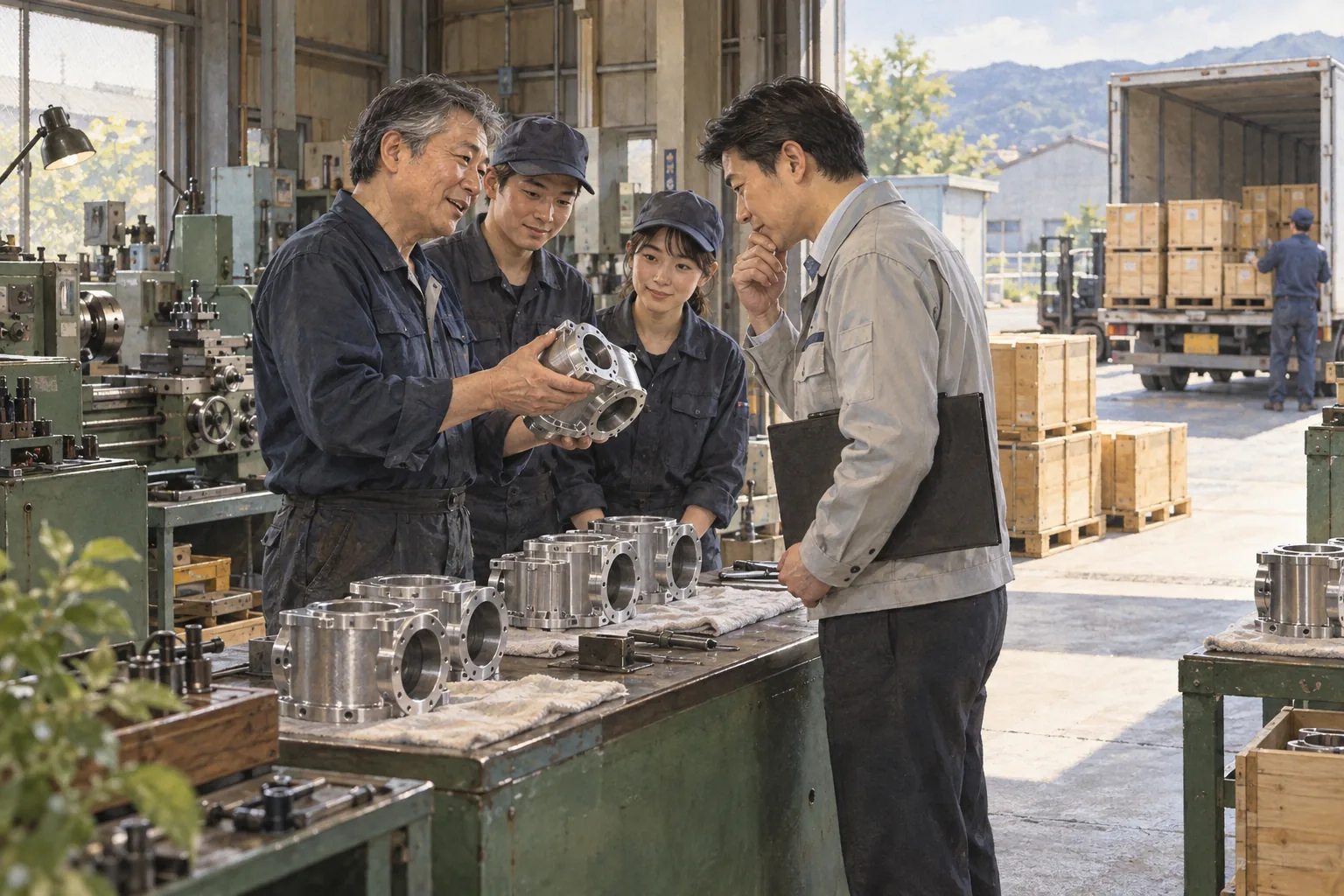
会社の99.7%は中小企業。大企業の下を支える構造がある。
一言で言うと
これだけ覚えれば最低限伝わる一文
Chusho kigyo to shitauke, small firms and subcontractors, are almost all of Japan's companies, many depending on one larger client.
中小企業と下請けとは、日本の会社のほぼすべてを占める中小の会社と、その多くが一社の大きな取引先に頼る仕組みのことです。
30秒で説明する
外国人に説明するときの標準サイズ
Small and midsize enterprises, defined by capital and employee count that vary by industry, make up 99.7% of Japanese companies and employ nearly seventy percent of all workers. Many operate as shitauke, subcontractors making parts or performing work for a single larger manufacturer or general contractor under a long-term, often exclusive relationship. This structure let large firms scale up quickly after the war while pushing cost and inventory risk down the chain. It also means a subcontractor's fortunes rise and fall with one client's orders.
資本金や従業員数で業種ごとに定義される中小企業は、日本の会社の99.7%を占め、働く人のおよそ七割を雇用しています。その多くは下請けとして、一社の大きな製造業者や元請けのために、長期的でしばしば専属に近い関係のもとで部品を作ったり作業を行ったりしています。この構造のおかげで、大企業は戦後急速に規模を拡大でき、費用や在庫のリスクを取引の連鎖の下へ押し出すことができました。同時に、下請け企業の業績は一社の発注に大きく左右されることにもなります。
スピーチ・英作文
通訳案内士の二次口述・大学入試の自由英作文に
Talk to almost any Japanese worker about their company and there is a strong chance it is a small or midsize enterprise, since these make up 99.7% of all companies and employ roughly seventy percent of the workforce, according to the trade ministry's own count. A great many of them exist as shitauke, subcontractors that manufacture parts, assemble components or provide services for a single larger client, often a major manufacturer, under contracts that can last decades.
This pyramid structure, sometimes called keiretsu when it involves formal capital ties, let major companies expand quickly after the war by pushing much of the cost of holding inventory, absorbing slow periods and investing in equipment onto their subcontractors. The relationship is not purely exploitative; it can bring stable long-term orders and technical guidance from the larger partner. But it also means a subcontractor with one dominant client has little bargaining power over prices, and a law exists specifically to stop large firms from unilaterally cutting the price they pay after an order has been placed.
日本で働く人にどんな会社かと聞けば、多くの場合、中小企業だという答えが返ってきます。経済産業省自身の集計によれば、中小企業は会社全体の99.7%を占め、働く人のおよそ七割を雇用しているからです。その多くは下請けとして存在し、一社の大きな取引先、多くはある製造業の大手のために、部品を作り、組み立て、あるいはサービスを提供しており、その契約は何十年も続くことがあります。
資本関係を伴う場合には系列と呼ばれることもあるこの構造は、戦後、大企業が在庫を抱えるリスクや、仕事の少ない時期の負担、設備投資の一部を下請けに押し出すことで、急速に規模を拡大することを可能にしました。
この関係は一方的な搾取だけではなく、大きな取引先から安定した長期の発注や技術指導を受けられることもあります。しかし、一社に大きく依存する下請け企業は価格交渉での立場が弱く、発注したあとに一方的に代金を減らすことを大企業に禁じる法律が、まさにそのために存在しています。
こう聞かれたら
外国人から実際にされる質問と、その答え方。
What counts as a small or midsize company?
どこからが中小企業になるのですか。
It is defined by capital and employee count, and the threshold differs by industry: a manufacturer with up to 300 employees or 300 million yen in capital counts as small or midsize, while the cutoff is lower for retail and services.
資本金と従業員数で定義され、業種によって基準が異なります。製造業なら従業員300人以下または資本金3億円以下が中小企業にあたり、小売業やサービス業では基準はもっと低くなります。
Is being a subcontractor a bad position to be in?
下請けであることは不利な立場なのですか。
It can be stable, since a long relationship provides steady orders, but it concentrates risk on one client. Laws exist to stop large firms from delaying payment or forcing unreasonable price cuts, though enforcement varies.
長い関係は安定した発注をもたらすため必ずしも不利とは限りませんが、リスクが一社に集中します。大企業が支払いを遅らせたり不当な値下げを迫ったりすることを禁じる法律はありますが、その運用には差があります。
Can a subcontractor grow into an independent company?
下請け企業が独立した会社に成長することはあるのですか。
Yes, some develop unique technology and diversify their client base, eventually becoming leaders in a narrow niche, sometimes called a hidden champion. Others remain dependent on one client for their entire existence.
あります。独自の技術を育て、取引先を分散させ、やがて狭い分野で世界的な地位を築く、いわゆる隠れたチャンピオンになる会社もあります。一方で、存続する間ずっと一社に頼り続ける会社もあります。
そのまま使えるフレーズ
- We're a subcontractor for a major automaker.うちは大手自動車メーカーの下請けです。
- Most of Japan's companies are small or midsize.日本の会社のほとんどは中小企業です。
- They depend on a single client for most of their orders.彼らは受注の大半を一社に頼っています。
- The law protects subcontractors from unfair price cuts.法律が、不当な値下げから下請け企業を守っています。
- That firm supplies parts to several major manufacturers.あの会社は複数の大手メーカーに部品を供給しています。
説明に使う語句
- small and midsize enterprise中小企業
- subcontractor下請け
- prime contractor元請け
- business group with capital ties系列
- Subcontract Act (renamed in 2026)下請法(2026年から取適法)
動画で見る
YouTube より豆知識
中小企業庁の集計(令和3年経済センサス-活動調査による)では、中小企業は336万4,891社で企業総数の99.7%、従業者数は3,309万8,442人で全体の69.7%を占めます。中小企業基本法は資本金と従業員数で中小企業を定義し、製造業などは資本金3億円以下または従業員300人以下、卸売業や小売業、サービス業ではより低い基準が設けられています。親事業者が下請け事業者に対して代金を不当に減額したり支払いを遅らせたりすることを禁じてきた下請代金支払遅延等防止法(下請法)は、2026年1月の改正法施行で「中小受託取引適正化法」(取適法)に名を改め、法律上の「下請事業者」という語も「中小受託事業者」に改められました。
