シャッター商店街しゃったーしょうてんがい
shatta-shotengai
a shopping street where most storefronts are permanently shuttered
中心街の商店街が、郊外の大型店に客を奪われて静かにさびれていく。
一言で言うと
これだけ覚えれば最低限伝わる一文
A shatta shotengai is an old shopping street where most storefronts stay shuttered, hollowed out by suburban superstores.
シャッター商店街とは、郊外の大型店に客を奪われ、多くの店がシャッターを下ろしたままの古い商店街のことです。
30秒で説明する
外国人に説明するときの標準サイズ
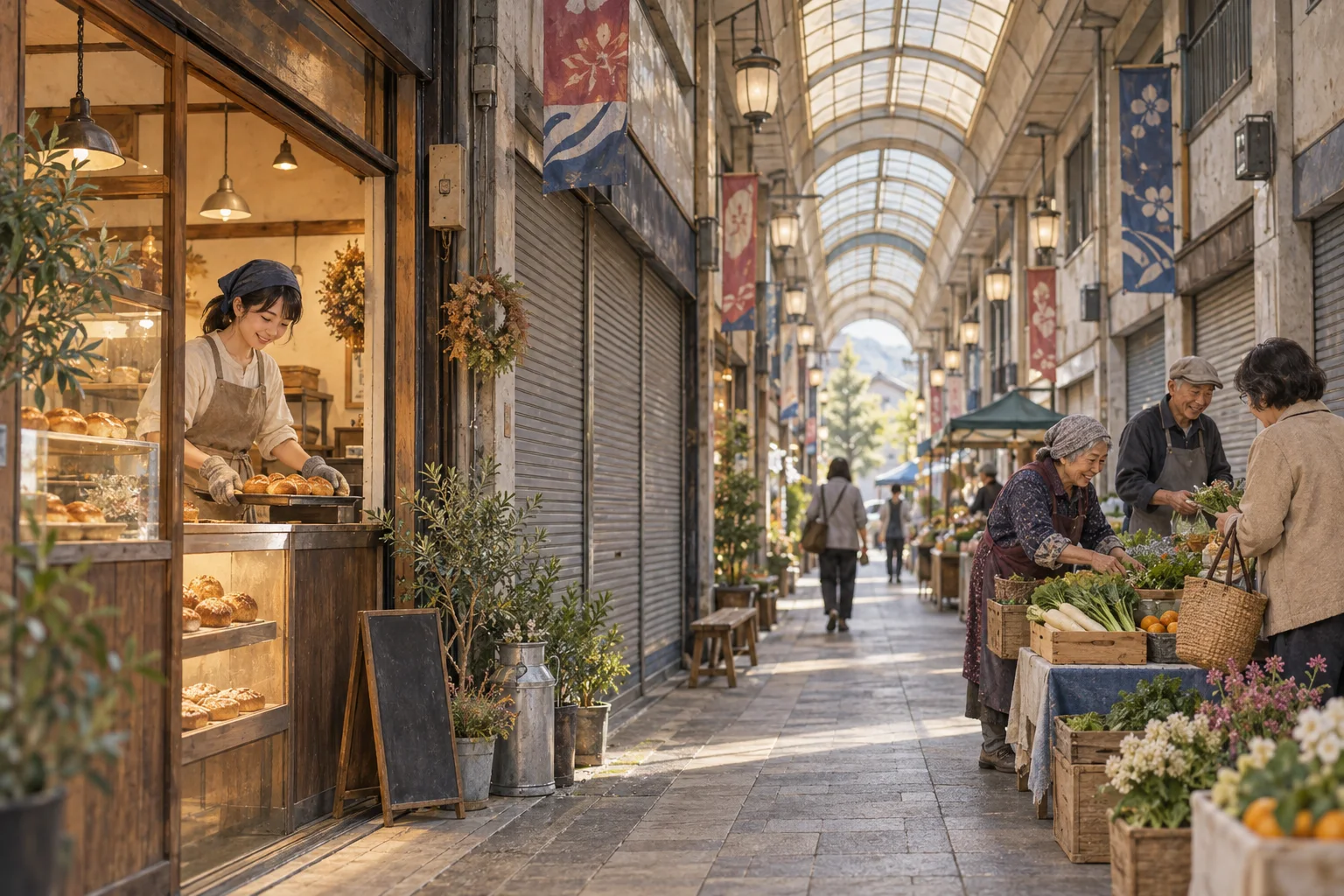
Many Japanese towns have an old covered shopping street near the train station, built when local shops were the only option nearby. As large suburban stores with free parking spread after regulations on them were loosened, shoppers with cars drifted away, and small family-run stores in the old street closed one by one, leaving rows of pulled-down metal shutters even in the middle of the day. The result is called a shatta shotengai, and it has become shorthand for regional decline itself.
日本の多くの町には、駅の近くに古い屋根付きの商店街があり、かつては地元の店しか選択肢がなかった時代に作られたものです。規制が緩和されて無料駐車場つきの郊外の大型店が広がると、車を持つ客はそちらへ流れ、旧市街の小さな個人商店は一軒また一軒と閉まり、昼間でも金属製のシャッターが下りたままになりました。こうしてできたのがシャッター商店街で、地方の衰退そのものを表す言葉としても使われるようになりました。
スピーチ・英作文
通訳案内士の二次口述・大学入試の自由英作文に
A shatta shotengai, literally a 'shutter shopping street,' is what happened to the old covered arcades that used to be the commercial heart of a Japanese town. Through the late twentieth century, national law tightly restricted large stores to protect small shopkeepers, but a 2000 law replaced that system with looser rules focused on traffic and the environment rather than protecting competitors.
Big suburban stores with parking lots multiplied after that, and shoppers who now had a car simply drove to where parking was free and prices were lower. The small, family-run shops downtown, many without an heir willing to take over anyway, closed one at a time, and their metal shutters stayed pulled down even during business hours because nobody bought the space or opened something new.
Some towns have tried to revive their shotengai with events, subsidized rents for young shopkeepers, or converting empty stores into cafés, with real but limited success. Walking through one today, past a few shops that are still open, is a quick, visible lesson in Japan's shrinking, aging regional cities.
シャッター商店街とは、かつて町の商業の中心だった屋根付きのアーケード街が変わり果てた姿を指す言葉です。20世紀後半まで、国の法律は大型店の出店を厳しく規制し、小さな商店を守っていましたが、2000年の法律でその仕組みは、競合店の保護ではなく交通や環境への配慮を重視する、より緩い規制に置き換わりました。
それ以降、駐車場を備えた郊外の大型店が各地で増え、車を持つようになった客は、駐車無料で値段の安いそちらへ流れていきました。もともと後継ぎがいないことも多かった旧市街の個人商店は一軒ずつ閉まり、誰も店舗を買い取らず新しい店も開かなかったため、金属製のシャッターは営業時間中でも下りたままになりました。
イベントの開催や、若い店主への家賃補助、空き店舗のカフェへの転用などで商店街の再生を試みる町もあり、成果は本物ではあっても限られています。今もなお営業を続ける数軒の店の間を歩けば、日本の地方都市が縮小し高齢化していく様子を、手早く目にすることができます。
こう聞かれたら
外国人から実際にされる質問と、その答え方。
Why don't new businesses just move into the empty shops?
なぜ新しい店が空き店舗に入らないのですか。
Many owners keep the property rather than sell or rent it, sometimes for tax reasons or simple attachment, which keeps storefronts closed even when a new shop might want the space.
多くの所有者は物件を売ったり貸したりせずに持ち続けており、税金上の理由や単なる愛着からそうしていることもあります。そのため新しい店が入りたくても、店舗が閉まったままになりがちです。
Is this only happening in small towns?
これは小さな町だけで起きていることですか。
It's worst in smaller regional cities, but you can find at least a few shuttered blocks even in mid-sized cities, wherever a suburban shopping mall opened nearby with free parking.
小規模な地方都市でとりわけ深刻ですが、無料駐車場つきの郊外型ショッピングモールが近くにできた場所なら、中規模の都市でも少なくとも数区画のシャッター街を見つけられます。
Are any of these streets being revived?
こうした商店街を再生する取り組みはありますか。
Some are, usually through local government subsidies for young shopkeepers, food and art events, or turning empty units into cafés and co-working spaces, though results vary a lot from town to town.
ある町ではあります。多くは自治体による若い店主への家賃補助、食や芸術のイベント、空き店舗をカフェやコワーキングスペースに変える取り組みなどで、成果は町によって大きく異なります。
誤解されやすい
MYTHShuttered shopping streets are simply abandoned and empty of people.
シャッター商店街は、人がまったく居ない廃墟のような場所だと思われがちです。
FACTMany still have a handful of open shops, a shrine or bus stop that keeps foot traffic going, and are more a symbol of decline than a true ghost town.
実際には数軒の営業中の店や、人の流れを保つ神社やバス停が残っていることが多く、完全な廃墟というより衰退の象徴という方が近いです。
そのまま使えるフレーズ
- This shopping street used to be much busier.この商店街は昔もっと賑やかでした。
- Half the shops here are closed now.ここの店は半分くらい閉まっています。
- A big store opened near the highway.幹線道路沿いに大きい店ができました。
- The town is trying to revive the shopping street.町は商店街の再生に取り組んでいます。
- That shop has been in the same family for generations.あの店は代々同じ家族が続けています。
説明に使う語句
- shopping street商店街
- shutterシャッター
- suburban store郊外店
- regional decline地方の衰退
- successor後継者
動画で見る
YouTube より豆知識
2000年、大型店の出店を実質的に規制していた大規模小売店舗法(大店法)が廃止され、交通や環境への配慮を条件とする大規模小売店舗立地法に置き換わった。これにより郊外への出店規制が緩み、駐車場を備えた大型店が各地に広がった一方、中心市街地の商店街では後継者不足も重なり、閉店した店の跡がシャッターを下ろしたまま何年も残る例が増えた。商店街の空き店舗率を調べる自治体もあり、若い店主への家賃補助やイベントで再生を試みる例もある。
