職人の後継者不足しょくにんのこうけいしゃぶそく
shokunin no kokeisha busoku
the shortage of successors for traditional craftspeople
働き手は最盛期の五分の一以下。跡を継ぐ人が見つからない。
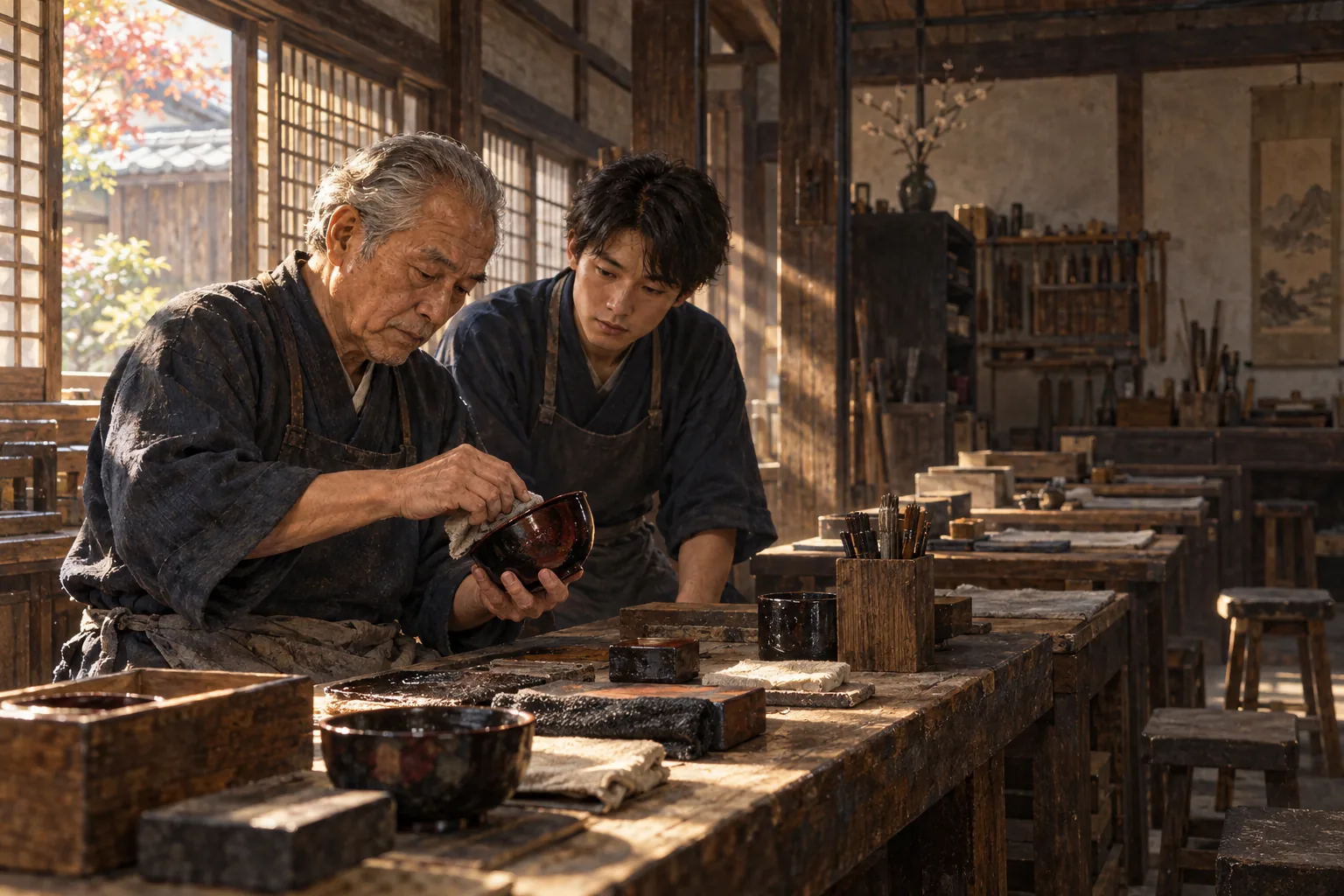
一言で言うと
これだけ覚えれば最低限伝わる一文
Shokunin no kokeisha busoku, or the shortage of craft successors, is the steep shrinking of Japan's traditional craft workforce.
職人の後継者不足とは、日本の伝統工芸を作る働き手が大きく減っている問題です。
30秒で説明する
外国人に説明するときの標準サイズ
The number of people working in Japan's officially designated traditional craft industries fell from about 288,000 in 1979 to roughly 48,000 by 2022, and the value of what they produce has dropped by a similar proportion. Long training periods, low pay relative to the skill required, and shrinking domestic demand for handmade goods all discourage young people from entering. Surveys of craft businesses regularly find that more than half have no one lined up to take over, and some techniques risk disappearing when a single master retires.
経済産業省が指定する伝統的工芸品産業で働く人の数は、1979年の約28万8千人から2022年度には約4万8千人にまで減り、生産額もほぼ同じ割合で落ち込んでいます。修業に長い年月がかかること、求められる技術に見合わない賃金、手作りの品への国内需要の縮小が重なり、若い人が入ってこなくなっています。工芸事業者を対象にした調査では、後継者のめどが立っていない事業者が半数を超えるという結果がたびたび出ており、一人の親方の引退とともに技術そのものが途絶える危険もあります。
スピーチ・英作文
通訳案内士の二次口述・大学入試の自由英作文に
Behind almost every traditional Japanese craft, from lacquerware to sword-forging to hand-woven textiles, sits the same worry: who will do this after the current generation retires. According to figures from the industry's own promotion association, the number of people working in officially designated traditional craft industries fell from about 288,000 workers in 1979, near the postwar peak, to roughly 48,000 by 2022, and production value has fallen by a comparable share.
The reasons compound each other. Mastering a craft can take a decade before a person earns a full income from it, wages rarely match the skill involved, and the everyday goods these crafts once supplied, dishes, furniture, clothing, are now bought mass-produced and cheap. Surveys of craft producers routinely find more than half with no successor identified.
Local governments and industry groups now run apprenticeship subsidy programs and recruit interested outsiders with no family connection to the trade, since the old assumption that a craft passes from parent to child inside one family can no longer be relied on to keep it alive.
漆器から刀鍛冶、手織りの織物まで、日本のほぼすべての伝統工芸の背後には、同じ心配があります。今の世代が引退したあと、誰がこれを続けるのかということです。業界団体自身の集計によれば、伝統的工芸品産業に指定された分野で働く人は、戦後のピークに近い1979年の約28万8千人から、2022年度には約4万8千人にまで減り、生産額もほぼ同じ割合で落ち込みました。
理由は重なり合っています。一人前になるまで十年ほどかかることも珍しくなく、賃金は求められる技術に見合わず、これらの工芸がかつて支えていた日用の品、食器や家具や衣類は、今では大量生産の安いものが買われています。
工芸の作り手を対象にした調査では、後継者が決まっていない事業者が半数を超えるという結果が繰り返し出ています。地方自治体や業界団体は、修業への補助金や、家業としてのつながりのない人材を募る取り組みを進めています。工芸が親から子へ家の中で受け継がれるという昔ながらの前提には、もはや頼れないからです。
こう聞かれたら
外国人から実際にされる質問と、その答え方。
Can anyone learn a traditional craft, or does it have to run in the family?
伝統工芸は誰でも学べるのですか、それとも家業でなければならないのですか。
Increasingly anyone can. Many workshops now recruit outside apprentices with no family connection, and some regions run funded training programs specifically to bring in newcomers, since relying only on family succession no longer produces enough successors.
今はだんだん誰でも学べるようになっています。多くの工房が家とつながりのない外部の弟子を募るようになり、新しい人材を呼び込むための補助つきの研修制度を設けている地域もあります。家族による継承だけに頼っていては、十分な後継者が確保できなくなっているからです。
Why don't more young people want to do this work?
どうして若い人はこの仕事をやりたがらないのですか。
The training is long and often unpaid or low-paid at first, the finished goods now compete with cheap factory-made alternatives, and the income at the end is uncertain, which makes it a hard sell next to a stable salaried job.
修業は長く、最初は無給か低賃金であることが多く、完成した品は安い工場製の代替品と競争しなければならず、その先の収入も不確かです。安定した給与の仕事と比べると、選びにくいのが実情です。
What happens to a craft if no successor is found?
後継者が見つからないと、その工芸はどうなるのですか。
In the worst case the specific technique dies with the last practitioner, since much of the knowledge is never fully written down. Some crafts have already narrowed to a handful of workshops nationwide, keeping the skill alive but barely.
最悪の場合、その技術は最後の担い手とともに失われます。知識の多くは、文書として完全には残されていないからです。すでに全国でごくわずかな工房しか残っておらず、かろうじて技術をつないでいる工芸もあります。
そのまま使えるフレーズ
- This workshop has been looking for an apprentice for years.この工房は何年も弟子を探しています。
- He's the last person who still makes these by hand.これを今も手作りしているのは彼だけです。
- There's no one in the family to take over.家業を継ぐ身内がいません。
- The technique could disappear within a generation.この技術は一世代のうちに途絶えかねません。
- She trained under a master with no family connection.彼女は家とは無縁の親方のもとで修業しました。
説明に使う語句
- successor後継者
- apprenticeship修業
- traditional craft industry伝統的工芸品産業
- hand-made手作り
- outside apprentice外部の弟子
動画で見る
YouTube より豆知識
伝統的工芸品産業振興協会によれば、伝統的工芸品産業の従事者数は1979年の約28万8千人をピークに、2022年度には4万8,334人まで減少しました。生産額も1983年の約5,400億円から2022年度には約1,050億円まで落ち込んでいます。多くの調査で、後継者が決まっていない事業者が半数を超えるという結果が示されており、経済産業省は伝統的工芸品産業の振興に関する法律にもとづき、後継者育成のための助成や研修を支援しています。
