ちらし寿司ちらしずし
chirashi-zushi
sushi rice topped or mixed with a variety of ingredients
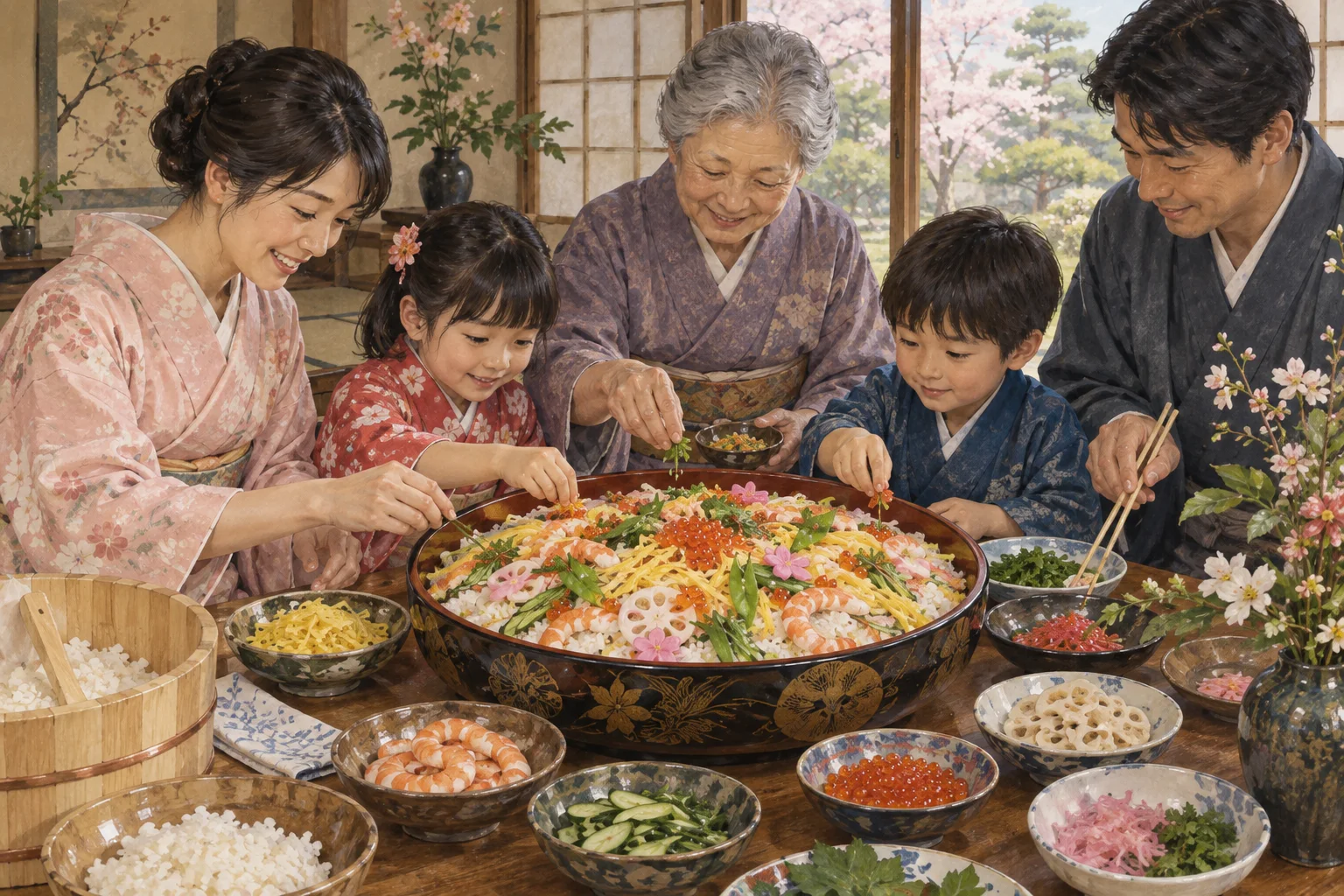
握らない寿司。ひな祭りの食卓に欠かせない、彩り豊かな一皿。
一言で言うと
これだけ覚えれば最低限伝わる一文
Chirashi-zushi is sushi rice scattered with a colorful mix of toppings, eaten at celebrations like Girls' Day.
ちらし寿司とは、酢飯に彩り豊かな具を散らした寿司で、ひな祭りなどのお祝いに欠かせません。
30秒で説明する
外国人に説明するときの標準サイズ
Chirashi-zushi, literally scattered sushi, skips the shaping that nigiri and rolls require: vinegared rice is simply topped or mixed with a colorful assortment of ingredients. In the Kansai style, cooked vegetables, egg and fish are mixed straight into the rice; the Tokyo style, closer to sashimi, layers raw fish on top just before serving. Its bright colors make it a fixture at Hinamatsuri, the Girls' Day festival in March, and other celebrations.
ちらし寿司は、握りや巻き寿司のように形を作る手間がなく、酢飯にさまざまな具を散らしたり混ぜたりするだけの寿司です。関西風は、煮た野菜や卵、魚などを酢飯そのものに混ぜ込みます。刺身に近い東京風は、食べる直前に生魚を上にのせて仕上げます。彩りが華やかなので、3月のひな祭りをはじめ、祝いの席の定番になっています。
スピーチ・英作文
通訳案内士の二次口述・大学入試の自由英作文に
Chirashi-zushi is one of the easiest styles of sushi to make at home, and understanding it clears up a common confusion for visitors who think sushi always means raw fish carefully shaped by hand. The word means scattered sushi, and it covers two related but different dishes. In the Kansai style, sometimes called bara-zushi, cooked ingredients — shiitake mushroom, egg, lotus root, shrimp — are mixed directly into the vinegared rice, so it keeps well and travels easily, closer to a rice salad than to sashimi.
The Tokyo, or Edomae, style is closer to what a visitor might expect: sashimi-grade raw fish, roe and other toppings are arranged on top of the rice just before eating, and it does not keep. What both versions share is the occasion: chirashi-zushi's bright mix of colors, often including pink, white and green ingredients, has made it the standard dish for Hinamatsuri on March 3rd, when families with daughters set out dolls and wish for their health, and it appears at other celebrations for the same reason.
ちらし寿司は、家庭でとくに手軽に作れる寿司の形で、これを知ると、寿司といえば必ず生魚を手で丁寧に形作るものだと思っている旅行者によくある誤解が解けます。「ちらし」とは散らすという意味で、似ているようで違う二つの料理を指します。
関西風、ばら寿司とも呼ばれるものは、しいたけ、卵、れんこん、えびなどの調理済みの具を酢飯そのものに混ぜ込むので、日持ちがよく持ち運びやすく、刺身というよりご飯のサラダに近いものです。東京風、江戸前風は、旅行者が想像するものに近く、刺身用の生魚やいくらなどの具を、食べる直前に酢飯の上に並べて仕上げ、日持ちはしません。
どちらにも共通しているのは、それを食べる機会です。ピンクや白、緑を含む彩り豊かなちらし寿司は、3月3日のひな祭り、娘のいる家庭が人形を飾って健やかな成長を願う日の定番料理となっており、同じ理由でほかの祝いの席にも登場します。
こう聞かれたら
外国人から実際にされる質問と、その答え方。
Is this the same as chirashi bowls served at sushi restaurants?
寿司屋で出てくるちらし丼と同じものですか。
Close, though restaurants usually serve the Edomae style, with raw fish arranged on top of the rice, while the home-cooked version, especially in Kansai, more often mixes cooked ingredients into the rice itself.
近いものですが、寿司屋ではふつう江戸前風、つまり酢飯の上に生魚を並べたものが出ます。家庭で作るもの、とくに関西風は、調理済みの具を酢飯そのものに混ぜ込むことが多いです。
Why is it eaten at Hinamatsuri?
どうしてひな祭りに食べるのですか。
Its bright, varied colors are seen as festive and auspicious, and the mix of ingredients is easy to make in a large batch for a family gathering, which fits a holiday centered on wishing daughters good health.
彩り豊かでさまざまな具が入っている様子が祝いにふさわしく縁起がよいとされ、家族が集まる場に合わせて大人数分をまとめて作りやすいことも、娘の健やかな成長を願う行事に合っています。
Does it keep well, or should I eat it right away?
日持ちはしますか、それともすぐ食べたほうがよいですか。
The Kansai-style version with cooked ingredients mixed in keeps reasonably well for a day. If raw fish is arranged on top in the Edomae style, it should be eaten the same day it's made.
調理済みの具を混ぜ込んだ関西風は、一日程度なら比較的日持ちします。江戸前風で生魚が上にのっている場合は、作った当日のうちに食べるべきです。
そのまま使えるフレーズ
- This is the Kansai-style, mixed version.これは関西風の、混ぜ込むタイプです。
- We eat this for Girls' Day.ひな祭りにこれを食べます。
- No shaping needed, just scatter the toppings.形を作る必要はなく、具を散らすだけです。
- It's colorful, so it feels festive.彩りがよいので、お祝いらしく感じます。
- This version keeps for a day.このタイプは一日くらい日持ちします。
説明に使う語句
- scattered sushiちらし寿司
- mixed sushi (Kansai style)ばら寿司
- Edo-style, sashimi-topped江戸前風
- fish roeいくら
- Girls' Dayひな祭り
動画で見る
YouTube より豆知識
ちらし寿司は、関西の「ばら寿司」と、東京の「江戸前ちらし」に大きく分けられるとされる。関西風は具を酢飯に混ぜ込み、東京風は刺身などを上にのせて仕上げる点が異なる。3月3日のひな祭りに食べられるのは、彩りのよさが祝いの席にふさわしいとされることに加え、えびは長寿、れんこんは見通しがよいことを表すなど、具材それぞれに縁起を込める考え方があるためとされる。地域や家庭によって使う具材や味付けはさまざまで、決まった正式なレシピがあるわけではない。
