和ろうそくわろうそく
warosoku
Japanese plant-wax candles
炎が大きく揺れる。芯が中空だから、空気を吸い上げる。
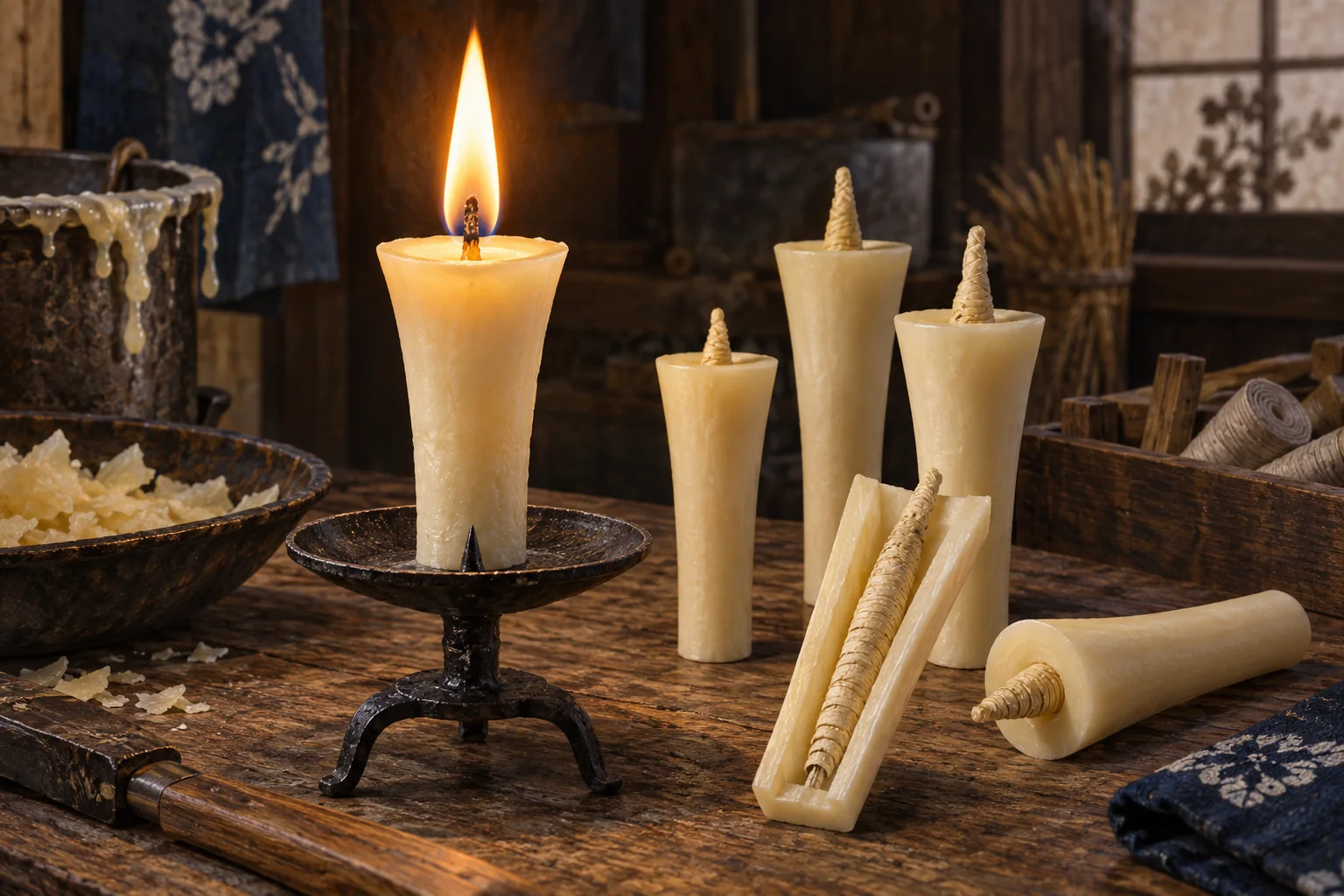
一言で言うと
これだけ覚えれば最低限伝わる一文
A warosoku is a Japanese candle made from plant wax with a hollow paper wick, giving a large moving flame.
和ろうそくとは、植物の蝋と中空の和紙の芯で作る日本のろうそくで、大きく揺れる炎になります。
30秒で説明する
外国人に説明するときの標準サイズ
A warosoku is made from plant wax, traditionally from the fruit of the wax tree, built up in layers by hand around a wick of rolled washi paper and rush pith. The wick is hollow, so air is drawn up through it and the flame is large and constantly moving. They are used in temples and for Buddhist altars.
和ろうそくは植物の蝋、伝統的には櫨の実から取った蝋を、和紙と藺草の髄を巻いた芯のまわりに手で層状に塗り重ねて作ります。芯が中空なので空気が吸い上げられ、炎は大きく、絶えず揺れます。寺院や仏壇で使われます。
スピーチ・英作文
通訳案内士の二次口述・大学入試の自由英作文に
A warosoku is a Japanese candle, and it behaves noticeably differently from a western one. The wax is from plants, traditionally pressed from the fruit of the wax tree, and it is traditionally built up by hand in layers around the wick rather than poured into a mold, which is why the candle is slightly conical and shows faint growth rings if you cut it.
The wick is the interesting part: rolled washi paper wrapped around the pith of a rush, and it is hollow. Air is drawn up through the center, so the flame is much larger than the candle's size suggests and moves constantly even in still air. That movement is the point in a dark temple.
There is a practical difference too: the wick does not consume itself, so it has to be trimmed with a special tool as it burns, and soot is lower than with paraffin. They are expensive, made by a small number of workshops, and mostly used for Buddhist rites and altars.
和ろうそくは日本のろうそくで、西洋のものとは目に見えて振る舞いが違います。蝋は植物のもので、伝統的には櫨の実を搾って取ります。伝統的には型に流し込むのではなく、芯のまわりに手で層状に塗り重ねて作るため、わずかに円錐形になり、切ると年輪のような層が見えます。
面白いのは芯です。藺草の髄に和紙を巻いたもので、中が空洞になっています。中心を通って空気が吸い上げられるので、炎は大きさから想像するよりずっと大きく、風のない場所でも絶えず揺れます。
暗い堂の中では、その揺れこそが目的です。実際的な違いもあります。芯は燃え尽きないので、燃えるにつれて専用の道具で切る必要があり、石油由来の蝋より煤は少なくなります。値は張り、作る工房は数少なく、主に仏事と仏壇で使われます。
こう聞かれたら
外国人から実際にされる質問と、その答え方。
Why does the flame move so much?
どうして炎がこんなに揺れるのですか。
The wick is hollow, so air is drawn up through its center and feeds the flame from inside. That makes the flame larger and unstable in a way a solid cotton wick is not, and the movement is regarded as part of its appeal.
芯が中空で、その中心を通って空気が吸い上げられ、内側から炎を養うからです。そのため炎は大きく、木綿の詰まった芯にはない不安定さを持ちます。その揺れが持ち味とされています。
Do I need to do anything while it burns?
燃えているあいだ、何かすることはありますか。
Yes, the wick needs trimming. Because it does not burn away, the charred tip grows and the flame gets ragged and sooty, so you cut it back with a small tool made for the purpose, traditionally at intervals during a rite.
芯を切る必要があります。芯は燃え尽きないので、焦げた先が伸びて炎が乱れ、煤が出ます。そのための小さな芯切りで切り詰めます。法要の間、折を見て行うのが伝統的なやり方です。
そのまま使えるフレーズ
- The wick is hollow, so it draws air.芯が中空で空気を吸い上げます。
- The wax comes from a plant.蝋は植物から取ります。
- The wick has to be trimmed.芯を切る必要があります。
- It's built up in layers by hand.手で層を重ねて作ります。
説明に使う語句
- candleろうそく
- wick芯
- plant wax木蝋
- soot煤
動画で見る
YouTube より豆知識
和ろうそくの蝋は、櫨の実から取る木蝋が伝統的で、米ぬかや漆の実を使うものもあります。芯は藺草の髄に和紙を巻き、真綿で留めます。形には、上が太い「イカリ型」と、まっすぐな「棒型」があります。芯を切るための「芯切り」という道具が付属します。西洋のろうそくが広まって需要は減りましたが、寺院の法要や仏壇では今も使われ、絵を描いた「絵ろうそく」は、雪国で花の代わりに供える習わしから生まれたとされます。
