棚田たなだ
tanada
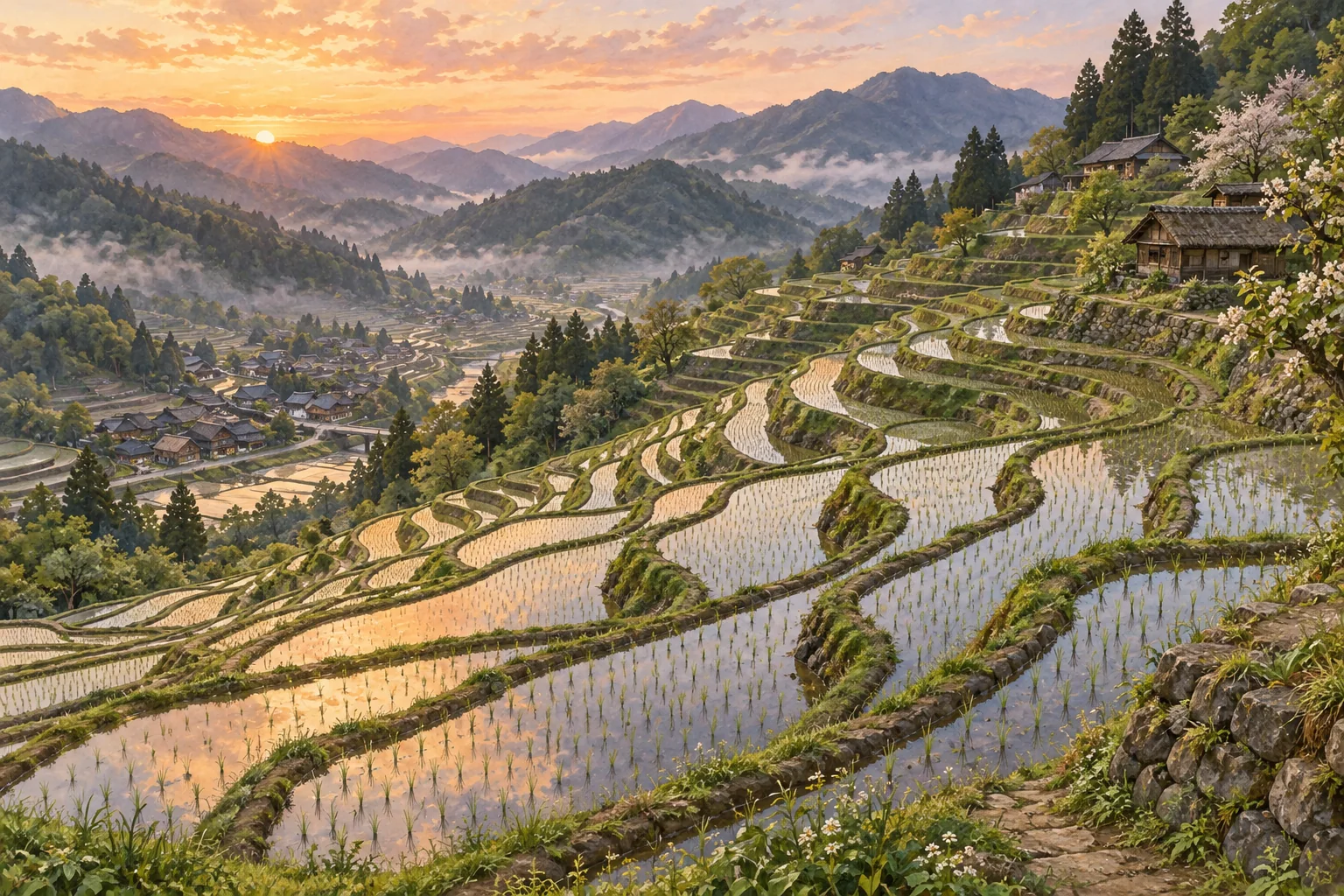
terraced rice paddies cut into mountain slopes
平地が少ない土地で、斜面そのものを階段状に田んぼにした。
一言で言うと
これだけ覚えれば最低限伝わる一文
Tanada are rice paddies terraced in steps up a mountainside, built where flat farmland was too scarce.
棚田とは、平らな農地が少ない土地で、山の斜面そのものを階段状に切り開いた田んぼのことです。
30秒で説明する
外国人に説明するときの標準サイズ
Where mountains leave little flat ground, farmers have long cut narrow, stepped terraces into hillsides and walled each level with earth or stone to hold water for growing rice. Each paddy follows the natural contour of the slope rather than a straight grid, which is why aerial photos of tanada look like rippling contour lines rather than the checkerboard pattern of flatland rice fields. They are far more labor-intensive to farm and harvest than flat paddies, and many are now maintained partly for their landscape value and partly by volunteer or urban-supported programs rather than by full-time farming alone.
山がちで平らな土地が少ない場所では、昔から農家が丘の斜面を細く階段状に切り開き、それぞれの段を土や石の畔で囲んで水をため、稲を育ててきました。一枚一枚の田んぼは、直線の区画ではなく斜面の等高線に沿った形になるため、棚田を空から見ると、平地の田んぼの碁盤の目のような模様ではなく、波打つ等高線のように見えます。平地の田んぼより耕作や収穫の手間ははるかにかかり、今では景観としての価値のために維持されていたり、専業農家だけでなくボランティアや都市部からの支援を受けた仕組みで支えられていたりする棚田も多くあります。
スピーチ・英作文
通訳案内士の二次口述・大学入試の自由英作文に
Rice needs flat, flooded ground, and Japan, being roughly seventy percent mountains, never had enough of it. Where a village had no choice but to farm a hillside, generations of farmers carved it into tanada, terraced paddies stepping down the slope, each held level by an earthen or stone wall and fed by water channeled from a stream higher up. Building and maintaining these terraces by hand, since heavy machinery can't easily work such narrow, irregular plots, made tanada far more labor-intensive per unit of rice than flat paddies, and many were abandoned as the farming population aged and shrank after the war.
In 1999 the agriculture ministry named Nihon no Tanada Hyakusen, the Top 100 Japanese Terraced Rice Paddies, though despite the name the list actually covers 134 terrace areas across 117 municipalities. Sites like Obasute in Nagano and Shiroyone Senmaida in Ishikawa, where paddies run almost to the sea, now draw photographers at planting time in late spring, when each flooded step reflects the sky, and in early autumn, when the rice turns gold.
稲作には平らで水を張れる土地が必要ですが、国土のおよそ七割が山地である日本には、そうした土地が十分にはありませんでした。斜面を耕すしかない村では、何世代もの農家が斜面を棚田へと切り開いてきました。段々になった田んぼで、それぞれの段は土や石の畔で水平に保たれ、上流の川から水路で水が引かれます。
こうした棚田は区画が狭く不揃いなため大型機械が入りにくく、手作業での造成と維持が必要で、面積あたりの手間は平地の田んぼよりはるかにかかります。戦後、農業人口が高齢化し減っていく中で、放棄された棚田も少なくありません。
1999年、農林水産省はこうした文化的・農業的な価値を認め、「日本の棚田百選」を選定しましたが、「百選」という名前にもかかわらず、実際には117市町村にまたがる134の棚田地区が選ばれています。長野の姨捨や、田んぼが海のすぐそばまで続く石川の白米千枚田といった場所は、とくに田植えの時期である晩春——水を張った一段一段が空を映す時期——と、稲が黄金色になる収穫前の初秋に、写真愛好家を集めています。
こう聞かれたら
外国人から実際にされる質問と、その答え方。
Why not just use flat land for rice instead?
田んぼなら、平らな土地を使えばよいのではありませんか。
In mountainous regions there often wasn't enough flat land to begin with, so terracing a slope was the only way for a village to grow enough rice to feed itself, even though it took far more labor than flat farming.
山がちな地域では、そもそも平らな土地が足りないことが多く、村が自分たちの食べる分の米を作るには、斜面を段々に切り開くしかありませんでした。平地での耕作よりずっと手間がかかっても、それが唯一の方法だったのです。
Are tanada still farmed commercially?
棚田は今も商業的に耕作されているのですか。
Some are, but many are maintained through a mix of aging local farmers, volunteer labor, and programs that let city residents "adopt" a paddy for a season, since the terrain makes it hard to farm profitably at scale.
耕作されている棚田もありますが、多くは高齢化した地元農家に加え、ボランティアや、都市部の住民がシーズンだけ田んぼを「オーナー」として支援する仕組みなどで支えられています。地形のせいで、大規模に採算を取って耕作するのが難しいためです。
What's the best time to see them?
見に行くならいつがいちばんよいですか。
Late spring, around May and June, when the flooded paddies before rice planting reflect the sky like mirrors, and early autumn, around September and October, when the rice ripens to gold, are the two seasons most visited.
田植え前、五月から六月ごろ、水を張った田んぼが鏡のように空を映す時期と、稲が黄金色に色づく九月から十月ごろの二つの時期が、最も見に行く人が多い時期です。
そのまま使えるフレーズ
- These terraces were carved into the mountainside by hand.この棚田は人の手で山の斜面を切り開いて作られました。
- Each paddy follows the shape of the slope.一枚一枚の田んぼが斜面の形に沿っています。
- It's beautiful right after planting, when the water reflects the sky.田植え直後、水が空を映すころが美しいです。
- Machines can't easily get onto plots this narrow.これほど狭い区画には機械が入りにくいのです。
- Volunteers help keep some of these terraces going.ボランティアがこうした棚田の維持を手伝っています。
説明に使う語句
- terraced rice paddy棚田
- earthen or stone terrace wall畔
- irrigation channel用水路
- rice planting田植え
- abandoned farmland耕作放棄地
動画で見る
YouTube より豆知識
棚田は、山がちで平地の少ない地域で斜面を段々に切り開いた田んぼで、区画が狭く不揃いなため大型機械が入りにくく、平地の田んぼより多くの手間がかかる。農林水産省は1999年に「日本の棚田百選」を選定したが、名前にもかかわらず実際には117市町村・134地区が選ばれている。戦後の農業人口の高齢化・減少により放棄される棚田も多い一方、長野の姨捨や石川の白米千枚田のように、景観として保護され、ボランティアやオーナー制度によって維持されている例もある。見ごろは、水を張る田植え前の晩春と、稲が色づく初秋とされる。
