卵焼きたまごやき
tamagoyaki
the rolled omelette, sweet or savory depending on where you are
甘いか、出汁か。家ごと、地域ごとに割れていて、どちらも正解。
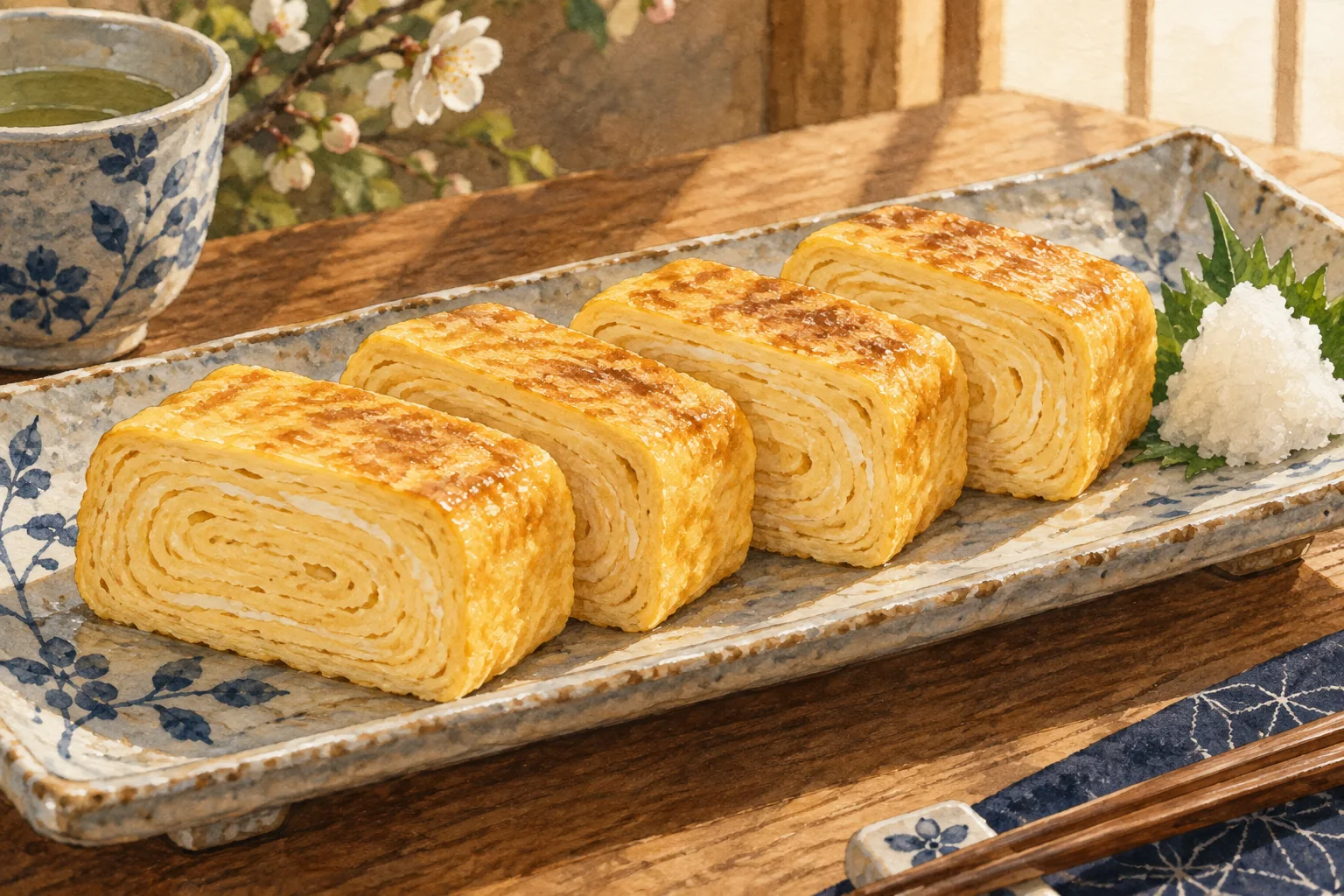
一言で言うと
これだけ覚えれば最低限伝わる一文
Tamagoyaki is a Japanese omelet made by rolling thin layers of egg in a rectangular pan, eaten hot or cold.
卵焼きとは、四角い鍋で薄い卵を何層にも巻いて作る卵料理で、温かくても冷めても食べるものです。
30秒で説明する
外国人に説明するときの標準サイズ
Tamagoyaki is cooked in a rectangular pan: a thin layer of beaten egg is poured, rolled to one end, more egg poured under it, and rolled again, until a layered block forms. It is sliced and eaten at room temperature, which is why it is in almost every bento box. Whether it is sweetened with sugar or seasoned with dashi and soy sauce depends on the region and, more often, on the household.
卵焼きは四角い鍋で作ります。溶いた卵を薄く流し、片側へ巻き、その下にまた卵を流して巻く。これを繰り返すと層になった塊ができます。切り分けて冷めたまま食べられるので、弁当にはほぼ必ず入っています。砂糖で甘くするか、出汁と醤油で味をつけるかは、地方によって、そしてそれ以上に家によって違います。
スピーチ・英作文
通訳案内士の二次口述・大学入試の自由英作文に
Tamagoyaki is worth explaining because the technique is visible and the argument about it is real. It is made in a rectangular pan, which exists for this one dish. You pour a thin layer of beaten egg, let it just set, roll it to one side, pour more egg underneath, and roll again, four or five times, until you have a layered block that you slice like a small loaf.
Done well it holds together without browning, which is harder than it looks. The reason it is in so many lunchboxes is that it tastes right cold. The part Japanese people will argue about is the seasoning.
In much of eastern Japan it is sweetened with sugar and can be genuinely sweet, close to a dessert. In Kansai and in the version served at sushi counters it is seasoned with dashi and soy sauce and is soft and savory. Neither is the correct one, and most people simply prefer whichever their mother made.
卵焼きは説明する値打ちがあります。作り方が目に見えますし、味をめぐる論争が本物だからです。使うのは四角い鍋で、この料理のためだけにある道具です。溶いた卵を薄く流し、固まりかけたら片側へ巻き、その下にまた卵を流して巻く。
これを四回、五回と繰り返すと、層になった塊ができ、小さなパンのように切り分けます。上手に焼けば、焦げ目をつけずにまとまります。見た目より難しい。弁当によく入っている理由は、冷めてもおいしいことです。日本人が言い争うのは味付けのほうです。
東日本の多くでは砂糖を入れ、はっきり甘く、菓子に近いこともあります。関西や寿司屋で出るものは、出汁と醤油で、柔らかく塩気のある味です。どちらが正しいということはなく、たいていの人は、母親が作っていたほうを好みます。
こう聞かれたら
外国人から実際にされる質問と、その答え方。
Is it sweet or salty?
甘いのですか、しょっぱいのですか。
Both exist. Sweet is common in eastern Japan, dashi-seasoned in Kansai and at sushi counters. Ask before you assume — people have strong opinions about it.
どちらもあります。東日本は甘いものが多く、関西や寿司屋は出汁の味です。決めつけずに尋ねてください。これについては、みな譲りません。
Do I need the special pan?
専用の鍋がいるのですか。
It makes the shape possible, but a round pan works if you roll carefully and trim the ends. The rectangular pan is cheap and sold everywhere in Japan.
形を作るには向いていますが、丸い鍋でも丁寧に巻いて端を切れば作れます。四角い鍋は安く、日本ならどこでも売っています。
Why is it in every lunchbox?
どうして弁当に必ず入っているのですか。
It is good cold, it adds color, it uses an ingredient everyone has, and it can be made the night before. Those four things decide most of what goes in a bento.
冷めてもおいしく、色がつき、どの家にもある材料で作れて、前の晩に作れるからです。弁当に入るものは、たいていこの四つで決まります。
誤解されやすい
MYTHTamagoyaki is the same as a Western omelette.
卵焼きは洋風のオムレツと同じものだ、と思われがちです。
FACTIt is built from rolled layers rather than folded once, it is usually not browned, and it is often eaten cold.
一度折るのではなく、薄い層を巻き重ねて作ります。ふつう焦げ目をつけませんし、冷めた状態で食べることも多いです。
そのまま使えるフレーズ
- It's a rolled omelette, cooked in layers.薄く巻き重ねて焼いた卵焼きです。
- Some families make it sweet, some savory.甘く作る家も、出汁で作る家もあります。
- It tastes fine cold, so it goes in lunchboxes.冷めてもおいしいので、弁当に入ります。
- The pan is rectangular — that's where the shape comes from.鍋が四角いから、この形になります。
- The sushi-counter version is seasoned with dashi.寿司屋のものは出汁で味をつけます。
説明に使う語句
- rectangular omelette pan卵焼き器
- beaten egg溶き卵
- to roll巻く
- lunchbox弁当
- dashi-seasoned rolled omelette出汁巻き
動画で見る
YouTube より豆知識
出汁を加えたものは「出汁巻き卵」と呼び分けられることが多い。寿司屋の卵焼きは、すり身やすりおろした山芋を加えて厚く焼くものがあり、店の技量を見る一品とされてきた。業務用の卵焼き器は、厚焼きの多い関東では正方形に近い形、だし巻きを何度も巻く関西では細長い長方形のものが使われることが多い。弁当の定番になったのは、冷めても味が落ちにくいことが大きい。
