体育座りたいいくずわり
taiiku zuwari
the way Japanese students sit on the floor
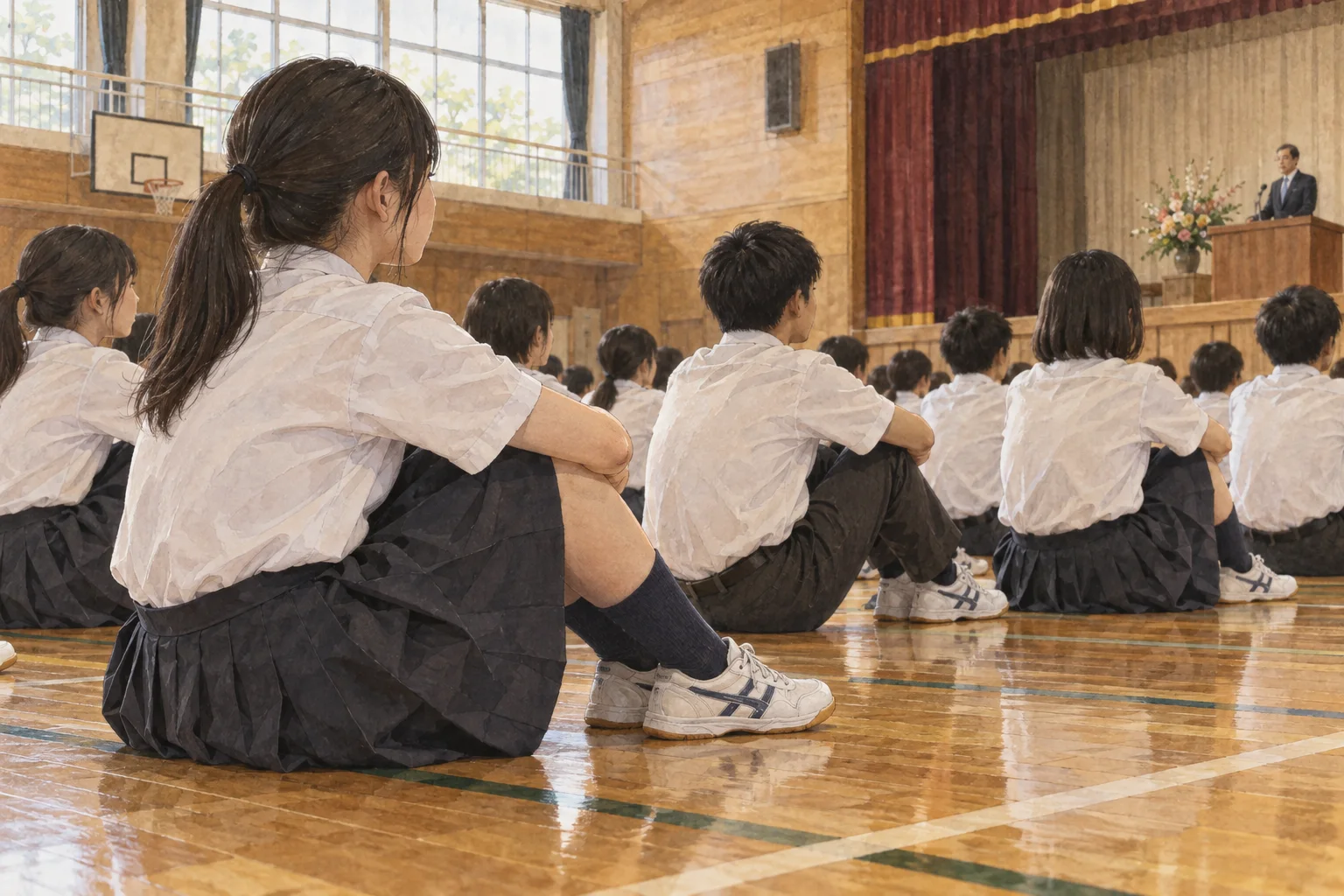
体育館で全校が同じ座り方をする。近年は「やめる学校」が出てきている。
一言で言うと
これだけ覚えれば最低限伝わる一文
Taiiku zuwari is the standard school sitting posture: on the floor, knees up, arms around the shins.
体育座りとは、床に座り、膝を立てて、すねを両腕で抱える、学校の標準的な座り方です。
30秒で説明する
外国人に説明するときの標準サイズ
When Japanese students sit on the floor of a gymnasium or playground, they all sit the same way: bottom on the ground, knees drawn up, arms wrapped around the shins, hands clasped. It is taught from primary school. In recent years some schools have stopped requiring it, citing discomfort and pressure on the body.
日本の生徒が体育館や校庭の地面に座るとき、全員が同じ形で座ります。尻を床につけ、膝を立て、すねを両腕で抱えて手を組む。小学校から教わります。近年は、体への負担や苦痛を理由に、これを求めない学校も出てきました。
スピーチ・英作文
通訳案内士の二次口述・大学入試の自由英作文に
If you watch a Japanese school assembly, every student on the floor is sitting in exactly the same position: bottom on the ground, knees drawn up to the chest, arms wrapped around the shins with the hands clasped. This is taiiku zuwari, and children are taught it from their first year of primary school.
Its appeal to a school is obvious. It takes up little space, everyone faces the same way, and nobody can fidget much. It is also under review. Physiotherapists have pointed out that it puts sustained pressure on the pelvis and the lower back, and that holding it for a long assembly is genuinely uncomfortable, particularly on a hard floor.
Some schools and local education boards have stopped insisting on it, and some now let students sit cross-legged or use small stools. It is a small thing, but it is a good example of a school convention being reconsidered rather than simply continued.
日本の学校の全校集会を見ると、床に座っている生徒は全員まったく同じ形をしています。尻を床につけ、膝を胸に引き寄せ、すねを両腕で抱えて手を組む。これが体育座りで、小学校の一年目から教わります。学校にとっての利点ははっきりしています。
場所を取らず、全員が同じ方向を向き、あまり動けません。そして今、見直されています。理学療法士からは、骨盤と腰に持続的な負担がかかること、硬い床で長い集会のあいだ保つのは本当につらいことが指摘されています。
これを求めるのをやめた学校や教育委員会もあり、胡座や小さな椅子を認める学校も出てきました。小さなことですが、学校の慣習が、ただ続けられるのではなく問い直されている良い例です。
こう聞かれたら
外国人から実際にされる質問と、その答え方。
Why does everyone sit the same way?
どうしてみんな同じ座り方をするのですか。
Space and order. It fits many students into a gymnasium, keeps everyone facing forward and makes a group easy to manage. Uniformity of posture is itself part of the point.
場所と秩序のためです。体育館に大勢を収め、全員が前を向き、集団として扱いやすくなります。姿勢がそろっていること自体が目的の一部です。
Is it actually bad for you?
体に悪いのですか。
It puts sustained pressure on the pelvis and lower back, and holding it for a long time on a hard floor is uncomfortable. That is the basis of the reconsideration, rather than any claim of lasting harm.
骨盤と腰に持続的な負担がかかり、硬い床で長時間保つのは苦痛です。見直しの根拠はそこにあり、恒久的な害が証明されたという話ではありません。
Are schools dropping it?
やめる学校も出てきているのですか。
Some are. Some schools and education boards no longer require it, and schools have introduced alternatives such as sitting cross-legged or using folding stools for assemblies.
やめた学校もあります。必須としなくなった学校や教育委員会があり、胡座を認めたり、集会で折りたたみの椅子を使ったりする学校が出ています。
そのまま使えるフレーズ
- Everyone sits in the same position.全員が同じ座り方をします。
- Knees up, arms around your shins.膝を立てて、すねを抱えます。
- It's taught from the first year of primary school.小学一年生から教わります。
- Some schools have stopped requiring it.求めるのをやめた学校もあります。
- It's uncomfortable on a hard floor.硬い床だとつらいです。
説明に使う語句
- posture姿勢
- assembly集会、朝礼
- cross-legged胡座をかいて
- uniformity統一されていること
- reconsider見直す
動画で見る
YouTube より豆知識
体育座りは「三角座り」「体操座り」など地域によって呼び名が異なる。学校で広く用いられるようになった経緯については、文部省が1965年に示した手引に記載があるとする説が知られるが、いつからどのように全国に定着したかは明確でない部分がある。近年、腰や骨盤への負担を指摘する声を受け、体育座りを求めないことにした学校や教育委員会もあり、椅子の使用や胡座を認める学校が現れている。似た姿勢は世界各地にあるが、学校で統一された座法として全国的に教えられている点が日本の特徴とされる。
