暑中見舞いしょちゅうみまい
shochu mimai
the midsummer greeting card
夏の年賀状。立秋を過ぎたら「残暑見舞い」に書き換える。
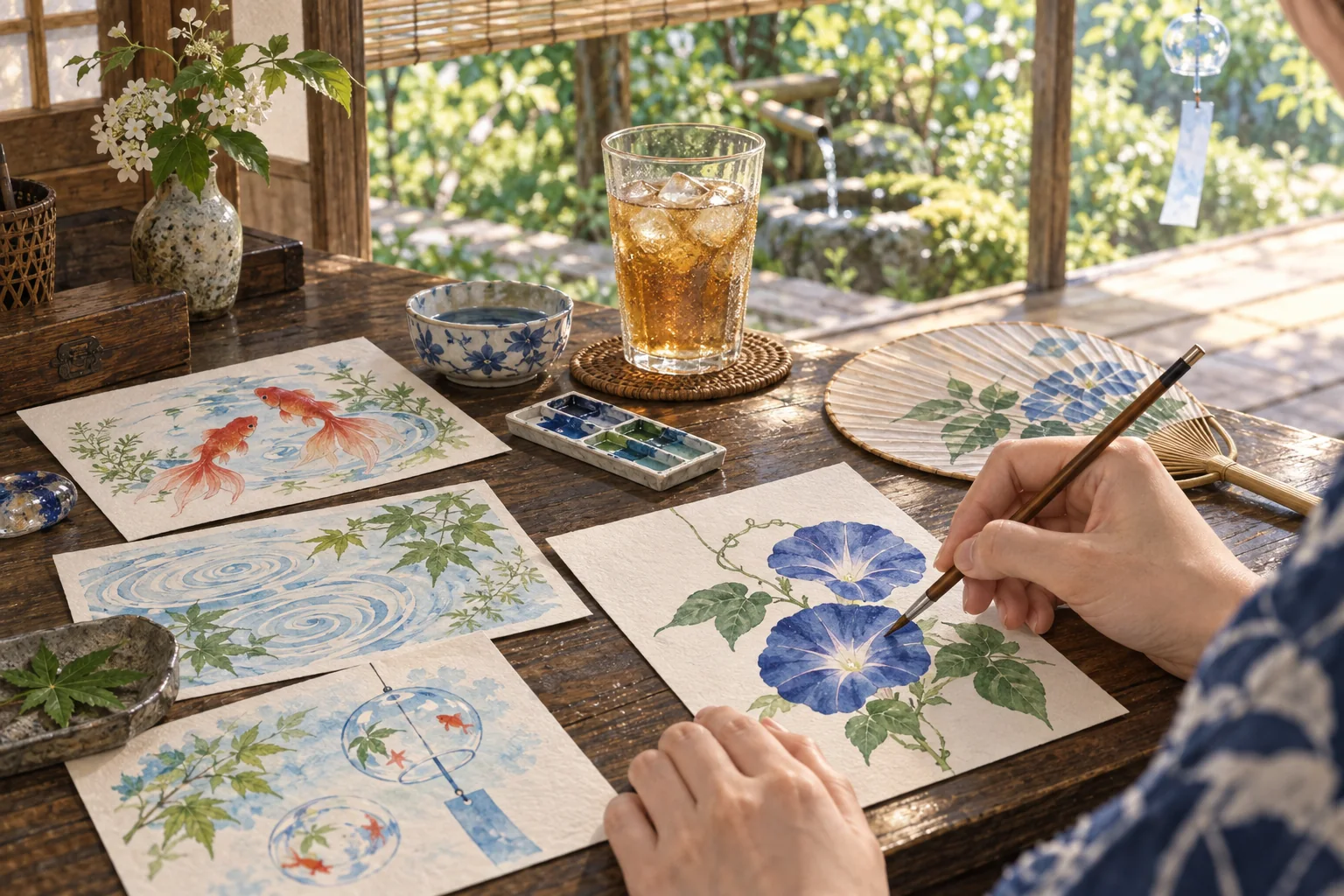
一言で言うと
これだけ覚えれば最低限伝わる一文
Shochu mimai is a midsummer card asking after someone's health in the heat, sent before the calendar's start of autumn.
暑中見舞いとは、暑さのなか相手の健康を尋ねる夏の便りで、暦の上の秋が来る前に出すものです。
30秒で説明する
外国人に説明するときの標準サイズ
A short seasonal card sent in midsummer, roughly from early July to the calendar's start of autumn around August 7. After that date the same letter is titled zansho mimai, a late-heat greeting, and sending one with the wrong title is a visible mistake. Like the New Year card it is partly a duty and partly a way of keeping in touch, and it is declining with the rest of postal mail.
真夏に出す短い季節の便りで、おおよそ七月の初めから、暦の上で秋が始まる八月七日ごろまでに出します。その日を過ぎると同じ手紙は「残暑見舞い」になり、名前を間違えると一目で分かります。年賀状と同じく、義理の面もあれば、つながりを保つ手立てでもあります。郵便全体と同じように、数は減っています。
スピーチ・英作文
通訳案内士の二次口述・大学入試の自由英作文に
Most people outside Japan know the New Year card, but there is a second seasonal letter in midsummer, and its rules show how the old calendar still governs manners. A shochu mimai is a short card sent in the hottest weeks, asking whether the recipient is coping with the heat and reporting briefly on yourself.
The window is not the actual weather but the calendar: it runs to risshu, the calendar's first day of autumn, which falls around August the seventh. Send the same words after that date and the heading must change to zansho mimai, a greeting in the lingering heat, even though it is still the hottest part of the year. Getting that wrong is noticed.
The card also has a practical use in the year when someone in a household has died, since they will not send New Year cards, and a summer card is a way of staying in contact without the celebratory wording. Volumes have fallen a long way; a company will still send them to clients, but between individuals a message has largely replaced them.
海外で知られているのは年賀状でしょうが、日本には真夏にもう一つ季節の便りがあります。その決まりは、古い暦がいまも作法を支配していることの小さな例です。暑中見舞いは、いちばん暑いころに出す短い便りで、相手が暑さをしのげているかを尋ね、自分の近況を少し書きます。
期間を決めるのは実際の気候ではなく暦です。立秋、つまり暦の上で秋が始まる八月七日ごろまで。同じ文面をその日より後に出すなら、見出しは「残暑見舞い」に変えなければなりません。まだ一年で最も暑い時期だとしても、です。ここを間違えると気づかれます。
この便りには実用の面もあります。家族を亡くした年は年賀状を出しませんから、祝いの言葉を使わずに連絡を保つ手立てになるのです。枚数は大きく減りました。会社は今も取引先に送りますが、個人どうしでは、ほとんどがメッセージに置き換わっています。
こう聞かれたら
外国人から実際にされる質問と、その答え方。
When exactly should it be sent?
いつ出せばよいのですか。
Commonly from around July 7 to August 7, though some say to wait until the end of the rainy season. After risshu, switch to zansho mimai, which is sent until late August.
七月七日ごろから八月七日ごろまでが一般的ですが、梅雨明けを待つという言い方もあります。立秋を過ぎたら残暑見舞いに切り替え、八月の下旬まで出します。
What do you write?
何を書くのですか。
The heading, a line about the heat, a question about the reader's health, two or three lines about yourself, and a closing wish that they take care. It is deliberately short.
見出し、暑さに触れる一文、相手の健康を尋ねる言葉、自分の近況を二、三行、そして体を大切にという結び。短く書くものです。
Can I send one to someone in mourning?
喪中の人に出してもよいですか。
Yes. Unlike the New Year card it carries no congratulation, so it is the usual way to keep in touch with a household that is not sending New Year greetings.
出せます。年賀状と違って祝いの意味がないので、年賀状を控える家との連絡を保つ手立てとして使われます。
誤解されやすい
MYTHThe summer card can be sent any time it is hot.
暑い時期ならいつ出してもよい、と思われがちです。
FACTThe wording is fixed by the calendar. After risshu, around August 7, it must be titled zansho mimai even though the heat continues.
言葉は暦で決まります。八月七日ごろの立秋を過ぎたら、暑さが続いていても残暑見舞いとしなければなりません。
そのまま使えるフレーズ
- It's a midsummer greeting card.真夏に出す季節の便りです。
- You ask whether they're coping with the heat.暑さをしのげているかを尋ねます。
- After early August it becomes a late-heat greeting.八月の初めを過ぎると残暑見舞いになります。
- The calendar decides the wording, not the weather.言葉を決めるのは気候ではなく暦です。
- You can send one to a household in mourning.喪中の家にも出せます。
説明に使う語句
- late-heat greeting残暑見舞い
- calendar start of autumn立秋
- postcardはがき
- in mourning喪中
- seasonal greeting季節の挨拶
動画で見る
YouTube より豆知識
立秋は二十四節気の一つで、八月七日ごろにあたる。暑中見舞いと残暑見舞いの切り替えはこの日を境とするのが一般的である。日本郵便は夏のくじ付きはがき「かもめ〜る」を長く発行していたが、2021年をもって販売を終えた。寒中見舞いは、松の内が明けてから立春までに出す冬の便りで、暑中見舞いと対になっている。
