七福神しちふくじん
shichifukujin
the seven lucky gods
7人のうち日本出身はたった1人。あとはインドと中国から来た神様。
一言で言うと
これだけ覚えれば最低限伝わる一文
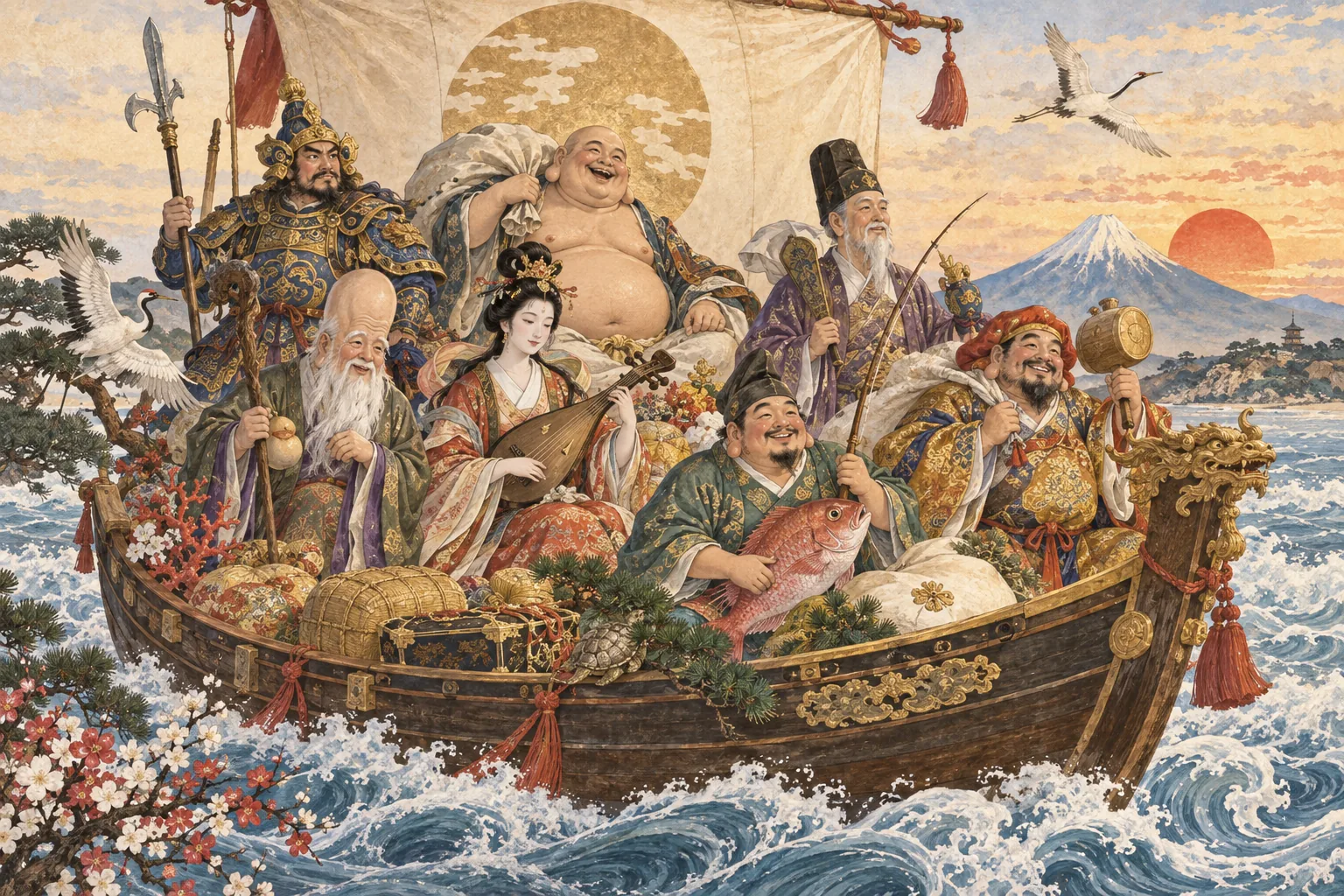
The shichifukujin are seven gods of good fortune who sail together on a treasure ship.
七福神とは、宝船に乗ってやってくるとされる、七柱の福の神です。
30秒で説明する
外国人に説明するときの標準サイズ
The seven lucky gods are a group assembled from three traditions: one is Japanese, three come from Hinduism by way of Buddhism, and three are Chinese. Each governs a different kind of good fortune, from wealth to longevity to a good catch of fish. They are usually shown together on a treasure ship, and some people put a picture of the ship under their pillow early in the New Year.
七福神は三つの伝統から寄せ集められた一団です。一柱が日本、三柱がヒンドゥー教から仏教を経て、三柱が中国から来ています。それぞれ担当する福が違い、富、長寿、大漁などを司ります。ふつうは宝船に一緒に乗った姿で描かれ、正月の夜にその絵を枕の下に敷く人もいます。
スピーチ・英作文
通訳案内士の二次口述・大学入試の自由英作文に
The seven lucky gods are one of the clearest examples of how Japan absorbs things. They are usually shown crowded onto a treasure ship, and they look like a set. They are not. Only one of them, Ebisu, is originally Japanese; he is the god of fishermen and of business, and he carries a sea bream.
Three came from India through Buddhism: Daikokuten, Bishamonten and Benzaiten, who was originally a river goddess and is the only woman among them. Three came from China: Fukurokuju and Jurojin, both associated with long life, and Hotei, the fat laughing monk that people outside Japan often mistake for the Buddha.
They are thought to have been grouped together in the Muromachi period, and since then they have traveled as a set. Many towns have a seven lucky gods walking route that takes in seven shrines and temples, and people do it in the first week of January.
七福神は、日本が外から来たものをどう取り込むかを、もっとも分かりやすく示す例です。ふつうは宝船にぎゅうぎゅうに乗った姿で描かれ、ひとそろいに見えます。そうではありません。
日本生まれは恵比寿ただ一柱で、漁業と商売の神、鯛を抱えています。三柱はインドから仏教を通って来ました。大黒天、毘沙門天、そしてもとは川の女神で、七福神で唯一の女性である弁財天です。三柱は中国から来ました。
長寿と結びつく福禄寿と寿老人、そして日本の外ではよく仏陀と間違えられる、太った笑う僧の布袋です。一団としてまとめられたのは室町時代とされ、以来ずっと組で旅をしています。多くの町に七つの寺社をめぐる七福神めぐりの道があり、正月の一週間に歩く人が多くいます。
こう聞かれたら
外国人から実際にされる質問と、その答え方。
Which one is the laughing fat one?
笑っている太った神様はどれですか。
Hotei. He was a real Chinese monk by tradition, carries a large cloth sack, and is the figure often sold abroad as a laughing Buddha, which he is not.
布袋です。伝承では実在した中国の僧で、大きな布袋を担いでいます。海外で「笑う仏陀」として売られている像はたいてい彼で、仏陀ではありません。
Is there really only one woman?
女性は本当に一人だけなのですか。
Yes, Benzaiten, who came from the Hindu goddess Saraswati. She is the goddess of music, eloquence and water, which is why her shrines are usually on or beside water.
弁財天だけです。ヒンドゥー教のサラスヴァティーに由来します。音楽・言葉・水の神で、その社が水辺や水の上にあるのはそのためです。
What is the treasure ship picture for?
宝船の絵は何のためのものですか。
You put it under your pillow on the night of January 1st or 2nd so that your first dream of the year is a lucky one. A palindromic poem is often written on it.
1月1日か2日の夜に枕の下に敷き、その年の初夢が良いものになるようにします。絵には回文の歌が書かれていることが多いです。
そのまま使えるフレーズ
- Only one of the seven is originally Japanese.七柱のうち、日本生まれは一柱だけです。
- They travel together on a treasure ship.宝船に一緒に乗ってやってきます。
- That one is Hotei, not the Buddha.あれは布袋で、仏陀ではありません。
- Many towns have a seven gods walking route.多くの町に七福神めぐりの道があります。
- People do it in the first week of January.正月の一週間に歩く人が多いです。
説明に使う語句
- deity神
- prosperity繁栄、商売繁盛
- longevity長寿
- pilgrimage route巡礼路、めぐりの道
- treasure ship宝船
動画で見る
YouTube より豆知識
七福神の顔ぶれは、恵比寿(日本)、大黒天・毘沙門天・弁財天(インド由来)、福禄寿・寿老人・布袋(中国由来)。福禄寿と寿老人は同一視されることがあり、その場合は吉祥天を加えるなど、構成に揺れがある。一団として定着したのは室町時代とされ、江戸時代に七福神めぐりが庶民の正月行事として流行した。宝船の絵には「なかきよの とをのねふりの みなめさめ なみのりふねの おとのよきかな」という回文の歌が添えられることが多い。大黒天はヒンドゥー教のシヴァ神の化身マハーカーラに由来し、もとは戦いの神だったが、日本では大国主神と習合して福の神になった。
