組子くみこ
kumiko
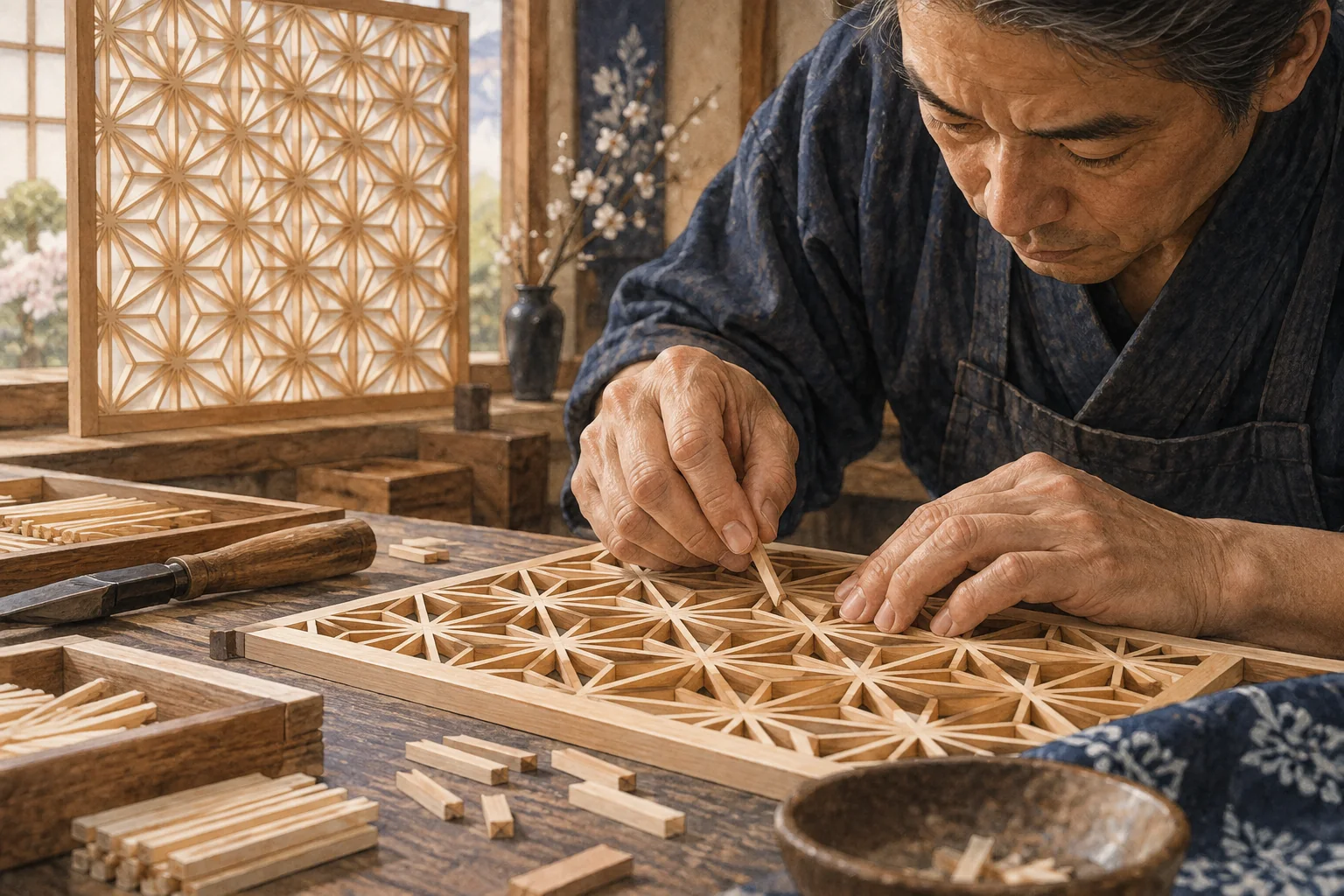
geometric wooden lattice patterns assembled without a single nail
釘を1本も使わず、細い木片だけで幾何学模様を組み上げる建具の技法。
一言で言うと
これだけ覚えれば最低限伝わる一文
Kumiko is a woodworking craft that locks thin wooden strips into geometric patterns without using a single nail.
組子とは、釘を1本も使わずに細い木片を組み合わせ、幾何学模様を作る木工の技法です。
30秒で説明する
外国人に説明するときの標準サイズ
Kumiko is the technique of cutting thin strips of wood with tiny notches and joints so precise that they lock together into repeating geometric patterns, with no nails or glue involved. It shows up most often filling the wooden frame of a shoji screen or a ranma transom above a sliding door, letting light through in a fixed pattern. Skilled kumiko craftsmen work with dozens of traditional named patterns, and the work has recently drawn attention overseas as a decorative feature in high-end renovation and interior design.
組子とは、細くひいた木材に精密な溝や継ぎ手を刻み、釘も接着剤も使わずに繰り返しの幾何学模様へと組み上げる技法です。多くは障子の枠や、引き戸の上にある欄間の飾りに使われ、決まった模様越しに光を通します。熟練した組子職人は何十種類もの伝統的な名前のついた文様を扱い、この仕事は近年、高級な改修やインテリアデザインの飾りとして海外でも注目を集めています。
スピーチ・英作文
通訳案内士の二次口述・大学入試の自由英作文に
Kumiko is easy to mistake for a purely decorative pattern, but it is really a joinery technique: thin strips of wood are cut with notches and grooves so exact that they grip each other tightly, without a single nail, screw or drop of glue holding the pattern together. Some craftsmen say humidity even helps, since the wood swells slightly and tightens the joints. The craft is often traced back roughly fourteen hundred years, to techniques that arrived with Buddhist temple construction, and it became common in the wooden frames of shoji screens and ranma transoms from the Muromachi period onward, letting light through in a fixed, repeating design rather than blocking it completely.
Today there are said to be over two hundred named traditional patterns, ranging from simple hemp-leaf grids to dense, star-like arrangements that take a skilled craftsman days to complete for a single panel. In recent years, kumiko panels have started turning up as standalone decorative pieces and lamp shades sold abroad, stripped of their original function but keeping the same nail-free structure.
組子は単なる装飾模様と間違われがちですが、実際には継ぎ手の技術です。細くひいた木材に、驚くほど精密な溝やホゾを刻み、釘もねじも接着剤も使わずに、木片どうしがしっかり噛み合って模様を保ちます。湿気はむしろ味方だと言う職人もいます。
木がわずかに膨らみ、継ぎ手が締まるからです。この技法は、仏教の寺院建築とともに伝わったとされる約千四百年前の技術にさかのぼるとされ、室町時代以降、障子の枠や引き戸上の欄間に広く使われるようになり、光を完全に遮るのではなく、決まった繰り返し模様越しに通すようになりました。
今日では200種類を超える伝統的な名前のついた文様があるとされ、単純な麻の葉模様の格子から、熟練の職人でも一枚の板に何日もかかる、星のように密な文様まで幅広くあります。近年では、組子の板が本来の役目から離れて、単体の飾り物やランプシェードとして海外でも売られるようになっており、それでも釘を使わない組み方そのものは変わっていません。
こう聞かれたら
外国人から実際にされる質問と、その答え方。
How does it stay together without nails or glue?
釘も接着剤もなしで、どうして形が保たれるのですか。
Each strip is cut with a notch, groove or tenon so precisely that neighboring pieces grip each other under tension. In humid weather the wood swells slightly, which tightens the joints further.
それぞれの木片には溝やホゾが精密に刻まれ、隣り合う木片どうしが張力で噛み合います。湿気の多い時期には木がわずかに膨らみ、継ぎ手がさらに締まります。
Where would I actually see kumiko in a house?
実際の家の中では、組子はどこで見られるのですか。
Traditionally in the wooden frame of a shoji screen or in a ranma transom panel above a sliding door, where the pattern lets light and air through while still marking a boundary between rooms.
伝統的には障子の枠や、引き戸の上にある欄間の板で見られます。模様越しに光や空気を通しながら、部屋と部屋の境目を示す役目も果たします。
Is this a modern interior design trend or something older?
これは最近のインテリアの流行なのですか、それとも古いものですか。
It's old, tracing back roughly fourteen hundred years to techniques that arrived with Buddhist temple construction, though it only recently became popular abroad as a standalone decorative feature rather than part of a screen or door.
古いものです。仏教の寺院建築とともに伝わったとされる、約千四百年前の技術にさかのぼります。ただ、障子や引き戸の一部としてではなく、単体の装飾として海外で人気になったのは最近のことです。
誤解されやすい
MYTHKumiko is just a modern decorative trend for minimalist interiors.
組子は、ミニマルな内装のための最近の流行だと思われがちです。
FACTIts roots go back roughly fourteen hundred years to temple-building techniques that arrived with Buddhism, and it became common in shoji screens and transoms from the Muromachi period onward; only its use as a standalone decorative panel abroad is a recent development.
実際には仏教の伝来とともに入ってきた寺院建築の技術にさかのぼり、約千四百年の歴史があるとされ、室町時代以降は障子や欄間に広く使われてきました。単体の飾り板として海外で使われるようになったのが最近の動きです。
そのまま使えるフレーズ
- This shoji has a beautiful kumiko pattern.この障子には美しい組子模様が入っています。
- Not a single nail is used in this panel.この板には釘が1本も使われていません。
- Each piece is cut and fitted by hand.一つひとつの木片は手作業で切り出し組まれています。
- There are over two hundred traditional patterns.伝統的な文様は200種類を超えるとされています。
- It's often used in the transom above a sliding door.引き戸の上の欄間によく使われます。
説明に使う語句
- wooden lattice joinery組子
- sliding paper screen障子
- transom panel欄間
- notch, groove溝
- geometric pattern幾何学文様
動画で見る
YouTube より豆知識
組子は、仏教の伝来とともに寺院建築の技術が伝わったころにさかのぼるとされ、飛鳥時代の法隆寺にも似た装飾が残るという。室町時代以降、障子や欄間に組子が広く使われるようになり、江戸時代には木造建築の需要とともに文様の種類が増えていったとされる。現在に伝わる文様は200種類を超えるといわれ、麻の葉模様のような単純なものから、星のように密な図案まで幅広い。近年は本来の建具から離れ、単体の飾りやランプシェードとして海外でも扱われている。
