熊野古道くまのこどう
Kumano Kodo
the old pilgrimage routes through the mountains south of Osaka
千年前から歩かれてきた道。誰が来てもよい、という考え方の道でもある。
一言で言うと
これだけ覚えれば最低限伝わる一文
The Kumano Kodo is a network of old pilgrimage trails through the mountains of the Kii peninsula.
熊野古道は、紀伊半島の山を抜ける古い参詣の道の総称です。
30秒で説明する
外国人に説明するときの標準サイズ
The Kumano Kodo is not one path but several, running through forested mountains south of Osaka to three great shrines known together as the Kumano Sanzan. People have walked them for over a thousand years, first retired emperors and their courts, later ordinary people of every class. The routes were listed as World Heritage in 2004.
熊野古道は一本の道ではなく、大阪の南の森深い山を抜けて、熊野三山と呼ばれる三つの大社へ向かういくつもの道です。千年以上前から歩かれてきました。初めは上皇とその一行、やがてあらゆる身分の人々が歩きました。2004年に世界遺産に登録されています。
スピーチ・英作文
通訳案内士の二次口述・大学入試の自由英作文に
The Kumano Kodo is a set of pilgrimage routes through the mountains of the Kii peninsula, leading to three shrines called the Kumano Sanzan. Retired emperors made the journey from Kyoto from the tenth century onward, some of them more than thirty times, and it took about a month on foot.
What makes Kumano unusual in Japanese religious history is that it accepted everyone. Women were admitted when many sacred mountains refused them, and there was no requirement to be free of the pollution that usually barred people from holy places.
The old phrase for the crowds on these roads translates as a procession of ants. The routes were made World Heritage in 2004, only the second pilgrimage road in the world to be listed after the Camino de Santiago, and the two have had a sister agreement since 1998. You can walk a single afternoon of it or several days.
熊野古道は、紀伊半島の山を抜けて熊野三山と呼ばれる三つの社へ向かう参詣の道の集まりです。10世紀以降、上皇たちが京都から詣で、30回以上通った人もいました。徒歩でおよそ一か月の旅です。
日本の信仰の歴史の中で熊野が変わっているのは、誰でも受け入れたことです。多くの霊山が女性を拒んだ時代にも女性が入れましたし、ふだんなら聖地から人を遠ざける穢れも問われませんでした。道の混みようを表した古い言い方は「蟻の熊野詣」です。
2004年に世界遺産となり、巡礼の道としてはサンティアゴ・デ・コンポステーラに次いで世界で二例目でした。二つの道は1998年から姉妹道の関係にあります。半日だけ歩くこともできますし、何日もかけることもできます。
こう聞かれたら
外国人から実際にされる質問と、その答え方。
Do I have to walk the whole thing?
全部を歩かなければいけませんか。
No, and most people do not. Buses run to points along the routes, so you can walk a section of a few hours and ride the rest. Walking the Nakahechi route end to end takes about four to five days.
その必要はありませんし、多くの人は歩き通しません。道の途中までバスが入るので、数時間ぶんだけ歩いて残りは乗ることができます。中辺路を通しで歩くと4〜5日ほどです。
Is it Shinto or Buddhist?
これは神道ですか、仏教ですか。
Both, deliberately. For most of its history the shrines were understood as places where Buddhist figures appeared in Japanese form, and pilgrims saw no contradiction. The two were separated by law only in 1868.
両方です。しかも意図的に。歴史の大半において、三山の神は仏が日本の姿で現れたものと考えられ、参る人に矛盾はありませんでした。法で分けられたのは1868年のことです。
What are the stone markers along the path?
道沿いにある石の目印は何ですか。
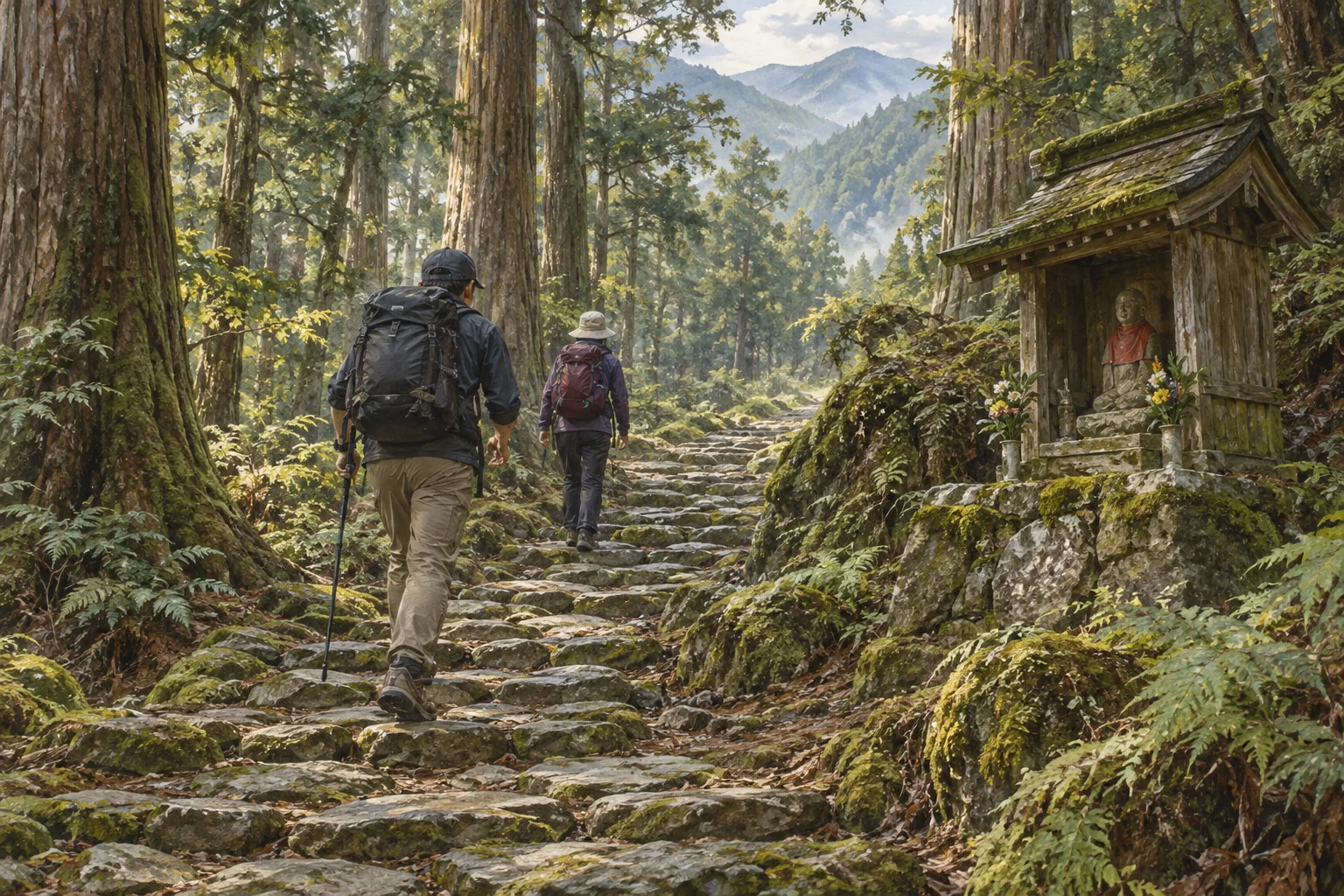
Many are oji, small subsidiary shrines where pilgrims stopped to rest and pray. Others are stone Buddhas or distance markers. Some have stood for centuries in places with no village nearby.
多くは王子と呼ばれる、参る人が休み祈った小さな社です。石仏や、里程を示す石もあります。近くに集落のない場所に何百年も立ち続けているものもあります。
そのまま使えるフレーズ
- It's a network of trails, not one single path.一本の道ではなく、いくつもの道の集まりです。
- Retired emperors walked here from Kyoto.上皇たちが京都から歩いて詣でました。
- Kumano accepted women when other sacred mountains didn't.ほかの霊山が拒んだ時代にも、熊野は女性を受け入れました。
- You can walk just a section in an afternoon.半日で一区間だけ歩くこともできます。
- It's twinned with the Camino de Santiago in Spain.スペインのサンティアゴの道と姉妹道の関係です。
説明に使う語句
- pilgrimage route参詣道
- pilgrim参詣者・巡礼者
- retired emperor上皇
- trailhead登山口
- moss-covered stone steps苔むした石段
動画で見る
YouTube より豆知識
熊野三山は熊野本宮大社・熊野速玉大社・熊野那智大社を指す。平安時代の末から鎌倉時代にかけて上皇の参詣が繰り返され、後白河上皇は34回詣でたとされる。身分や性別を問わず受け入れたことから、人の絶えない様子を「蟻の熊野詣」と呼んだ。2004年、「紀伊山地の霊場と参詣道」として世界文化遺産に登録された。巡礼の道の登録はサンティアゴ・デ・コンポステーラに次いで二例目である。和歌山県とスペインのガリシア州は1998年に姉妹道の提携を結んでいる。
