鬼門きもん
kimon
the unlucky northeast direction
北東は鬼の通り道。今も住宅の間取りで気にする人がいる。
一言で言うと
これだけ覚えれば最低限伝わる一文
Kimon is the northeast, traditionally considered the direction from which misfortune enters.
鬼門とは北東のことで、災いが入ってくる方角とされてきました。
30秒で説明する
外国人に説明するときの標準サイズ
Kimon means demon gate and refers to the northeast, held to be the direction bad fortune comes from. The southwest is the reverse gate. The belief came from Chinese geomancy and shaped where temples, gates and household features were placed. Some builders and homeowners still avoid putting a front door, kitchen or toilet in that corner.
鬼門は鬼の門という意味で、災いが入ってくるとされる北東を指します。その反対の南西は裏鬼門です。この考えは中国の方位術から入り、寺や門、家の設備をどこに置くかを左右してきました。玄関や台所、便所をその角に置かないようにする施工者や家の持ち主は今もいます。
スピーチ・英作文
通訳案内士の二次口述・大学入試の自由英作文に
Kimon literally means demon gate, and it refers to the northeast. In the system that came to Japan from Chinese geomancy, that is the direction from which harmful influences arrive, and the opposite corner, the southwest, is called the back gate and treated with similar caution.
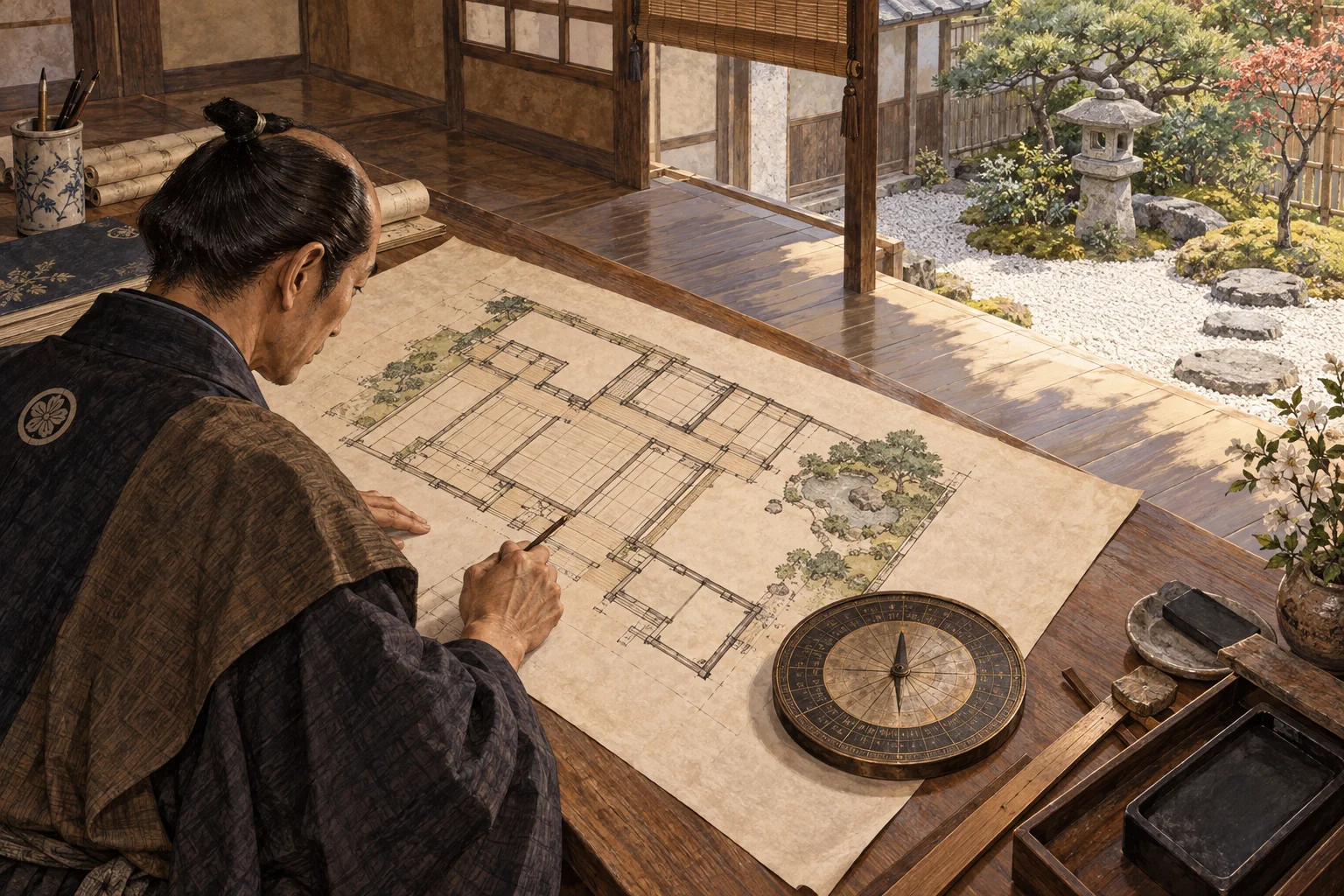
This was taken seriously in city planning: temples to the northeast of capitals were treated as their guardians, and the great monastery on Mount Hiei, northeast of Kyoto, came to be seen as the city's protector for this reason. In houses, the tradition says not to place an entrance, a kitchen, a bathroom or a toilet in that corner, and to plant a particular tree or set a small shrine there instead.
How much anyone believes this now varies enormously. Plenty of Japanese people would say it is superstition and then quietly mention it to their builder anyway, and real estate agents still field questions about it, so it is not gone.
鬼門は文字どおり鬼の門という意味で、北東を指します。中国の方位術から日本に入った体系では、そこが害をなすものの来る方角とされ、その反対の南西は裏鬼門と呼ばれて同じように用心されます。これは都市の設計で真剣に扱われました。
都の北東にある寺は守りの寺とされ、京都の北東にある比叡山の大寺院も、そのために都の守りと位置づけられました。家については、その角に玄関、台所、浴室、便所を置かないこと、代わりに決まった木を植えるか小さな社を置くこととされてきました。
今どれだけ信じられているかは人によってまったく違います。迷信だと言いながら、施工業者にはそっと伝える日本人は少なくありませんし、不動産業者は今もこの質問を受けます。消えてはいないのです。
こう聞かれたら
外国人から実際にされる質問と、その答え方。
Do people really still design houses around this?
いまも本当に、それに合わせて家を設計するのですか。
Some do. Builders are used to being asked, and house plans are sometimes adjusted so that a water-using room is not in the northeast. Many others ignore it entirely. It rarely decides a purchase, but it does come up.
する人はいます。施工業者は聞かれ慣れていて、水回りが北東に来ないよう間取りを調整することもあります。一方でまったく気にしない人も多くいます。購入の決め手になることはまれですが、話題には出ます。
Why the northeast specifically?
どうして北東の方角なのですか。
In the Chinese zodiac directions, the northeast lies between the ox and the tiger, which is commonly given as the reason the demon of Japanese art has ox horns and a tiger-skin loincloth. The image and the direction came from the same system.
十二支を方位に当てると、北東は丑と寅の間に当たります。日本の絵に描かれる鬼が牛の角を持ち、虎の皮の腰巻をしているのはそのためだと、よく説明されます。姿も方角も同じ体系から来ています。
誤解されやすい
MYTHThis is ancient Japanese religion.
これは古来の日本の宗教だと思われがちです。
FACTIt came into Japan from Chinese geomancy and calendar science, and it is a folk belief rather than a doctrine of Shinto or Buddhism.
中国の方位術や暦の学問から入ったもので、神道や仏教の教義ではなく民間の信仰です。
そのまま使えるフレーズ
- The northeast is the unlucky direction.北東が鬼門です。
- People avoid putting a kitchen there.台所をそこに置かない人がいます。
- The southwest is the reverse gate.南西は裏鬼門です。
- It came from Chinese geomancy.中国の方位術から来ています。
説明に使う語句
- direction方角
- superstition迷信
- floor plan間取り
- to ward off避ける
動画で見る
YouTube より豆知識
鬼門の考え方は陰陽道とともに日本に入り、平安京の北東に当たる比叡山の延暦寺は、都を守る役割を担ったとされます。江戸では上野の寛永寺が同じ位置づけで建てられました。家相では鬼門に南天や柊を植える、盛り塩をする、といった作法が伝えられています。日常語としての「鬼門」は、苦手な相手や不得意な分野を指す比喩に使われ、「あの科目は鬼門だ」のように言います。
