君が代きみがよ
kimigayo
the national anthem, and why it is argued about
歌詞は十世紀の和歌、曲は明治、法律で国歌になったのは1999年。
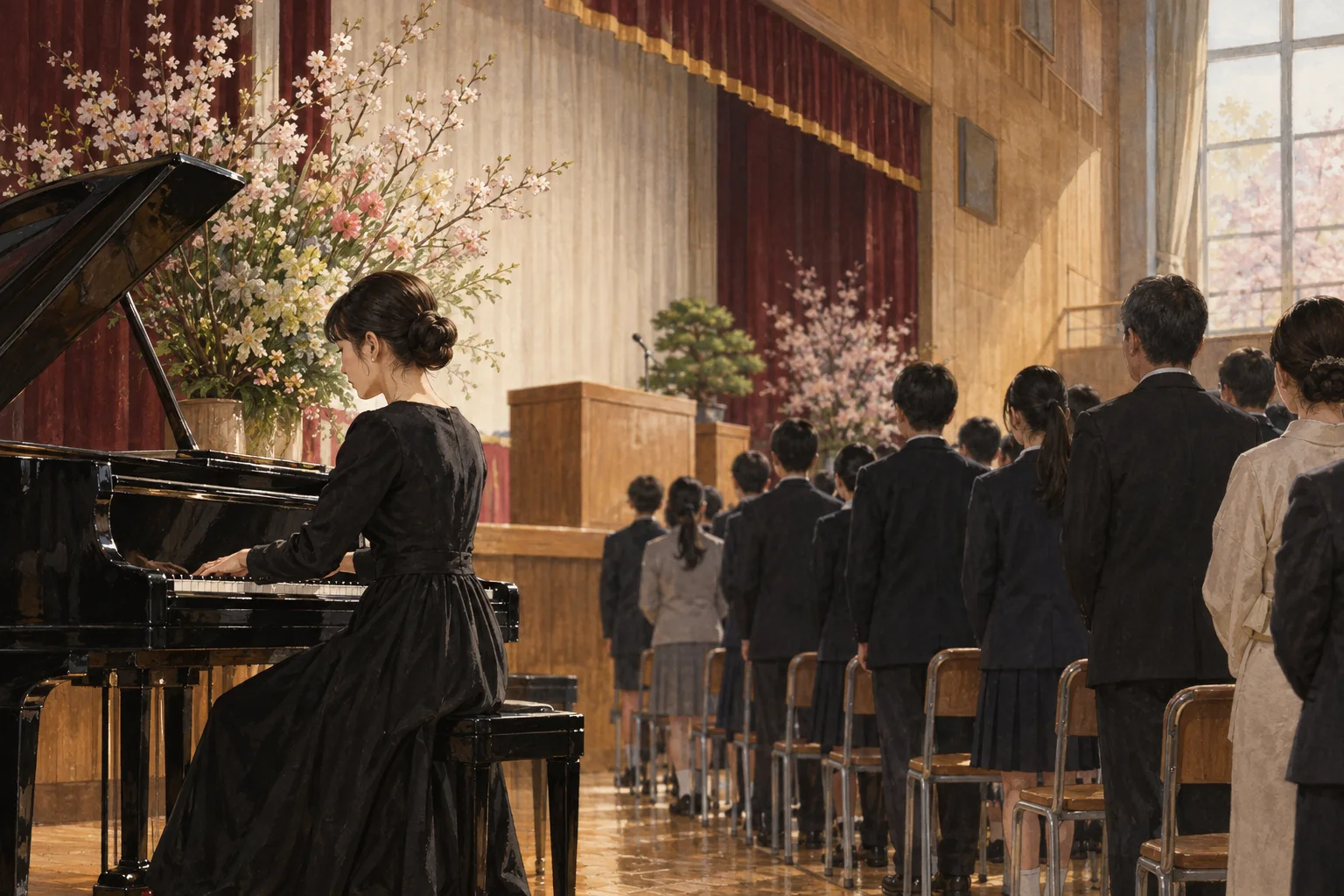
一言で言うと
これだけ覚えれば最低限伝わる一文
Japan's national anthem: a tenth-century poem set to music in the Meiji period and made the anthem by law only in 1999.
日本の国歌です。十世紀の和歌に明治期に曲がつき、法律で国歌と定められたのは1999年でした。
30秒で説明する
外国人に説明するときの標準サイズ
The words come from an anonymous waka in a tenth-century imperial anthology, wishing that the age of the person addressed last until pebbles grow into a boulder covered in moss. The melody dates from 1880. It was treated as the anthem from the Meiji period but had no legal basis until the Flag and Anthem Law of 1999. Its use in schools remains contested, and opinion inside Japan is divided.
歌詞は十世紀の勅撰和歌集にある詠み人知らずの和歌で、小さな石が巌となり苔がむすまで、あなたの世が続くように、という意味です。曲は1880年に作られました。明治期から国歌として扱われてきましたが、法的な根拠は1999年の国旗国歌法までありませんでした。学校での扱いをめぐっては今も争いがあり、日本国内でも意見は分かれています。
スピーチ・英作文
通訳案内士の二次口述・大学入試の自由英作文に
Kimigayo is the Japanese national anthem, and it is worth being able to describe both what it is and why it is argued about. The text is old: an anonymous poem from an imperial anthology of around the year 905, originally a wish for long life, saying may your age continue until a pebble becomes a boulder covered in moss. By some counts that makes it the oldest anthem text in use anywhere.
The melody is modern, composed in 1880 by court musicians. The disagreement is about the twentieth century. The word kimi is read by some as referring to the emperor, and the anthem was used during the era of empire and war, so some teachers and citizens object to being required to sing it, while others hold that it is simply the anthem and that standing for it is ordinary.
The 1999 law made it official but imposed no obligation to sing; the disputes since concern instructions given to teachers, and several have reached the courts. Opinion in Japan is genuinely divided, and it is not a question a guide should settle for the listener.
君が代は日本の国歌です。何であるかと、なぜ争いがあるかの両方を説明できるとよいでしょう。歌詞は古い。905年ごろに編まれた勅撰和歌集にある詠み人知らずの歌で、もとは長寿を願う歌でした。小さな石が巌となり、苔のむすまで、あなたの世が続きますように、という意味です。数え方によっては、現用の国歌として世界で最も古い歌詞ということになります。
ただし曲は新しく、1880年に宮内省の楽師らが作りました。争いの元は二十世紀の歴史です。「君」を天皇と読む人がおり、この歌は帝国と戦争の時代に用いられました。そのため歌うことを求められるのを拒む教員や市民がいる一方、単に国歌であり、起立するのはふつうの市民の作法だと考える人もいます。
1999年の国旗国歌法は国歌と定めましたが、歌う義務は課しませんでした。その後の争いは教員への職務命令をめぐるもので、いくつかは裁判になっています。日本国内で意見は実際に分かれており、案内する側が聞き手のために結論を出すべき問いではありません。
こう聞かれたら
外国人から実際にされる質問と、その答え方。
What do the words actually mean?
歌詞はどういう意味ですか。
May your age go on for a thousand, eight thousand generations, until small stones become a boulder covered in moss. As a poem it was a wish for someone's long life.
あなたの世が千代に八千代に、さざれ石が巌となって苔がむすまで続きますように、という意味です。歌としては、誰かの長寿を願うものでした。
Who is kimi?
「君」とは誰ですか。
In the original poem it meant a person one was addressing. From the Meiji period it was widely read as the emperor. The government in 1999 explained it as referring to the emperor as the symbol of the state under the present constitution.
元の歌では、呼びかける相手のことでした。明治以降は天皇を指すと広く読まれました。政府は1999年に、現憲法下の象徴としての天皇を指すと説明しています。
Do people have to sing it?
歌わなければいけないのですか。
There is no legal duty for the public. The disputes concern instructions given to public school teachers at ceremonies, which courts have addressed in a series of cases.
一般の人に法的な義務はありません。争いは、式典で公立学校の教員に出される職務命令をめぐるもので、一連の裁判で扱われてきました。
誤解されやすい
MYTHKimigayo has been Japan's legal national anthem since the nineteenth century.
君が代は十九世紀から法律上の国歌だった、と思われがちです。
FACTIt was used as the anthem from the Meiji period but had no statutory basis until the Flag and Anthem Law of 1999.
明治期から国歌として用いられてきましたが、法律の根拠ができたのは1999年の国旗国歌法です。
そのまま使えるフレーズ
- The words are a poem from around the year 905.歌詞は905年ごろの和歌です。
- The melody was written in 1880.曲は1880年に作られました。
- It became the anthem by law only in 1999.法律で国歌になったのは1999年です。
- Its use in schools is still disputed.学校での扱いは今も争われています。
- Opinion inside Japan is divided on this.この点について、日本国内でも意見は分かれています。
説明に使う語句
- national anthem国歌
- national flag国旗
- imperial poetry anthology勅撰和歌集
- graduation ceremony卒業式
- official instruction職務命令
動画で見る
YouTube より豆知識
歌詞は『古今和歌集』(905年ごろ成立)の詠み人知らずの一首がもとで、当初は「わが君は」で始まる形だった。現在の旋律は1880年(明治13年)に宮内省の林広守らの案をもとに定められ、ドイツ人のフランツ・エッケルトが和声を付けたとされる。1999年(平成11年)の国旗及び国歌に関する法律により、日章旗が国旗、君が代が国歌と定められた。同法には斉唱の義務を定める規定はない。
