放課後ほうかご
hokago
after school, and why students stay
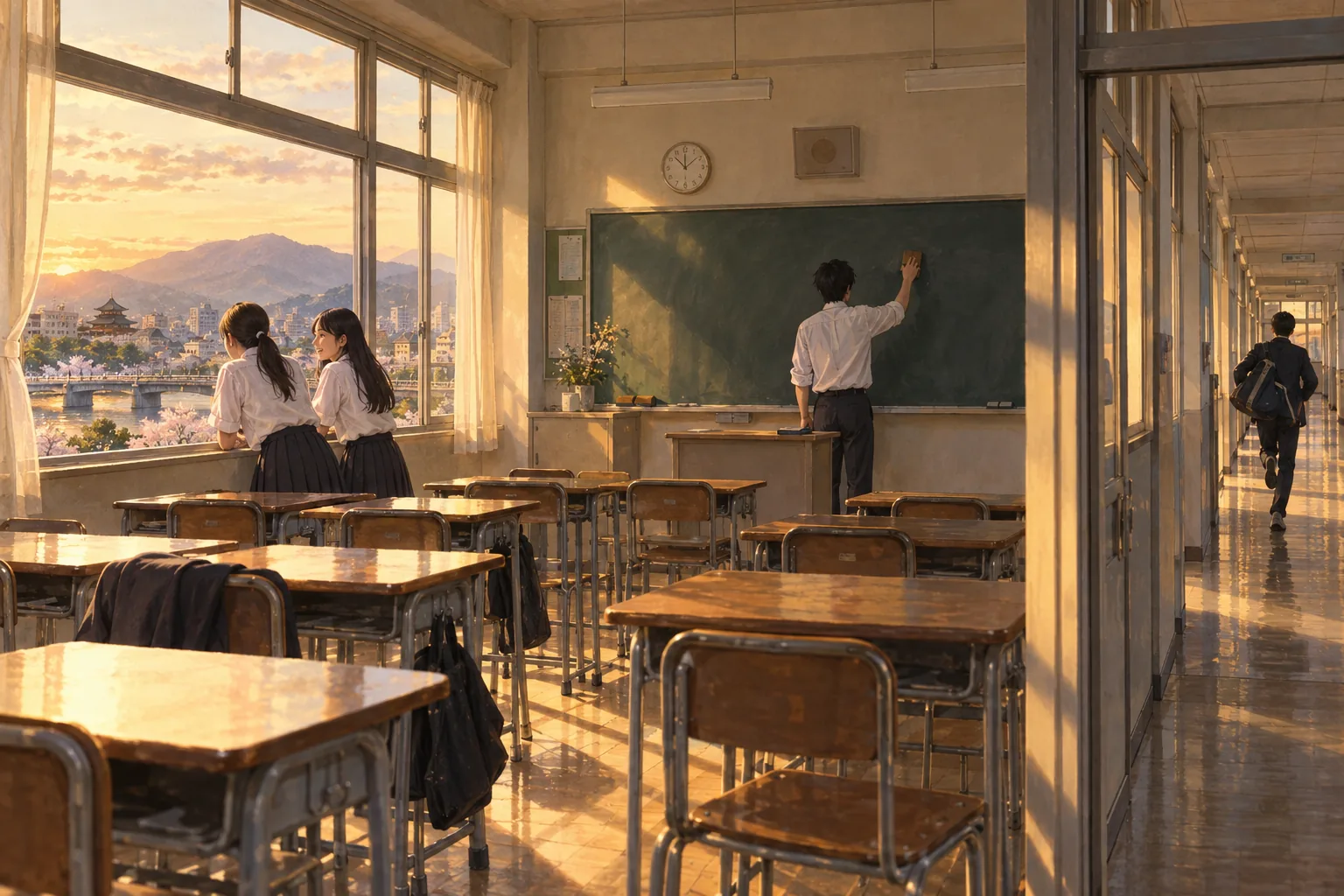
授業が終わっても、学校に残る。日本の学生の一日が長い理由の半分がここにある。
一言で言うと
これだけ覚えれば最低限伝わる一文
Houkago is the time after lessons end, which many Japanese students spend at school rather than going home.
放課後とは授業が終わったあとの時間で、日本の多くの生徒は家に帰らず学校に残ります。
30秒で説明する
外国人に説明するときの標準サイズ
Lessons in a Japanese school end in the mid-afternoon, but many students do not leave. They clean the classroom, go to club activities, and often stay until the school closes in the early evening. For many students the hours after lessons are what they actually remember about school.
日本の学校の授業は午後の半ばに終わりますが、多くの生徒はそこで帰りません。教室を掃除し、部活に行き、夕方の下校時刻まで残ることも多いのです。多くの生徒にとって、学校の記憶として残るのは、授業のあとの時間です。
スピーチ・英作文
通訳案内士の二次口述・大学入試の自由英作文に
Lessons in a Japanese school finish in the mid-afternoon, but the day does not. At many schools, everyone cleans first: the whole school stops and students sweep and wipe their own classrooms. Then there is homeroom, and then club activities, which for a sports club can run until six or later.
Students who are not in a club may stay to study or help with an event. The school closes and everyone is sent home in the early evening. Put together with morning practice and juku, this is why the Japanese student day is long. But it is also why so much of what people remember about school happened after the lessons ended.
The friendships, the arguments, the walk to the station, the stop at a convenience store on the way home. Japanese fiction set in schools spends most of its time in this window, and that is not an invention. That really is where the life of a school is.
日本の学校の授業は午後の半ばに終わりますが、一日は終わりません。多くの学校では、まず全員で掃除をします。学校全体が動きを止め、生徒が自分たちの教室を掃き、拭きます。それから帰りの会があり、そのあと部活動です。
運動部なら6時かそれ以降まで続くこともあります。部活に入っていない生徒も、残って勉強したり、行事の準備を手伝ったりします。夕方には学校が閉まり、全員が下校します。朝練と塾を合わせれば、これが日本の学生の一日が長い理由です。
ただ同時に、学校について人が覚えていることの多くが、授業のあとに起きた理由でもあります。友情、言い合い、駅までの道、帰りに寄るコンビニ。学校を舞台にした日本の作品がこの時間帯を多く描くのは、作り話ではありません。学校の生活は、本当にそこにあるのです。
こう聞かれたら
外国人から実際にされる質問と、その答え方。
Can students just go home?
生徒はそのまま帰ってもいいのですか。
Yes, once cleaning and homeroom are done, if they are not in a club. In practice most junior high students are in a club, and the ones who are not often stay anyway because their friends are there.
掃除と帰りの会が終われば、部活に入っていなければ帰れます。実際には中学生の多くが部活に入っていますし、入っていない生徒も友人がいるので残ることが多いです。
What time do they get home?
家に着くのは何時ごろですか。
For a junior high student in a sports club, seven or later is common. Add juku and it becomes nine or ten. Schools set a closing time specifically to stop it running later.
運動部の中学生なら7時以降が普通です。塾を足すと9時か10時になります。それ以上遅くならないよう、学校は下校時刻を定めています。
Is there homework as well?
宿題もあるのですか。
Yes, on top of all of it, and more during long holidays. The summer homework set, including a free research project, is a shared national memory and a source of August panic.
それに加えてあります。長期休みはさらに増えます。自由研究を含む夏休みの宿題は、日本人に共通の記憶であり、8月の焦りの原因でもあります。
そのまま使えるフレーズ
- Lessons end, but most students don't go home yet.授業が終わっても、多くの生徒はまだ帰りません。
- Often everyone cleans the classroom first.まず全員で教室を掃除することが多いです。
- Then club activities until the evening.そのあと夕方まで部活です。
- The school sets a closing time.学校が下校時刻を決めています。
- That's the part people actually remember.人が覚えているのは、その時間です。
説明に使う語句
- after school放課後
- homeroom学級活動、帰りの会
- club activity部活動
- closing time下校時刻
- homework宿題
動画で見る
YouTube より豆知識
「放課後」の「放課」はもともと授業を放つ、つまり終えることを指す。授業終了後の時間の使い方は学校が定めており、下校時刻は季節によって変わることが多い(冬は日没が早いため早める)。掃除の時間は「特別活動」に位置づけられ、教育課程の一部である。長期休業中の宿題として出される自由研究は、小学校の定番であり、テーマ探しに家族が巻き込まれることも多い。近年は働き方改革のなかで、部活動の終了時刻や休養日が明示され、放課後の学校の閉門時刻も早まる傾向にある。学童保育(放課後児童クラブ)は共働き家庭の小学生を対象とした別の制度である。
