蛍ほたる
hotaru
fireflies
ゲンジボタルの光る間隔は、西日本と東日本で違う。
一言で言うと
これだけ覚えれば最低限伝わる一文
Hotaru, or fireflies, are a brief early-summer sight in Japan, and going to watch them is a seasonal outing.
蛍は、初夏のごく短い期間だけ見られ、見に行くことが季節の行事になっている虫です。
30秒で説明する
外国人に説明するときの標準サイズ
Fireflies appear in Japan for a few weeks in early summer, usually June, along clean streams. Going out at dusk to watch them is a recognized seasonal activity, and many towns run firefly nights. The two common species are the larger genji firefly and the smaller heike firefly, both usually said to be named after warrior clans from a twelfth-century war.
日本では初夏、たいてい6月の数週間だけ、きれいな流れのそばに蛍が現れます。夕暮れに見に行くことは季節の行事として定着していて、多くの町が蛍の夜の催しを開きます。よく見られるのは大きめのゲンジボタルと小さめのヘイケボタルで、どちらも12世紀の戦いで争った武士の一族にちなむ名だといわれます。
スピーチ・英作文
通訳案内士の二次口述・大学入試の自由英作文に
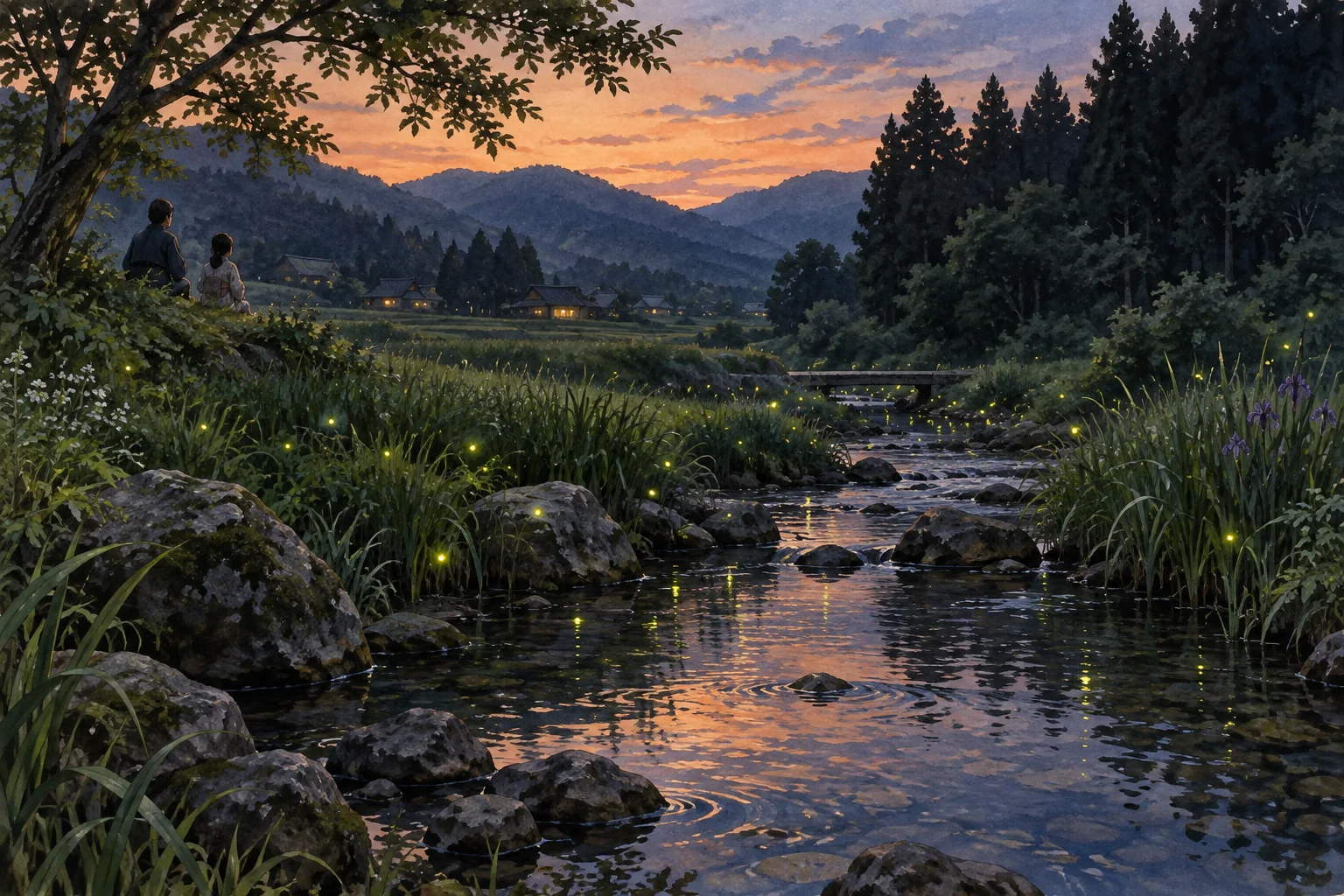
Firefly watching is one of those Japanese customs that lasts about two weeks a year and then vanishes. In early summer, usually June, fireflies rise from clean streams at dusk, and people walk out along the water to watch without flashlights or flash photography. The two species most people see are usually said to be named after the Genji and the Heike, the two clans of a famous twelfth-century war, though the exact origin of the names is debated.
There is a detail worth knowing: the genji fireflies in western Japan flash at roughly twice the speed of those in the east, an east-west difference researchers have documented. Because the larvae need clean running water, fireflies disappeared from many places during the rapid growth years and have been brought back by local restoration efforts, so a firefly night is often also a story about a river that was cleaned up.
蛍狩りは、年に二週間ほどだけ続いて消える日本の習慣のひとつです。初夏、たいていは6月に、夕暮れになると清らかな流れから蛍が立ちのぼり、人々は懐中電灯もフラッシュ撮影もせずに水辺を歩いて眺めます。
多くの人が見る二種は、12世紀の有名な戦いで争った源氏と平家にちなむといわれますが、名の由来には諸説あります。知っておくと面白い点があります。西日本のゲンジボタルは、東日本のもののおよそ二倍の速さで光るという東西の違いが、研究で記録されています。
幼虫がきれいな流れを必要とするため、高度経済成長の時期に多くの土地から蛍は姿を消し、地域の復元の取り組みで戻ってきました。ですから蛍の夜はしばしば、きれいになった川の話でもあるのです。
こう聞かれたら
外国人から実際にされる質問と、その答え方。
Why can't I use a flash or a flashlight?
どうしてフラッシュや懐中電灯を使ってはいけないのですか。
Because light disrupts the flashing they use to find each other, and a bright beam will clear an area. Most firefly sites ask for phones face down and no white light. Some hand out red cellophane to cover a flashlight.
光は蛍が互いを見つけるための明滅を乱し、強い明かりを当てると一帯からいなくなってしまうからです。多くの観賞地では携帯電話を伏せ、白い光を使わないよう求めます。懐中電灯に赤いセロハンをかぶせるよう配る場所もあります。
When exactly should I go?
正確にはいつ行くのがいいですか。
Roughly late May to late June in much of Honshu, depending on the area, and later further north. Warm, humid, windless evenings without moonlight are best, and the peak is roughly an hour after sunset. Local tourism sites post nightly counts during the season.
本州の多くでは、地域によって5月下旬から6月下旬が目安で、北へ行くほど遅くなります。暖かく湿って風がなく、月の出ていない晩がよく、日没から1時間ほどが最も多く飛びます。時季には地元の観光の案内が毎晩の数を出しています。
そのまま使えるフレーズ
- Please don't use a flash.フラッシュは使わないでください。
- The season only lasts a couple of weeks.見られるのは2週間ほどだけです。
- They need clean running water to breed.繁殖にはきれいな流れが必要です。
- The best time is about an hour after sunset.日没から1時間ほどが見ごろです。
説明に使う語句
- firefly蛍
- to glow / to flash光る
- larva幼虫
- stream小川
動画で見る
YouTube より豆知識
ゲンジボタルの発光の間隔には東西で差があり、西日本ではおよそ2秒、東日本ではおよそ4秒に一度とされ、その境目は中部地方あたりにあります。「蛍雪の功」という言葉は、蛍の光と雪明かりで学んだという中国の故事に由来し、卒業式で歌われる「蛍の光」の題名もここから来ています。ただしこの歌の旋律はスコットランド民謡で、日本語の歌詞をつけたものです。ヘイケボタルは水田にも住み、農薬の影響を受けやすいとされます。
