縁側えんがわ
engawa
the wooden veranda between inside and out
部屋でも庭でもない場所。「内でも外でもない」空間が、日本の家にはある。
一言で言うと
これだけ覚えれば最低限伝わる一文
An engawa is the narrow wooden strip along the outside of a Japanese house, neither indoors nor outdoors.
縁側とは、日本家屋の外周に沿った細い板張りの部分で、内でも外でもない場所です。
30秒で説明する
外国人に説明するときの標準サイズ
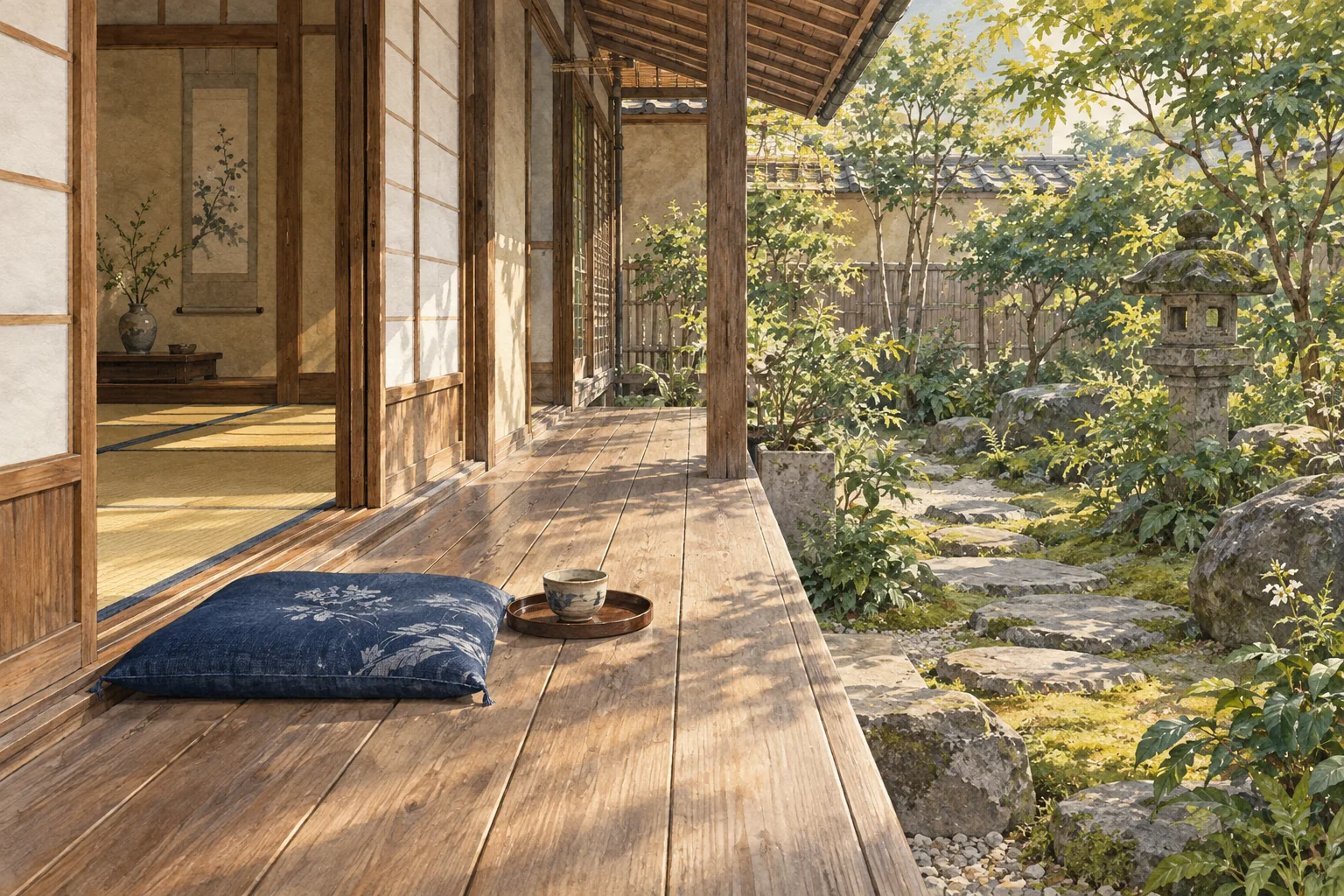
An engawa is a wooden walkway running along the outside of a traditional house, between the sliding paper doors and the garden. With the shoji open it is part of the room; with the outer rain shutters closed it is a corridor. People sit on the edge with their feet on the ground to talk to a neighbor, eat a watermelon, or watch the rain.
縁側は、伝統的な家の外周に沿って走る板張りの通路で、障子と庭のあいだにあります。障子を開ければ部屋の一部になり、雨戸を閉めれば廊下になります。人はその端に腰かけ、足を地面に下ろして近所の人と話し、スイカを食べ、雨を眺めます。
スピーチ・英作文
通訳案内士の二次口述・大学入試の自由英作文に
The engawa is one of my favorite features of a Japanese house, and it is hard to translate because there is no exact Western equivalent. It is a narrow wooden walkway running along the outside of the building, between the sliding paper doors of the room and the garden.
When the doors are open, it is part of the room. When the outer wooden shutters are closed for the night, it becomes an inside corridor. And when you sit on its edge with your feet down on the stones, you are outside. That ambiguity is the point.
A neighbor can come to the garden and sit on the engawa to talk without ever entering the house, which is a comfortable degree of closeness: more than the doorway, less than the living room. Children sit there eating watermelon in summer, and old people sit there in the sun. New houses rarely have one, and I think something small was lost with them.
縁側は日本家屋で私がいちばん好きな部分のひとつで、西洋にぴったり対応するものがないため訳しにくい言葉です。建物の外側に沿って走る細い板張りの通路で、部屋の障子と庭のあいだにあります。障子を開ければ部屋の一部です。
夜に雨戸を閉めれば、内側の廊下になります。そして端に腰かけて足を沓脱石に下ろせば、そこは外です。そのあいまいさが要点です。近所の人が庭から来て縁側に腰かけ、家に入らないまま話して帰れます。
玄関より近く、居間ほど近くない、ちょうどよい距離感です。夏は子どもがそこでスイカを食べ、年寄りが日向に座ります。新しい家にはめったにありません。小さなものが一つ失われたと、私は思っています。
こう聞かれたら
外国人から実際にされる質問と、その答え方。
Is it inside or outside the house?
それは家の内側ですか、外側ですか。
Both, depending on which doors are shut. Architecturally it is a buffer zone, and Japanese has a term for this kind of in-between space rather than treating it as an anomaly.
どちらの戸を閉めるかによって、両方です。建築上は緩衝の空間で、日本語にはこうした中間領域を指す言い方があり、例外扱いされていません。
What is it for, practically?
実用としては、何のためのものですか。
It shades the room from high summer sun while letting low winter sun in, keeps rain off the paper doors, and gives access along the house without a corridor inside.
夏の高い日ざしを遮り、冬の低い日ざしを入れ、雨から障子を守り、家の中に廊下を作らずに移動できるようにしています。
Why do new houses not have them?
どうして新しい家にはないのですか。
Insulation and land cost. An engawa is a thermal weak point and takes up floor area, and modern homes prioritize sealed, heated interiors and smaller footprints.
断熱と土地の値段です。縁側は熱の逃げ道であり床面積も使います。現代の住宅は気密と暖房、そして狭い敷地を優先します。
そのまま使えるフレーズ
- Come and sit on the engawa.縁側にどうぞ。
- It's neither inside nor outside.内でも外でもない場所です。
- With the doors open it's part of the room.戸を開ければ、部屋の一部になります。
- Neighbors can sit there without coming in.近所の人は、家に入らずそこに座れます。
- New houses hardly ever have one.新しい家には、まずありません。
説明に使う語句
- veranda縁側、ベランダ
- eaves軒
- buffer zone緩衝空間
- in-between中間の
- overhang張り出し、軒の出
動画で見る
YouTube より豆知識
縁側は雨戸の内側にある「内縁」と、外側にある「濡れ縁」に分けられる。濡れ縁は雨がかかるため、竹や耐候性のある木材が使われた。縁側の外に置かれた石を「沓脱石(くつぬぎいし)」といい、履物を脱いで上がるための踏み台である。深い軒と縁側の組み合わせは、夏の高い太陽を遮り冬の低い太陽を室内に入れる、気候に応じた設計になっている。建築家ブルーノ・タウトは1930年代に桂離宮を訪れ、日本建築の内外を連続させる感覚を高く評価した。近年は断熱性能を重視する住宅設計のなかで縁側は減ったが、ウッドデッキとして形を変えて残る例もある。
