江戸切子えどきりこ
Edo kiriko
cut glass from Tokyo
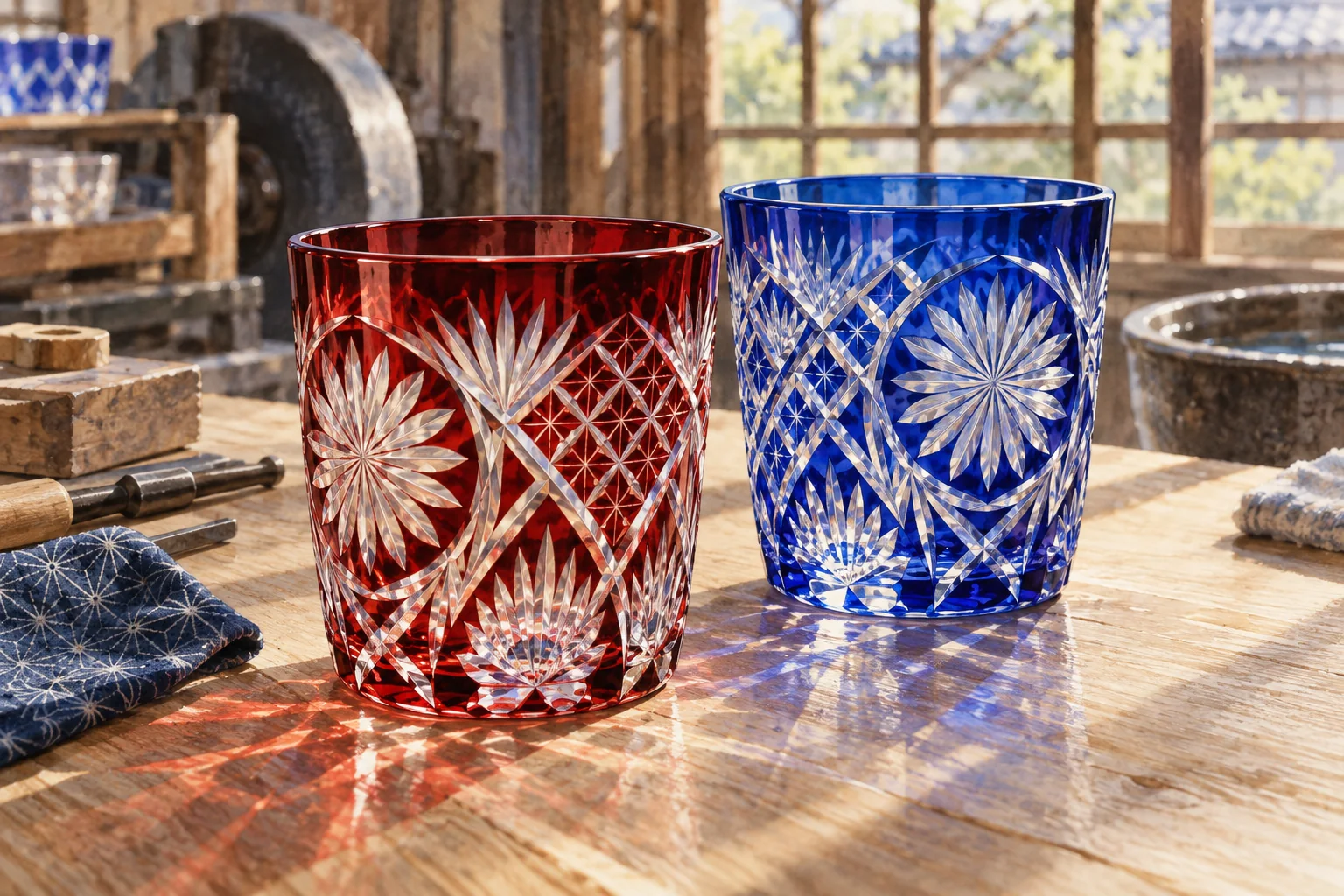
色ガラスを薄く重ねて削る。だから削った線だけが白く光る。
一言で言うと
これだけ覚えれば最低限伝わる一文
Edo kiriko is Japanese cut glass, with colored glass ground away to leave a clear pattern.
江戸切子とは、色ガラスを削って透明な文様を出す日本の切子細工です。
30秒で説明する
外国人に説明するときの標準サイズ
Edo kiriko is cut glass made in Tokyo, using a thin layer of colored glass over clear glass. The craftsman grinds the pattern by hand against a spinning wheel, cutting through the color so the lines appear clear and bright. Traditional patterns are geometric, based on baskets, chrysanthemums, hemp leaves and fish scales.
江戸切子は東京でつくられる切子ガラスで、透明なガラスの上に色ガラスを薄くかぶせたものを使います。職人は回転する円盤に手で当てて文様を削り、色の層を削り抜くことで線が透明に光ります。伝統的な文様は幾何学的で、籠目、菊、麻の葉、魚の鱗などをもとにしています。
スピーチ・英作文
通訳案内士の二次口述・大学入試の自由英作文に
Edo kiriko is cut glass made in Tokyo, and the technique dates from the last decades of the Edo period. Much of its look comes from the material: a layer of colored glass, often deep blue or red, is fused thinly over clear glass, so when the craftsman grinds a groove the color is removed and the line shows up as clear, bright and sharp against the colored ground.
The cutting is done freehand against a spinning wheel, with only a few rough guide lines marked on the glass, and the classic patterns have names taken from everyday things: basket weave, hemp leaf, chrysanthemum, fish scale.
A small glass takes hours. If you buy one, use it. The pattern is designed to catch light through whatever you pour into it, and it looks dull sitting in a cabinet.
江戸切子は東京でつくられる切子ガラスで、技法は江戸時代の終わりごろにさかのぼります。その見た目の多くは素材から来ています。
透明なガラスの上に、濃い青や赤の色ガラスを薄くかぶせてあるので、職人が溝を削ると色が取り除かれ、線が色地の上に透明で明るく鋭く浮かびます。削りは回転する円盤に手で当てて行い、ガラスには目安になる線を数本引くだけです。
古典的な文様には日常のものから取った名がついています。籠目、麻の葉、菊、魚の鱗。小さな一客に何時間もかかります。買ったら使ってください。文様は注いだものを通して光を受けるように設計されていて、飾り棚の中では鈍く見えてしまいます。
こう聞かれたら
外国人から実際にされる質問と、その答え方。
How is it different from Satsuma kiriko?
薩摩切子とはどう違うのですか。
Satsuma kiriko, from Kagoshima, uses a thicker layer of color, so the cut edge shades gradually from color to clear. Edo kiriko has a thin layer and a crisp edge. Satsuma production stopped in the nineteenth century and was later revived.
鹿児島の薩摩切子は色の層が厚いため、削った縁が色から透明へなだらかに変わります。江戸切子は層が薄く、境目がはっきりします。薩摩切子は19世紀に一度途絶え、のちに復元されました。
Can it go in the dishwasher?
食器洗い機に入れられますか。
No. Hand wash in lukewarm water with a soft sponge, and avoid sudden temperature changes and hot water. The cut edges chip easily against other dishes, so wash it on its own.
使えません。ぬるま湯とやわらかいスポンジで手洗いし、急な温度差と熱湯は避けてください。削った縁は他の食器に当たると欠けやすいので、単独で洗ってください。
そのまま使えるフレーズ
- The color layer is very thin.色ガラスの層はとても薄いです。
- Cutting through the color makes the line clear.色を削り抜くと線が透明になります。
- It's all cut freehand.すべて手で削っています。
- Please hand wash it, not in the dishwasher.食洗機ではなく手で洗ってください。
説明に使う語句
- cut glass切子ガラス
- to grind削る
- geometric pattern幾何学文様
- craftsman職人
動画で見る
YouTube より豆知識
江戸切子は1834年ごろ、江戸のびいどろ屋が金剛砂を使ってガラスの表面に彫刻を始めたのが起こりとされます。国の伝統的工芸品に指定されており、江東区や墨田区などに工房が集まっています。文様には、籠目、矢来、菊繋ぎ、麻の葉、七宝、魚子などの名前があり、着物や建具の伝統文様と共通するものが多くあります。現代は色数が増え、黒や緑も作られますが、青と赤が今も定番です。
