道頓堀どうとんぼり
Dotonbori
the canal-side street in Osaka with the running-man sign
走っている看板の男は、ゴールした選手。1935年から立っている。
一言で言うと
これだけ覚えれば最低限伝わる一文
Dotonbori is the canal-side street in Osaka known for huge signs and cheap food.
道頓堀は大阪の川沿いの通りで、巨大な看板と安くてうまい食べ物で知られています。
30秒で説明する
外国人に説明するときの標準サイズ
Dotonbori is a street along a canal in southern Osaka. It has been an entertainment district since the 1600s, when theaters lined the water, and today it is known for enormous signs: a running man, a moving crab and many more. It is where people go for takoyaki and okonomiyaki. Osaka's nickname for its own food culture is kuidaore, roughly ruining yourself by eating.
道頓堀は大阪の南にある、川沿いの通りです。1600年代に芝居小屋が水辺に並んで以来の繁華街で、いまは巨大な看板で知られています。走る男、動くカニ、ほかにもたくさん。たこ焼きやお好み焼きを食べに行く場所です。大阪には自分たちの食文化を指す「食い倒れ」という言葉があります。
スピーチ・英作文
通訳案内士の二次口述・大学入試の自由英作文に
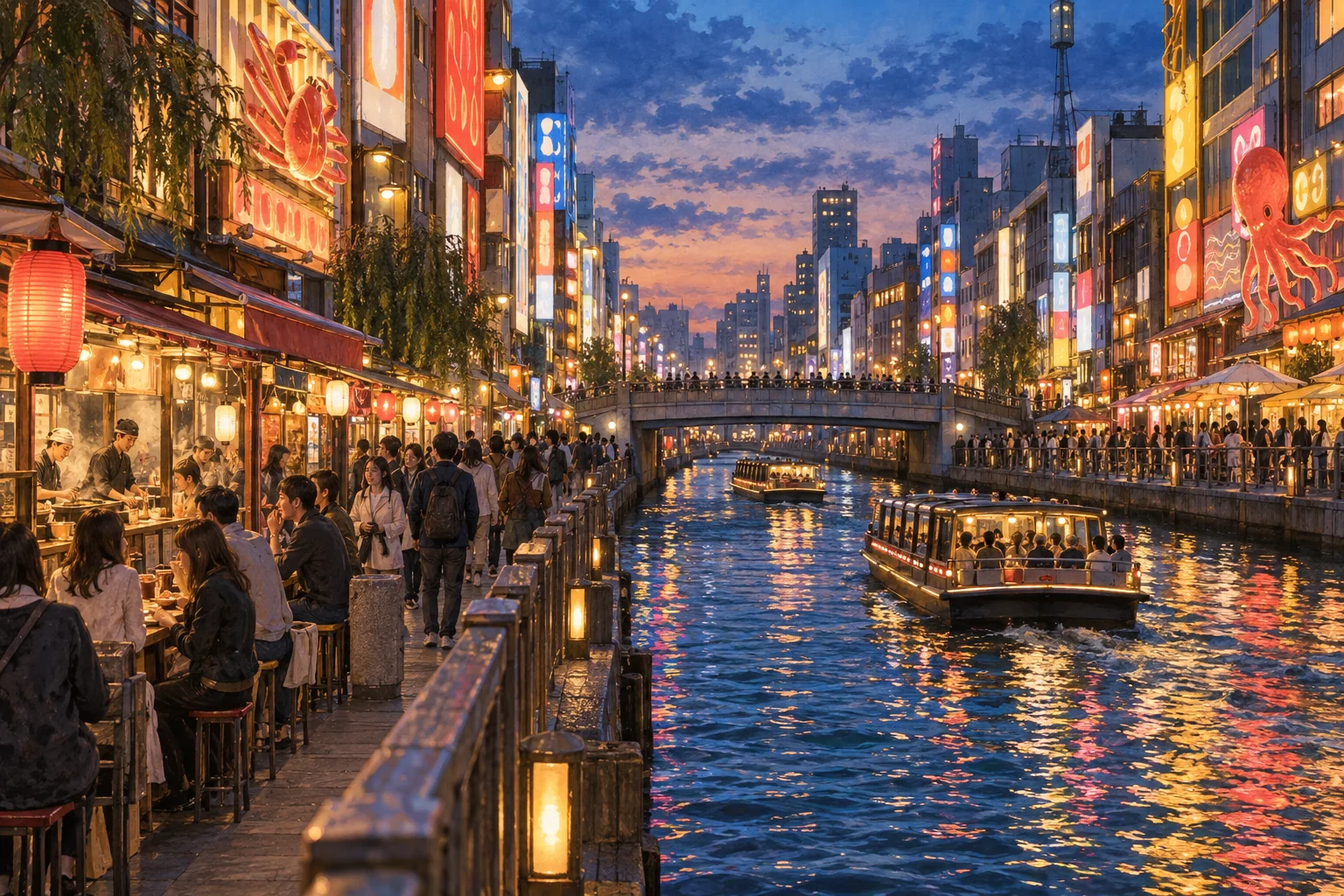
Dotonbori is a street along a canal in Osaka, and it is the image most people have of the city: signs stacked on signs, a crab the size of a car moving its legs above a restaurant door, crowds at eleven at night.
The most famous sign is a man in a white running shirt with his arms up, advertising a candy company. It first went up in 1935 and the current one is the sixth version. He is not running toward anything; he is a runner who has just finished, arms raised at the finish line.
The canal itself was dug in the early 1600s, and theaters were built along it, which is why this has been the entertainment quarter for four hundred years. Come hungry. Takoyaki and okonomiyaki are the two things to eat, and standing up is normal.
道頓堀は大阪の川沿いの通りで、多くの人が思い浮かべる大阪の姿そのものです。看板の上に看板が重なり、店の入口の上で車ほどの大きさのカニが脚を動かし、夜11時でも人であふれています。
いちばん有名なのは、白い陸上シャツで両手を上げた男の看板で、菓子会社の広告です。初代は1935年に立ち、いまのものは六代目です。彼はどこかへ走っているのではなく、ゴールして両手を上げた選手です。
道頓堀川は1600年代の初めに掘られ、その岸に芝居小屋が建ちました。だからここは400年前から繁華街なのです。お腹を空かせて行ってください。たこ焼きとお好み焼きが二本柱で、立ったまま食べるのが普通です。
こう聞かれたら
外国人から実際にされる質問と、その答え方。
Why is the running man famous?
どうしてあの走る男の看板が有名なのですか。
It is the oldest of the big signs, first lit in 1935. It was taken down during the war and rebuilt afterward, and the current one is the sixth version. Standing in front of it with your arms up is the standard Osaka photograph.
大きな看板の中でいちばん古く、初代は1935年に点灯しました。戦時中に一度撤去され、戦後に復活して、いまのものは六代目です。両手を上げて前で撮るのが大阪の定番の写真です。
Do people really jump into the canal?
本当に川へ飛び込む人がいるのですか。
Some do after big baseball wins, and it makes the news every time because the water is not clean and people have been injured. It is not a tradition anyone recommends.
野球の優勝のときに飛び込む人はいて、そのたびにニュースになります。水はきれいではなく、けが人も出ています。勧められる習慣ではありません。
Is Osaka food really different from Tokyo food?
大阪の食べ物は、東京とそんなに違うのですか。
The ingredients overlap, but the seasoning differs: Osaka broth is lighter in color and leans on kelp. The bigger difference is attitude — cheap, fast and filling is a point of pride here.
材料は重なりますが、味つけは違います。大阪のだしは色が薄く、昆布を効かせます。それ以上に違うのは姿勢で、安くて早くて満足できることを誇りにしています。
誤解されやすい
MYTHThe running man on the sign is running a race.
看板の男はレースの最中だと思われがちです。
FACTHe has finished. The pose is a runner crossing the line with both arms raised, used as a symbol of reaching a goal.
彼はゴールした姿です。両手を上げて線を越えた選手の形で、目標に届いたことの象徴として使われています。
そのまま使えるフレーズ
- That sign has been there since 1935.あの看板は1935年からあります。
- He's not running — he's just finished the race.走っている最中ではなく、走り終わったところです。
- Osaka people say kuidaore — eat until you're ruined.大阪では「食い倒れ」と言います。
- Takoyaki is octopus in batter, eaten hot.たこ焼きは、たこを生地で包んで熱いうちに食べます。
- Eating while standing is completely normal here.ここでは立ち食いはごく普通です。
説明に使う語句
- canal堀(ほり)
- entertainment district繁華街
- neon signネオン看板
- street food屋台の食べ物
- batter生地
動画で見る
YouTube より豆知識
道頓堀川は安井道頓らが開削し、大坂の陣のあと元和元年(1615年)に完成したとされ、名は道頓にちなむ。岸には芝居小屋が並び、江戸時代には五座と呼ばれる劇場街になった。グリコの看板は昭和10年(1935年)に初代が点灯し、現在は六代目。2014年からLEDになり、背景の絵が時間帯で変わる。走者の姿は「ゴールインマーク」と呼ばれ、ゴールした瞬間を表す。カニの看板は脚が動くもので、1960年代から同じ店の入口にある。
