鎮守の森ちんじゅのもり
chinju no mori
the grove that surrounds a shrine
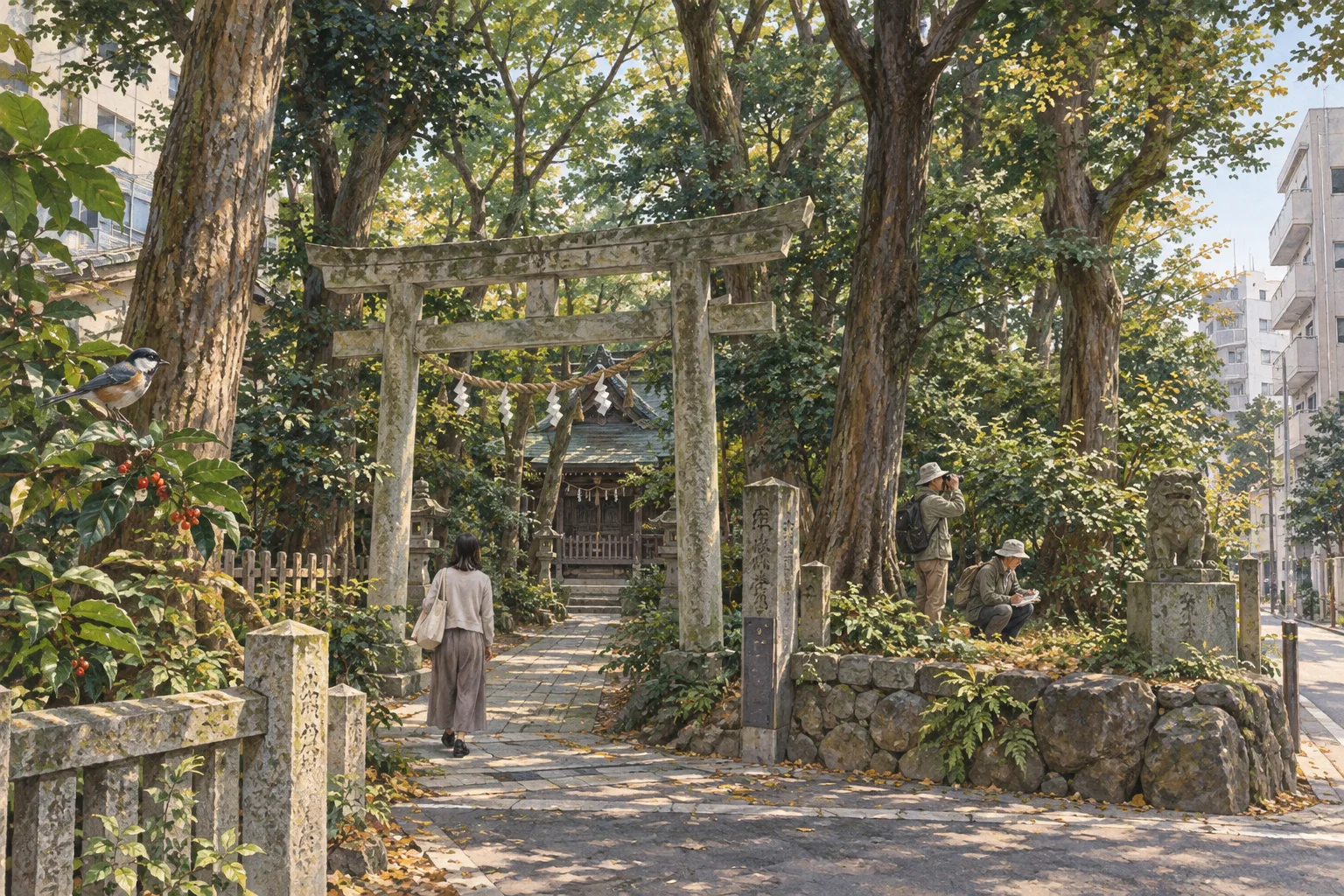
町の中に急に現れる濃い緑。切られずに残った理由がある。
一言で言うと
これだけ覚えれば最低限伝わる一文
Chinju no mori, the grove around a shrine, is protected as sacred and is often the oldest greenery in town.
鎮守の森とは、神社を囲む聖域として守られた森で、その土地でいちばん古い緑であることも少なくありません。
30秒で説明する
外国人に説明するときの標準サイズ
Chinju no mori is the wooded ground around a shrine. The trees are treated as part of the sacred space rather than as a garden, so they are not cleared or thinned for looks. In cities this has left small islands of old forest between buildings, valuable enough that ecologists study them as records of what grew there before.
鎮守の森とは、神社を囲む樹林のことです。木々は庭ではなく聖域の一部として扱われるため、見た目のために伐ったり透かしたりしません。そのため都市では、建物のあいだに古い森が小さく島のように残りました。そこに何が生えていたかを知る手がかりとして、生態学の研究対象にもなっています。
スピーチ・英作文
通訳案内士の二次口述・大学入試の自由英作文に
Walk through a Japanese city and you will pass places where the noise suddenly drops and the light goes green. That is usually a shrine grove.
The trees are not decoration; the grove marks where the sacred ground begins, and cutting it has long been avoided, so many of these patches survived war and development. Ecologists value them because a grove often holds the species that grew in that area naturally, long since cleared everywhere else.
The most famous example is the opposite case: the forest around Meiji Shrine in Tokyo was planted from bare ground around 1915, with roughly a hundred thousand trees donated from all over the country, and designed to grow over centuries into something that looks wild. It is now dense enough that people assume it was always there.
日本の都市を歩いていると、急に音が遠のいて、光が緑になる場所を通ることがあります。たいていは神社の森です。木々は飾りではありません。森は聖なる場所の境目を示すもので、伐ることが長く避けられてきました。
そのおかげで、戦争や開発を越えて残った森が多くあります。生態学者が注目するのは、その土地に本来生えていた木が、ほかではすっかり失われたあとも鎮守の森に残っていることがあるからです。有名な例はむしろ逆です。
東京の明治神宮の森は、1915年ごろに何もない土地に造られたもので、全国から寄せられた十万本ほどの木を植え、何百年もかけて自然の林のように育つよう設計されました。今では、はじめからそこにあったと誰もが思うほど深い森になっています。
こう聞かれたら
外国人から実際にされる質問と、その答え方。
Can I walk into the grove?
森の中に入ってもよいのですか。
Stay on the paths. The approach and the open areas are for visitors, but the wooded parts are usually not, and some have rope markers. Where a sign or a rope says no entry, that is a boundary, not a suggestion.
道の上を歩いてください。参道や開けた場所は参拝者のためのものですが、林の中はそうでないことが多く、縄が張られているところもあります。掲示や縄がある場合、それは目安ではなく境目です。
Why were these groves never cut down?
どうしてこの森は伐られずに残ったのですか。
Because cutting inside a shrine's grounds was held to invite misfortune, and because the land belonged to the shrine rather than to a landowner who might sell it. Both reasons mattered more than conservation ever did.
境内の木を伐ると災いを招くと考えられてきたこと、そして土地が売り手のいる私有地ではなく神社のものだったことです。保護の考えより、この二つのほうがずっと大きく働きました。
Are they all natural forest?
どれも自然の森なのですか。
No. Many are, in the sense of being the local forest left alone, but others were planted, and the best known of all, the Meiji Shrine forest, was designed and planted from scratch a century ago.
違います。その土地の林がそのまま残った例は多くありますが、植えられたものもあります。もっとも知られる明治神宮の森は、百年ほど前に設計して一から植えられたものです。
そのまま使えるフレーズ
- This grove belongs to the shrine.この森は神社のものです。
- It is cooler inside the trees.木の中は涼しいです。
- Please stay on the path.道から出ないようにしてください。
- These trees have been left uncut for generations.この木々は何代にもわたって伐られずに残ってきました。
- The forest was planted a century ago.この森は百年ほど前に植えられました。
説明に使う語句
- shrine grove鎮守の森
- sacred ground聖域
- native species在来種
- to fell a tree木を伐る
- shrine approach参道
動画で見る
YouTube より豆知識
鎮守の森は、神社を囲む樹林のことで、聖域の一部として伐採を避けてきたため、その土地に本来あった植生が残っている例があります。都市の中の小さな森が、生態学の資料として調べられるのはそのためです。一方、東京の明治神宮の森は自然林ではありません。1915年ごろに造成が始まり、全国から献木された十万本ほどを植えて、何世代もかけて自然の林に近づくよう設計されたものです。落ち葉は外へ持ち出さず、林の中に還す方針がとられてきました。
