湯冷めゆざめ
yuzame
catching a chill after a hot bath, as your body cools down too fast
湯上がりに薄着で長居すると、風邪をひくと言われる理由。
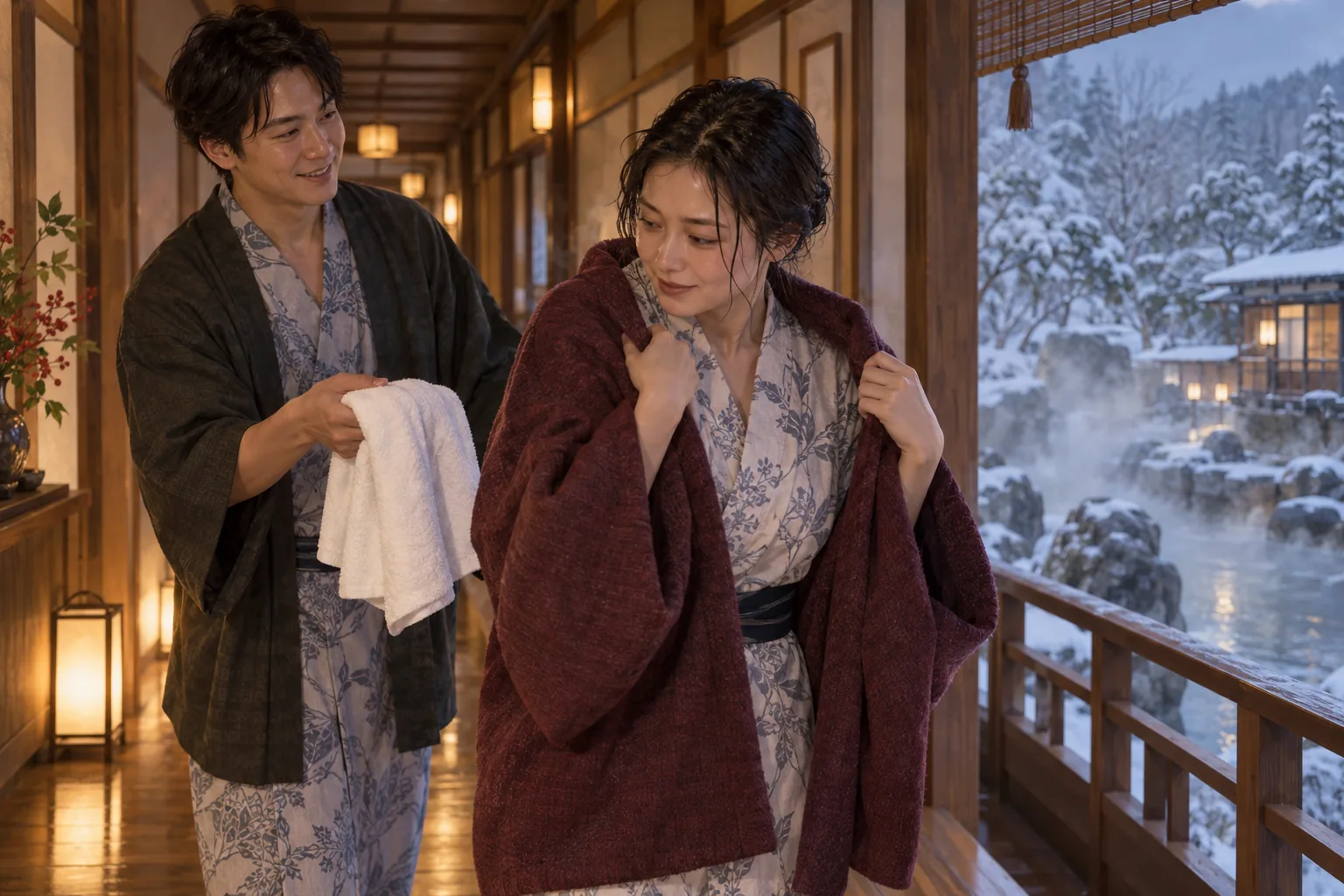
一言で言うと
これだけ覚えれば最低限伝わる一文
Yuzame is the chill people believe you can catch by staying underdressed right after a hot bath.
湯冷めとは、熱い風呂に入ったあと薄着のまま過ごすと引くと考えられている、体の冷えのことです。
30秒で説明する
外国人に説明するときの標準サイズ
Yuzame describes the cold or chill some Japanese people believe follows a hot bath if you cool down too quickly afterward, especially by going outside underdressed or with wet hair. A hot soak opens the skin's blood vessels and raises body temperature, so stepping into cold air right after can, in this traditional view, lead to catching a cold. Doctors don't treat yuzame as a specific medical condition, but the habit it encourages, drying off and dressing warmly before heading out, is common advice after any hot bath, not just in Japan.
湯冷めとは、熱い風呂に入ったあと、特に薄着のまま外に出たり髪が濡れたままだったりして急に体が冷えると引くと考えられている、風邪のような不調のことです。熱い風呂は皮膚の血管を広げて体温を上げるため、その直後に冷たい空気に触れると、この伝統的な考え方では風邪をひきやすくなるとされます。医学的には湯冷め自体が特定の病名として扱われているわけではありませんが、体をしっかり拭いて温かい格好をしてから外に出るという習慣自体は、日本に限らず熱い風呂のあとの一般的な助言でもあります。
スピーチ・英作文
通訳案内士の二次口述・大学入試の自由英作文に
Ask an older relative in Japan why you should dry your hair before bed, and yuzame is often the reason given. The idea is that a hot bath widens the blood vessels near the skin and raises your body temperature, so if you step into cool air right afterward, especially with wet hair or underdressed, your body cools too fast and, in traditional belief, becomes more likely to catch a cold.
It's not a recognized medical diagnosis, and modern doctors would point instead to general chill and immune stress rather than a bath specifically. Still, the habit it produces is hard to argue with: towel off, get dressed warmly, dry your hair, and let your body temperature settle before heading outside or straight to bed. Even visitors who don't believe the folk explanation tend to keep the routine anyway, since it simply feels better.
日本で、寝る前に髪をしっかり乾かすよう言われた理由をお年寄りに尋ねると、よく出てくるのが湯冷めという言葉です。熱い風呂は皮膚近くの血管を広げて体温を上げるため、その直後に涼しい空気に触れると、特に髪が濡れていたり薄着だったりすると、体が急に冷え、伝統的な考え方ではそのせいで風邪をひきやすくなるとされます。
これは正式な医学的診断名ではなく、現代の医師なら風呂そのものより、一般的な冷えや免疫の負担を理由に挙げるでしょう。それでも、そこから生まれた習慣に異論を挟むのは難しいものです。
体をしっかり拭き、温かい服を着て、髪を乾かし、体温が落ち着いてから外に出たり寝たりするという習慣です。この言い伝えを信じていない人でも、単純に気持ちがいいという理由で、この習慣を続けていることが多くあります。
こう聞かれたら
外国人から実際にされる質問と、その答え方。
Is yuzame an actual medical condition?
湯冷めは実際の医学的な病気なのですか。
No, it's a traditional folk explanation rather than a diagnosis, though the underlying idea, that cooling down too fast after raising your body temperature isn't great for you, isn't entirely without basis.
いいえ、正式な診断名ではなく、伝統的な言い伝えによる説明です。ただし、体温を上げたあとに急に冷えるのは体によくないという根本の考え自体は、まったく根拠がないわけではありません。
Why do people rush to dry their hair after an onsen?
なぜ温泉のあと急いで髪を乾かす人が多いのですか。
Wet hair cools the head faster than dry hair, so it's seen as the quickest way to trigger yuzame, which is why hair dryers are standard equipment in almost every onsen and sento changing room.
濡れた髪は乾いた髪より頭を早く冷やすため、湯冷めを引き起こしやすい原因と見なされています。そのため、ほとんどの温泉や銭湯の脱衣所にドライヤーが備え付けられているのです。
Does this only happen after a hot bath, or from cold weather too?
これは熱い風呂のあとだけ起きるのですか、それとも寒い時期にも起きるのですか。
It's specifically tied to the temperature swing after a hot bath, though people sometimes use the word more loosely for any sudden chill in winter after being warm indoors.
基本的には熱い風呂のあとの急な温度差に結びついた言葉ですが、冬に室内で暖まったあと急に冷えたときにも、もう少し広い意味でこの言葉が使われることがあります。
そのまま使えるフレーズ
- Dry your hair well or you'll catch a chill.しっかり髪を乾かさないと湯冷めしますよ。
- Don't go outside right after the bath.お風呂上がりすぐに外に出ないでください。
- Put something warm on before you cool down.体が冷える前に何か羽織ってください。
- There's a hair dryer by the mirror.鏡のところにドライヤーがあります。
- I always feel a chill if I skip drying my hair.髪を乾かさないと、いつも体が冷える感じがします。
説明に使う語句
- to catch a chill湯冷めする
- hair dryerドライヤー
- to cool down suddenly急に冷える
- body temperature体温
- changing room脱衣所
動画で見る
YouTube より豆知識
湯冷めということばは、熱い風呂で開いた血管や上がった体温が、急な冷えによって元に戻る過程を指すとされ、特に髪が濡れたままだと起きやすいと昔から言われてきた。医学的な病名ではないが、体を冷やしすぎることが体調を崩す一因になりうるという考え方自体は否定されておらず、脱衣所にドライヤーを備える温泉や銭湯が多いのはこのためでもある。冬場に限らず、夏でも冷房の効いた部屋に入浴直後に入ると湯冷めしたと表現されることがある。
