ところてんところてん
tokoroten
seaweed jelly pushed into noodles, sweet in Kansai and tangy in the east
同じ食べ物に、関東は酢醤油、関西は黒蜜をかける。どちらも譲らない。
一言で言うと
これだけ覚えれば最低限伝わる一文
Tokoroten is a firm seaweed jelly pushed through a press into noodle strands and eaten cold in summer.
ところてんとは、海藻から作る固まりを専用の道具で麺状に押し出し、夏に冷たくして食べるものです。
30秒で説明する
外国人に説明するときの標準サイズ
Tokoroten is made by boiling tengusa seaweed, straining it and letting it set into a firm block, which is then pushed through a wooden press with a wire grid to make noodle-like strands. It has almost no calories and almost no taste of its own, so everything depends on the dressing — vinegar and soy sauce in eastern Japan, black sugar syrup in the Kansai region, which surprises people from the other region.
ところてんは、天草という海藻を煮て濾し、固めた塊を、針金を張った木の道具で押し出して麺状にしたものです。カロリーはほとんどなく、味もほとんどありません。ですからかけるものがすべてです。東日本は酢醤油、関西は黒蜜。相手の地方の食べ方を知って驚く、という反応が起きます。
スピーチ・英作文
通訳案内士の二次口述・大学入試の自由英作文に
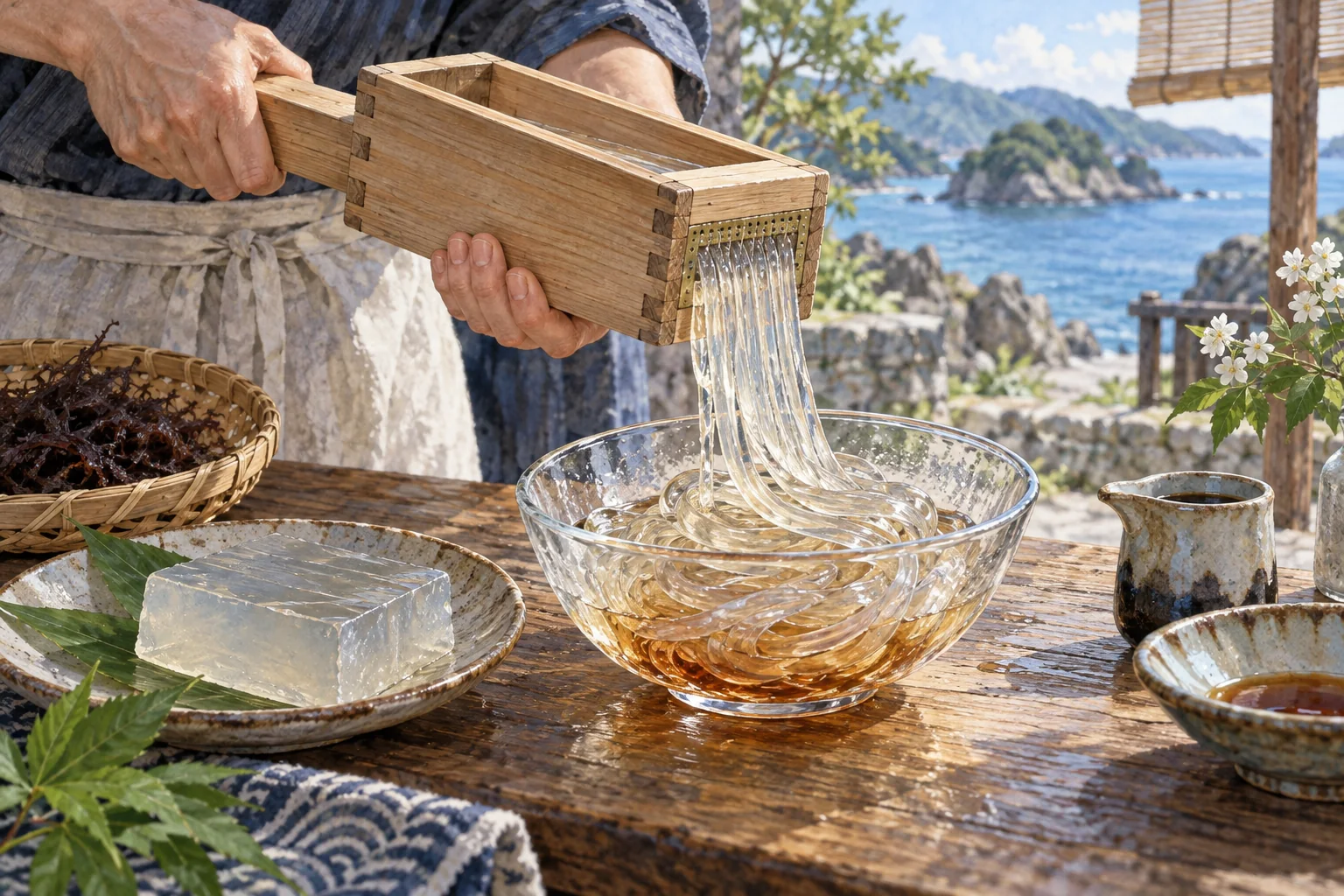
Tokoroten is a small dish that says a lot about how divided Japan is by region. It is made from tengusa, a red seaweed, which is boiled until it dissolves, strained, and left to set into a firm translucent block. To serve it you put the block into a wooden box with a wire grid at one end and push it through with a plunger, which turns it into strands like thick noodles in one movement.
Many older Japanese remember doing this at home. It has virtually no calories and virtually no flavor of its own, which is the point: it is a cold, slippery texture that you dress. And here the country splits. In eastern Japan it is dressed with vinegar and soy sauce, often with mustard, and eaten as a light savory dish.
In Kansai it is usually topped with kuromitsu, a dark sugar syrup, and eaten as a dessert. Both regions find the other version genuinely strange, and the reaction when a Kansai person is handed the vinegar version is worth watching.
ところてんは小さな食べ物ですが、日本が地方でどれだけ分かれているかをよく示します。原料は天草という紅藻で、これを煮溶かし、濾して、透き通った固い塊に冷やし固めます。出すときは、片端に針金を張った木の箱に塊を入れ、押し棒で一気に押し出す。
太い麺のような形が、その一動作でできます。年配の人には、家でやった覚えのある人が多くいます。カロリーはほぼゼロ、それ自体の味もほぼありません。そこが肝心で、冷たくつるりとした食感に、何かをかけて食べるものだからです。そして、ここで国が割れます。
東日本では酢醤油、多くは辛子を添えて、軽いおかずとして食べます。関西ではたいてい黒蜜をかけ、甘いものとして食べます。どちらの地方も、相手のやり方を本気で奇妙だと思っています。関西の人に酢醤油のものを出したときの反応は、見る値打ちがあります。
こう聞かれたら
外国人から実際にされる質問と、その答え方。
What does it taste like?
どんな味ですか。
Almost nothing on its own. The appeal is the cold, firm, slippery texture, so the dressing carries the whole dish.
それ自体はほとんど味がありません。冷たく、こりっとして、つるりとした食感が身上で、味はかけるものが受け持ちます。
Is it the same as agar jelly?
寒天と同じですか。
Same seaweed, different product. Kanten is tokoroten that has been frozen and dried into a dry agar used for setting other things; tokoroten is the fresh jelly itself.
原料は同じで、品が違います。寒天は、ところてんを凍らせて乾かした乾物で、ほかのものを固めるのに使います。ところてんは、その生の状態のものです。
Which dressing should I try?
どちらのかけ方を試せばよいですか。
Whichever the shop hands you, which will depend on where you are. If you want the other one, ask — some places can do both and will find the request funny.
店が出してきたほうです。場所によって決まっています。もう一方が欲しければ頼んでみてください。両方できる店もあり、面白がられます。
誤解されやすい
MYTHTokoroten is a dessert.
ところてんは甘いものだ、と思われがちです。
FACTIt depends on the region. Eastern Japan dresses it with vinegar and soy sauce as a savory dish; the Kansai region pours sugar syrup on it.
地方によります。東日本は酢醤油をかけておかずとして、関西は黒蜜をかけて甘いものとして食べます。
そのまま使えるフレーズ
- It's a jelly made from seaweed.海藻から作る固まりです。
- You push it through a press to make the strands.押し出して麺の形にします。
- It has almost no calories and no flavor.カロリーも味も、ほとんどありません。
- In Tokyo it's vinegar and soy sauce.東京では酢醤油です。
- In Kansai they pour sugar syrup on it.関西では黒蜜をかけます。
説明に使う語句
- red seaweed天草
- press, extruder天突き
- agar寒天
- black sugar syrup黒蜜
- vinegar and soy dressing酢醤油
動画で見る
YouTube より豆知識
ところてんは天草(テングサ)を煮て抽出した液を冷やし固めたもので、「天突き」と呼ばれる道具で押し出して麺状にする。寒天は、ところてんを屋外で凍結乾燥させたもので、江戸時代に京都で偶然生まれたと伝えられる。関東では酢醤油と辛子、関西では黒蜜をかけるのが一般的だが、三杯酢をかけるなど、ほかの食べ方の地域もある。伊豆半島や伊豆諸島が天草の産地として知られる。
