手土産てみやげ
temiyage
the gift you bring when you visit
手ぶらで行かない。しかも「つまらないものですが」と言って渡す。
一言で言うと
これだけ覚えれば最低限伝わる一文
Temiyage is the small gift you bring when visiting someone's home or office.
手土産とは、人の家や会社を訪ねるときに持っていく小さな贈り物です。
30秒で説明する
外国人に説明するときの標準サイズ
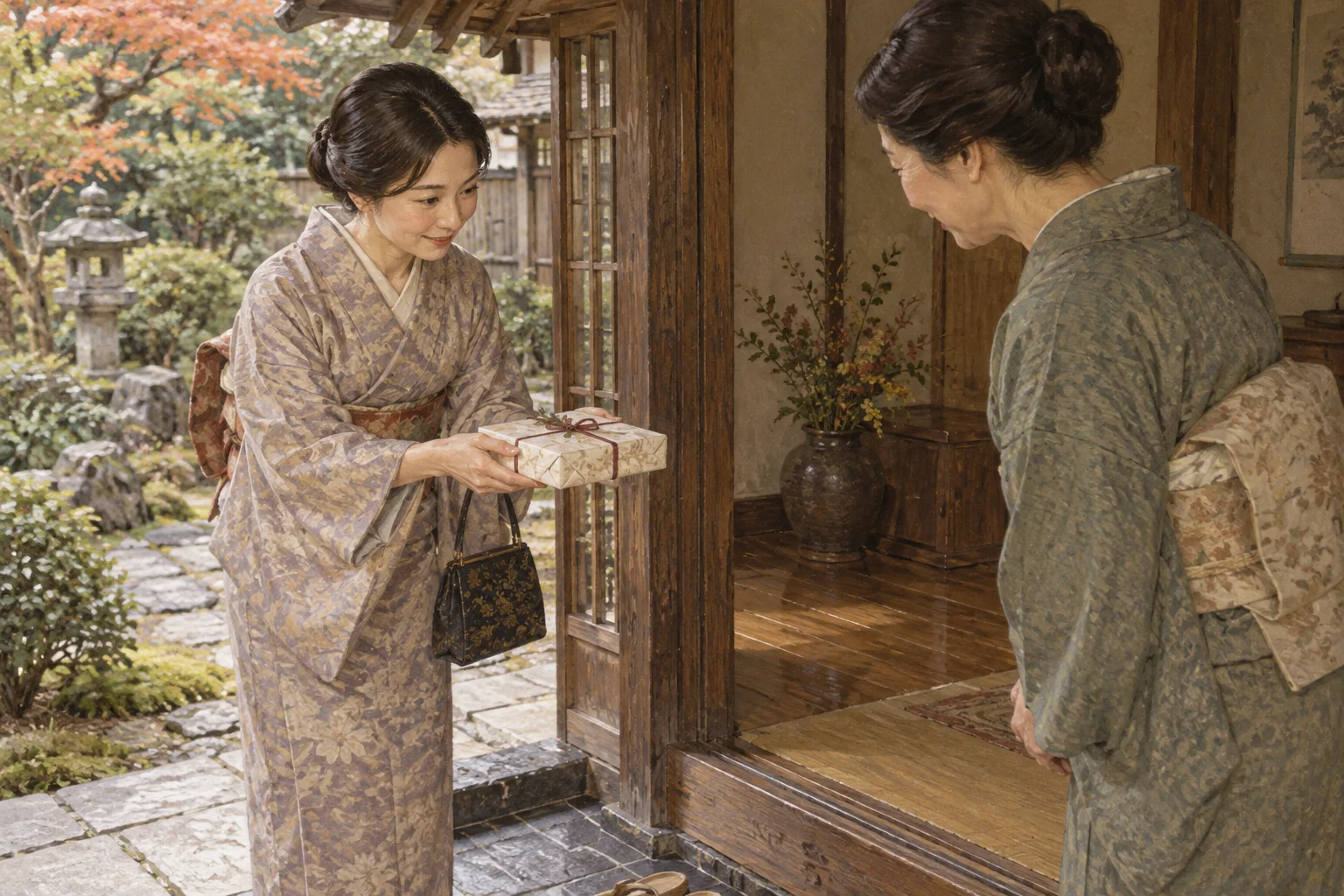
You do not arrive empty-handed in Japan. A visit to someone's home, an office call, or a return from a trip all call for a small gift, usually something edible that can be shared and does not last. Sweets from a known shop are the safest choice. You hand it over at the start, after greetings, with both hands.
日本では手ぶらで訪ねません。人の家を訪ねるとき、会社を訪問するとき、旅行から帰ったとき、いずれも小さな贈り物を用意します。たいていは分けられて、あとに残らない食べものです。名の知れた店の菓子が最も無難です。挨拶のあと、最初に両手で渡します。
スピーチ・英作文
通訳案内士の二次口述・大学入試の自由英作文に
In Japan you do not visit somebody empty-handed. A temiyage is the small gift you bring, and the rules around it are fairly clear. It should be consumable, so that it does not become an object the recipient has to keep or display. It should be shareable, so that a family or an office can divide it.
And it should come from somewhere identifiable, because part of the meaning is that you went and chose it. Sweets from a well-known shop are the standard answer. You hand it over near the beginning of the visit, after greetings, holding it with both hands and turning it so the other person can read it.
There is a traditional phrase used when handing it over, tsumaranai mono desu ga, meaning this is a trifling thing, but. It sounds strange translated: you are not insulting your own gift, you are lowering it so the other person is not burdened by having to match it.
日本では、人を訪ねるときに手ぶらでは行きません。手土産がその小さな贈り物で、決まりはかなりはっきりしています。食べて無くなるものであること。相手が取っておいたり飾ったりしなくて済むからです。分けられるものであること。家族や職場で分けられるように。
そしてどこのものか分かるものであること。自分が出向いて選んだ、ということも意味のうちだからです。名の知れた店の菓子が標準的な答えです。渡すのは訪問の最初のほう、挨拶のあとで、両手で持ち、相手が字を読める向きにして差し出します。
渡すときの決まり文句があります。「つまらないものですが」。訳すと妙に響きます。自分の贈り物をけなしているのではありません。相手が同等のものを返さねばと負担に感じないよう、低く置いているのです。
こう聞かれたら
外国人から実際にされる質問と、その答え方。
What should I bring?
何を持っていけばいいですか。
Individually wrapped sweets from a named shop are the safest choice: shareable, consumable, and clearly chosen. Regional specialties from where you live or traveled are particularly well received.
名の知れた店の個包装の菓子が最も無難です。分けられ、無くなり、選んだことが分かります。自分の住む土地や旅先の名物なら、とくに喜ばれます。
Why say it's a trifling thing?
どうして「つまらないもの」と言うのですか。
To lower the gift so the recipient does not feel obliged to return something of equal value. It is a politeness formula, not an assessment of what you brought.
贈り物を低く置くことで、相手が同等のものを返さねばと感じずに済むようにするためです。品物の評価ではなく、礼儀の型です。
When do I hand it over?
いつ渡せばいいですか。
Near the start, after greetings, and out of its shopping bag. In a home you do it after being shown in; in an office, after the business card exchange and before sitting down to talk.
挨拶のあと、早い段階で、紙袋から出して渡します。家なら通されてから、会社なら名刺交換のあと、本題に入る前です。
そのまま使えるフレーズ
- It's just a small thing.つまらないものですが。
- This is from where I live.私の地元のものです。
- Please share it with everyone.皆さんで召し上がってください。
- Hand it over with both hands.両手でお渡しします。
- Something edible is the safe choice.食べものにしておくのが無難です。
説明に使う語句
- gift贈り物、手土産
- empty-handed手ぶらで
- consumable食べて無くなる
- individually wrapped個包装の
- reciprocateお返しをする
動画で見る
YouTube より豆知識
手土産に「消えもの」、つまり食べたり使ったりして無くなるものが好まれるのは、相手に保管や処分の負担を残さないためとされる。菓子が個包装であることが重視されるのは、職場や家庭で配りやすいからである。旅行先の土産を「お土産(おみやげ)」、訪問時に持参するものを「手土産」と呼び分けることが多い。「つまらないものですが」は謙譲の定型句だが、近年は「お口に合うかわかりませんが」「気に入っていただけると嬉しいのですが」といった、卑下しない言い方を選ぶ人も増えている。紙袋は持ち帰るのが正式とされるが、相手が持ち運ぶ場合はそのまま渡すこともある。
