単身赴任たんしんふにん
tanshin funin
transferring without the family
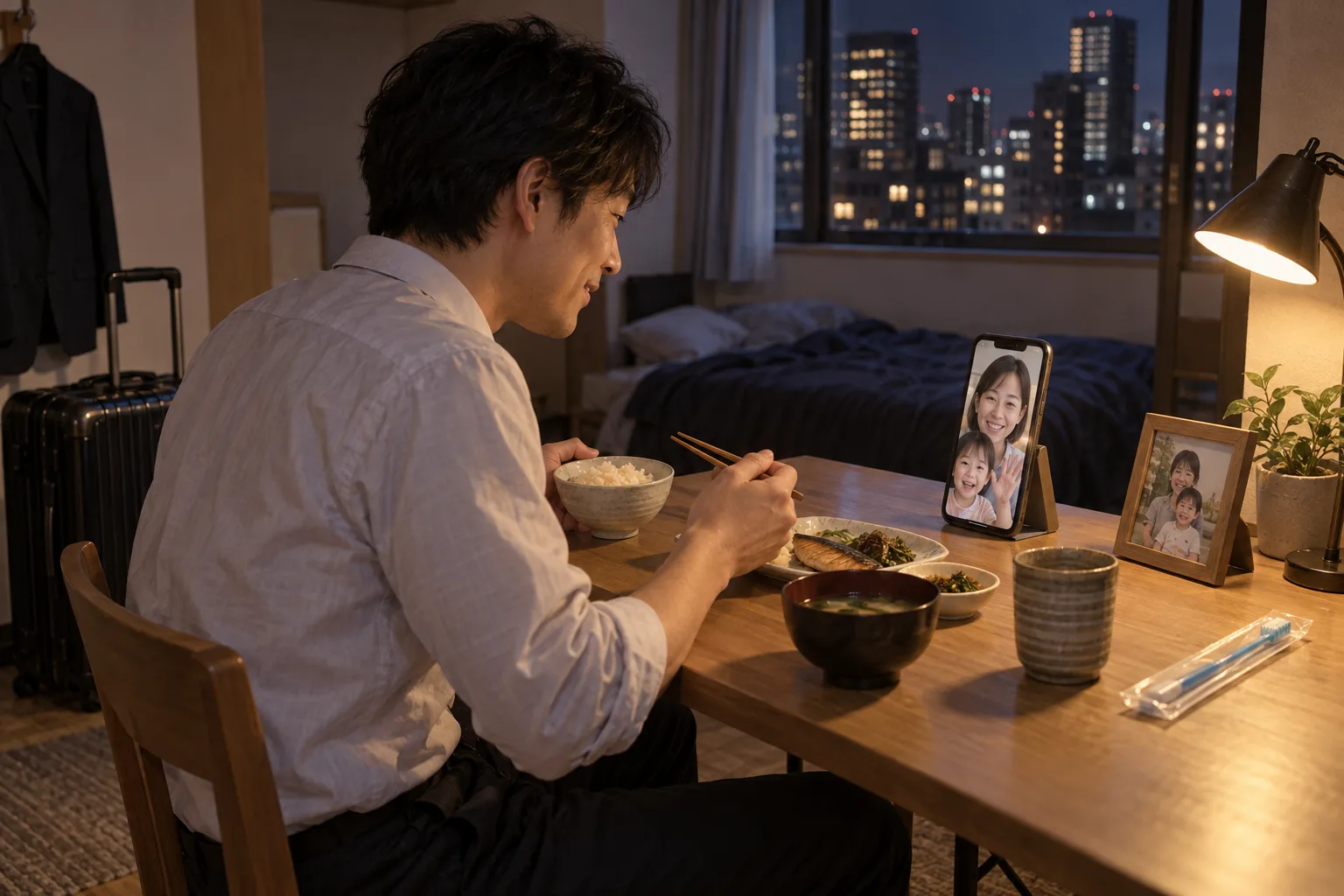
会社が転勤を命じ、家族は残る。父親が単身で何年も別の街に住む。
一言で言うと
これだけ覚えれば最低限伝わる一文
Tanshin funin is being transferred to another city and living there alone while the family stays behind.
単身赴任とは、転勤を命じられて家族を残し、一人で別の街に住むことです。
30秒で説明する
外国人に説明するときの標準サイズ
Japanese companies move employees between branches, and the employee is expected to go. When the family cannot move, because of the children's schooling, a spouse's job or an elderly parent, the employee goes alone and lives in company housing, often for years, returning at weekends or monthly.
日本の企業は社員を拠点の間で異動させ、社員はそれに応じることが前提とされます。子どもの学校、配偶者の仕事、高齢の親といった事情で家族が動けない場合、社員は一人で赴任し、社宅などに住みます。多くは何年も続き、週末や月に一度帰ります。
スピーチ・英作文
通訳案内士の二次口述・大学入試の自由英作文に
Tanshin funin means being posted to another city and going alone. Japanese companies, particularly large ones, move staff between branches every few years, partly to develop generalists and partly to prevent anyone becoming entrenched, and historically the employee was expected to accept without much negotiation.
If the family cannot move, and often they cannot because a child is mid-way through school, or the spouse has a job, or a parent needs care, then the employee goes by himself. The word is not gendered but the overwhelming majority are men. He lives in a small company apartment, comes home at weekends or once a month depending on the distance, and this can go on for years.
The costs are not hidden in Japan: it is discussed as a cause of distance between fathers and children and of strain on marriages. Companies have begun to reduce it, offering allowances to move families, limiting transfers, or hiring staff on regional terms who cannot be posted elsewhere.
単身赴任とは、別の街へ転勤し、一人で行くことです。日本の企業、とくに大企業は数年ごとに社員を拠点の間で動かします。何でもできる人材を育てるためであり、同時に誰かが一箇所に根を張るのを防ぐためでもあります。歴史的に、社員はそれをあまり交渉せずに受け入れることが前提とされてきました。
家族が動けない場合、そしてそれはよくあることですが、子どもが学校の途中であるとか、配偶者に仕事があるとか、親に介護が必要であるといった事情で、社員は一人で行きます。この語に性別はありませんが、圧倒的多数は男性です。小さな社宅に住み、距離に応じて週末か月に一度帰り、それが何年も続きます。
その代償は日本で隠されてはいません。父と子の距離が開く原因として、また夫婦に負担がかかる原因として論じられています。企業も減らし始めました。家族で移るための手当を出す、転勤を限る、転居を伴う異動のない地域限定の採用を設ける、といった形です。
こう聞かれたら
外国人から実際にされる質問と、その答え方。
Can an employee refuse a transfer?
転勤を断ることはできますか。
Legally it depends on the contract and on whether the order is reasonable, and courts have ruled both ways. In practice refusing has long been understood to damage a career, though attitudes are shifting and regional hiring tracks now exist.
法的には契約の内容と、その命令が合理的かどうかによります。裁判の判断も分かれています。実際には、断ることは長く経歴に響くと理解されてきました。ただし受け止め方は変わりつつあり、地域限定の採用の枠も設けられています。
How often do they come home?
どれくらいの頻度で家に帰るのですか。
It depends on distance and company support. Weekly if the posting is a couple of hours away, monthly if it is at the other end of the country, and companies often pay for a set number of trips home per month.
距離と会社の支援によります。二時間ほどの赴任地なら毎週、国の反対側なら月に一度が目安で、会社が月に何回かの帰省の費用を負担することが多いです。
そのまま使えるフレーズ
- He was transferred and went alone.転勤になって単身で行きました。
- The family stayed for the children's school.子どもの学校のために家族は残りました。
- He comes home once a month.月に一度帰ってきます。
- Some firms now hire on regional terms.地域限定の採用を設ける会社も出てきました。
説明に使う語句
- transfer (to another office)転勤
- company housing社宅
- to live apart別居する
- allowance手当
動画で見る
YouTube より豆知識
転勤は人材育成と組織の刷新を目的として運用されてきましたが、家族の負担が大きいとして見直す企業が増えています。転居を伴う異動のない「地域限定社員」の制度を設ける企業もあります。厚生労働省は転勤に関する雇用管理の手引きを示し、育児・介護休業法も子育てや介護の事情への配慮を事業主に求めています。単身赴任中の住まいは社宅や会社が借り上げた住宅が多く、帰省の交通費が支給されるのが一般的です。近年はリモートワークの普及により、転勤の必要性そのものを問い直す動きもあります。
