バスの整理券ばすのせいりけん
seiriken
the numbered ticket that tracks your bus fare
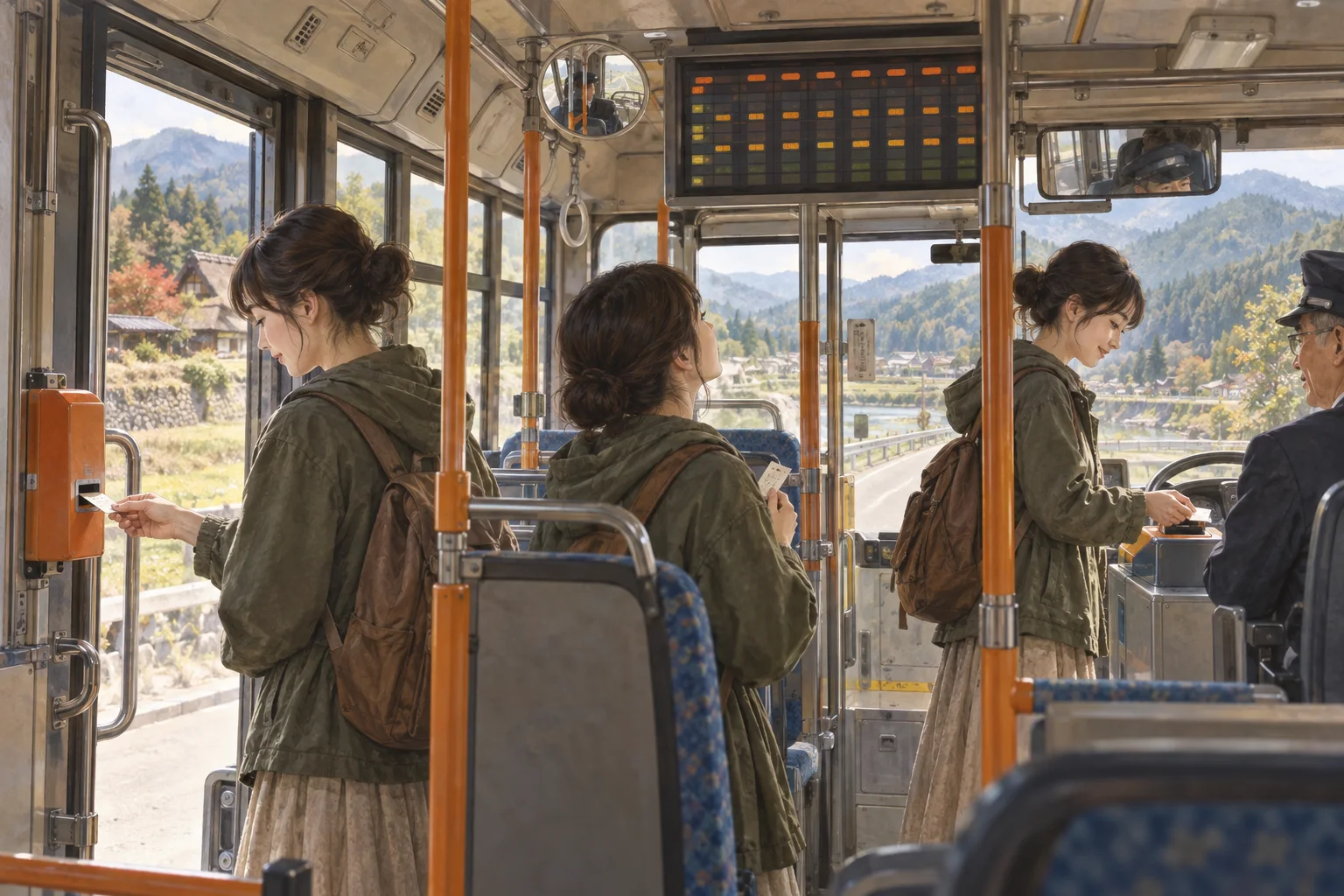
乗った停留所を覚えているのは、あなたではなく整理券の番号。
一言で言うと
これだけ覚えれば最低限伝わる一文
On many Japanese buses, a numbered ticket taken at boarding tracks where you got on so the fare can be worked out.
日本の多くのバスでは、乗車時に取る番号つきの整理券が、乗った場所を記録して運賃を計算します。
30秒で説明する
外国人に説明するときの標準サイズ
On buses that charge by distance rather than a flat rate, passengers usually board from the rear or middle door and pull a small numbered ticket, called seiriken, from a machine by the step. A screen at the front shows the fare for each ticket number, rising as the bus travels further, and passengers pay that exact amount along with the ticket when they get off at the front. IC cards have replaced the ticket for many riders, but the fare display works the same way underneath.
均一運賃ではなく距離に応じて運賃が変わるバスでは、乗客はたいてい後ろか中ほどの扉から乗り、乗り口にある機械から整理券と呼ばれる小さな番号つきの券を取ります。前方の画面には整理券の番号ごとに運賃が表示され、バスが進むにつれて金額が上がっていきます。降りるときは前の扉から出て、番号に表示された金額と整理券を一緒に運賃箱に入れます。ICカードに置き換わりつつありますが、裏側の仕組みは今も同じです。
スピーチ・英作文
通訳案内士の二次口述・大学入試の自由英作文に
Seiriken solve a simple problem: on a bus where the fare depends on distance, how do you prove where someone got on? The answer is a small paper ticket with a number on it, taken from a dispenser by the rear door the moment you board.
A fare board at the front of the bus lists a fare next to every ticket number, and that number's fare climbs as the bus moves further from the start of the route, calculated automatically by the bus's onboard system. When you reach your stop, you get off through the front door, drop the ticket into the fare box along with the exact amount shown for your number, and if you need change, most fare boxes have a built-in changer you can use first.
If you board with an IC card instead, you simply tap it when boarding and again when leaving, and the machine handles the calculation without a paper ticket at all. The seiriken system mostly survives now on routes and older buses where cashless payment hasn't fully taken over.
整理券は、距離に応じて運賃が変わるバスが抱えるシンプルな問題を解決します。乗客がどこで乗ったかを、どう証明するかという問題です。答えは、乗った瞬間に後ろの扉のそばの発行機から取る、番号のついた小さな紙の券です。
バス前方の運賃表示器には整理券の番号ごとに運賃が並び、その番号の運賃はバスが出発地点から遠ざかるにつれて自動で上がっていきます。降りる停留所に着いたら前の扉から降り、番号に表示された金額をぴったり整理券と一緒に運賃箱に入れます。
小銭が足りなければ、運賃箱に付いた両替機で先に両替できることがほとんどです。ICカードで乗る場合は、乗るときと降りるときにタッチするだけで、紙の券なしに機械が計算してくれます。整理券の仕組みは今、キャッシュレス化が進みきっていない路線や古いバスに主に残っています。
こう聞かれたら
外国人から実際にされる質問と、その答え方。
What if I lose the ticket before I get off?
降りる前に整理券をなくしたらどうすればいいですか。
Tell the driver where you boarded, and they can usually work out the fare from the route and timing, though it's simpler to just hold onto the ticket.
どこで乗ったかを運転士に伝えれば、路線と時間帯からだいたいの運賃を割り出してもらえます。とはいえ整理券をそのまま持っておく方が簡単です。
Do I need exact change?
ぴったりの小銭を用意する必要はありますか。
You pay the exact fare, but most fare boxes have a changer built in: break a larger coin or a 1,000-yen bill first, then pay. Some newer boxes give change automatically, and carrying coins speeds things up.
運賃はぴったり払いますが、ほとんどの運賃箱には両替機が付いているので、先に大きい硬貨や千円札を崩してから払えます。お釣りが自動で出る新しい運賃箱もあります。小銭を持っていた方が早く済みます。
Why don't all buses use this system?
なぜすべてのバスがこの仕組みを使っていないのですか。
Buses in cities with flat fares, or where almost everyone uses an IC card, often skip the ticket machine entirely, since the fare doesn't depend on distance or the card handles it automatically.
均一運賃の都市部のバスや、ほとんどの人がICカードを使う路線では、整理券発行機自体を置いていないことが多いです。運賃が距離によらないか、カードが自動で処理してくれるからです。
そのまま使えるフレーズ
- Please take a ticket when you board.乗車の際は整理券をお取りください。
- Get off from the front door.前のドアから降りてください。
- How much is fare number twelve?12番はいくらですか。
- You can get change from this machine.この機械で両替できます。
- Just tap your card when you board and leave.乗るときと降りるときにカードをタッチしてください。
説明に使う語句
- numbered ticket整理券
- fare board運賃表示器
- fare box運賃箱
- to board乗車する
- flat fare均一運賃
動画で見る
YouTube より豆知識
整理券方式は主に地方都市や郊外の路線バスで使われ、乗車距離に応じて運賃が変わる「対キロ制」を支えている。運賃表示器は各整理券の番号ごとに、その区間に応じた運賃を自動で計算して表示する。均一運賃の都市部の路線や、交通系ICカードの利用が広がった路線では、整理券を発行しない、あるいは廃止した例も増えている。運賃箱には両替機能が付いているものが多く、千円札を崩せる機種もある。
