ポイント経済ぽいんとけいざい
pointo keizai
why everyone in Japan is asked for a point card
レジでよく「ポイントカードはお持ちですか」と聞かれる。集めた点は、そのまま金として使える。
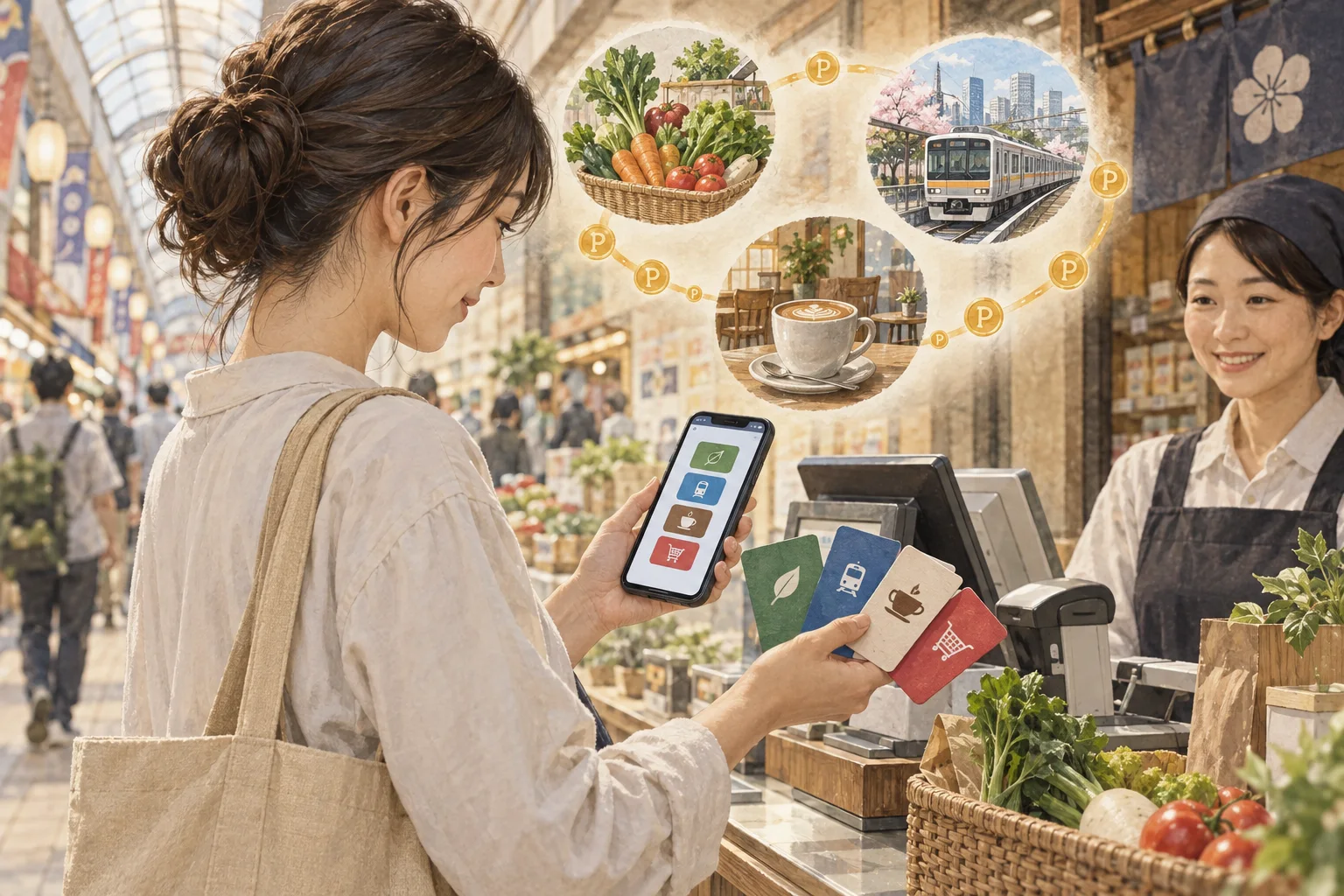
一言で言うと
これだけ覚えれば最低限伝わる一文
Pointo keizai, the point economy, is Japan's loyalty point system, with points that work across companies and spend like money.
ポイント経済とは、買い物でたまるポイントが会社をまたいで貯まり、そのまま金のように使える日本の仕組みです。
30秒で説明する
外国人に説明するときの標準サイズ
Most Japanese chain stores offer points, usually one percent of what you spend, and the major schemes — run by phone carriers, internet retailers and convenience store groups — are accepted across thousands of unrelated businesses. Points can be spent at face value like cash, and many people treat collecting them as a hobby with its own name. This is why you are asked about a point card at so many registers.
日本のチェーン店の多くに、買い物の一パーセントほどがたまる点の仕組みがあります。大手のもの、つまり携帯会社、通販、コンビニの系列が運営するものは、まったく無関係な何千もの店で使えます。点は現金と同じ額面でそのまま支払いに使えますし、これを集めること自体を趣味とする人も多く、呼び名まであります。レジでよくポイントカードを尋ねられるのは、このためです。
スピーチ・英作文
通訳案内士の二次口述・大学入試の自由英作文に
If you shop in Japan you will be asked, at register after register, whether you have a point card, and it helps to know why. Most large retailers run a loyalty scheme, typically returning one percent of what you spend as points.
What makes Japan unusual is that the biggest schemes are not tied to one shop: they are run by mobile carriers, online retailers and convenience store groups, and are accepted at drugstores, gas stations, restaurants, clinics and municipal offices that have nothing to do with each other. Points are spendable at face value, so a hundred points is a hundred yen, and you can pay for a whole meal with them.
Campaigns multiply them, credit cards tied to a scheme return more, and paying by a linked app stacks points from two or three sources at once. There is a word, poikatsu, for treating this as an activity, and books and blogs about optimizing it. For a visitor the practical answer at the register is simply to say you do not have one, which is normal and expected.
日本で買い物をすると、行く先々のレジでポイントカードをお持ちですかと聞かれます。理由を知っておくと役に立ちます。大手の小売店の多くが、買った額のおよそ一パーセントを点として返す仕組みを持っています。日本が変わっているのは、大きな仕組みが一つの店に縛られていないことです。
携帯会社、通販、コンビニの系列が運営し、まったく関係のない薬局、給油所、飲食店、診療所、役所の窓口でも使えます。点は額面どおりに使えるので、百ポイントは百円。食事一回分を点だけで払えます。期間の催しで倍率が上がり、その仕組みに紐づいたクレジットカードなら還元が増え、連携した決済アプリで払えば、二つ三つの点が同時にたまります。
これを活動として行うことを指す「ポイ活」という言葉があり、効率を追う本や記事も出ています。旅行者にとってレジでの答えは簡単です。持っていない、と言えばよい。ごくふつうのことで、そう答えることが想定されています。
こう聞かれたら
外国人から実際にされる質問と、その答え方。
Can a visitor get points?
旅行者でも貯められますか。
Some schemes need a Japanese phone number or address, but several convenience store and drugstore cards can be issued on the spot to anyone. For a short trip it is rarely worth it.
日本の電話番号や住所が要るものもありますが、コンビニや薬局のカードには、その場で誰でも作れるものもあります。短い旅行なら、割に合わないことがほとんどです。
Are points really worth money?
点は本当に金になるのですか。
At the main schemes, yes — one point equals one yen at the register. Some airline and hotel points work differently, so check before assuming.
主な仕組みではそうです。レジで一ポイント一円として使えます。航空会社や宿の点は扱いが違うので、確かめてください。
What's the polite answer if I don't have one?
持っていないときは何と言えばよいですか。
Just say no, or shake your head. Nobody minds, and staff ask hundreds of times a day expecting that answer as often as not.
いいえ、と言うか、首を振るだけで構いません。誰も気にしません。店員は一日に何百回も尋ねていて、断られるほうも想定内です。
誤解されやすい
MYTHPoint cards only work at the shop that issued them.
ポイントカードは発行した店でしか使えない、と思われがちです。
FACTThe major Japanese schemes are shared across thousands of unrelated businesses, which is why a single card is worth carrying.
日本の大手の仕組みは、無関係な何千もの店で共通して使えます。一枚持つ値打ちがあるのは、そのためです。
そのまま使えるフレーズ
- They're asking if you have a point card.ポイントカードを持っているか聞かれています。
- Just say no — it's completely normal.持っていないと答えて大丈夫です。
- One point is one yen, so you can pay with them.一ポイント一円なので、支払いに使えます。
- The big schemes work at thousands of different shops.大手の点は、何千もの店で使えます。
- Collecting points is a hobby here — it has a name.点を集めること自体が趣味で、呼び名もあります。
説明に使う語句
- loyalty pointsポイント
- point cardポイントカード
- rate of return還元率
- point collectingポイ活
- cashless paymentキャッシュレス決済
動画で見る
YouTube より豆知識
共通ポイントは、複数の企業をまたいで貯めて使える仕組みで、2003年に始まったTポイント(2024年にVポイントへ統合)が先がけとされる。現在は楽天ポイント、dポイント、Pontaなどが大きく、加盟店は数万規模にのぼる。多くは1ポイント1円として支払いに充当できる。2019年から2020年にかけて実施されたキャッシュレス・ポイント還元事業は、消費増税にあわせた国の施策として行われた。「ポイ活」は2010年代後半から広まった言い方である。
